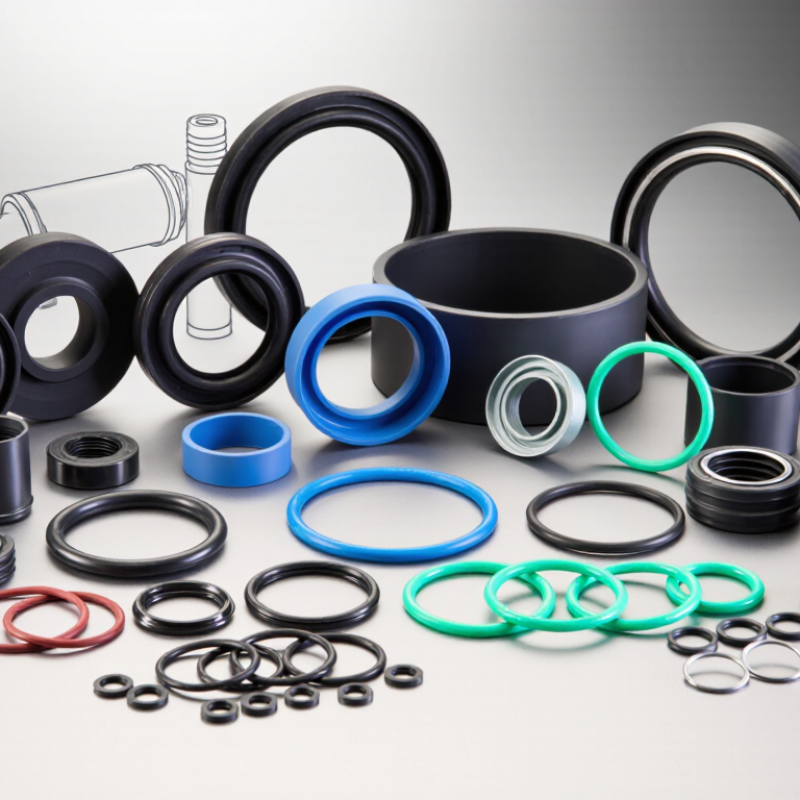
China Top 10 Cylinder Seal Kits Manufacturers

Selecting a reliable source for Cylinder Seal Kits can reduce leakage, downtime, and repeat repairs. A kit may contain seals, O-rings, wipers, and backup rings, but the exact contents vary by cylinder design. Material choice matters, too. Polyurethane, nitrile, and other compounds respond differently to pressure, temperature, fluid, and wear. Even a small mismatch can shorten service life.

This guide introduces ten notable Chinese manufacturers and offers a practical starting point for comparing them. It considers product range, customization, manufacturing experience, quality controls, and technical support—not just price or catalogue size. Buyers should also confirm dimensions, operating conditions, material specifications, and inspection documents before placing an order. Ask how the supplier handles samples, traceability, and production consistency. A polished website alone proves little. Request clear drawings or samples when specifications are uncertain, and check that quoted kits match the intended cylinder model. Still, rankings are imperfect. A manufacturer suited to standard excavator seals may not fit a specialized industrial application. Use this overview to narrow the field, then verify each supplier against your equipment and service requirements. The details deserve a second look.

China Top 10 Cylinder Seal Kits Manufacturers

Cylinder Seal Kits: Definition, Components, and Functions

China Top 10 Cylinder Seal Kits Manufacturers

Cylinder Seal Kits: Definition, Components, and Functions

A cylinder seal kit is a set of replacement parts for sealing a hydraulic or pneumatic cylinder. Its contents depend on the cylinder design and service conditions. Common parts include piston seals, rod seals, wipers, O-rings, backup rings, and wear rings. Each has a specific job. Rod seals help limit fluid leakage where the rod exits the cylinder. Wipers scrape dust and moisture from the rod as it retracts. Wear rings guide moving parts and help prevent metal-to-metal contact.

Together, these components help maintain pressure, reduce fluid loss, and keep dirt away from internal surfaces. A worn seal may leave a thin oil film on the rod, while a damaged wiper can let grit reach the seal assembly. Small parts matter. Kit selection should match the cylinder’s dimensions, seal groove, operating pressure, temperature, and fluid. Material compatibility is important; a seal that looks correct may still swell or wear quickly in an unsuitable fluid. Even careful selection cannot compensate for a scratched rod or damaged groove.

Common Applications of Cylinder Seal Kits in China

Across China’s construction sites, cylinder seal kits are commonly used in excavators, loaders, and mobile cranes. They help hydraulic cylinders retain pressure and limit oil leakage and dust entry. Tractors and harvesters also depend on reliable seals during seasonal work. In factories, presses, injection-molding machines, and material-handling systems use cylinder seals through repeated operating cycles. Small leaks matter. Oil on a frame may indicate worn seals, a scratched rod, or incorrect installation—not just an aging kit.

Conditions vary widely. A machine working in dusty inland conditions may need different inspection attention than equipment exposed to coastal humidity or winter cold. Before selecting a kit, technicians should check cylinder dimensions, seal material compatibility, operating temperature, fluid type, and pressure requirements. A replacement kit alone may not solve recurring leakage if a rod is scored or a cylinder bore is damaged. That detail is easy to miss during a rushed repair.

Tips: Clean the cylinder area before opening it, and keep grit away from exposed parts. Compare each old seal with the replacement, but verify dimensions against service specifications. After reassembly, check for leaks and smooth movement under controlled operation. Don’t rush.

How to Evaluate Chinese Cylinder Seal Kit Manufacturers

When evaluating Chinese cylinder seal kit manufacturers, start with engineering evidence, not catalog claims. Ask for compound data, hardness range, temperature limits, and pressure ratings for each seal. The values should match your cylinder’s fluid and operating conditions. Request dimensional inspection records, batch traceability, and a sample test report showing leakage results. Small differences matter. A seal that looks correct can still fail after repeated pressure cycles.

Check how the supplier controls production. Ask to see incoming-material checks, mold maintenance records, and procedures for handling rejected parts. ISO 3601 can help you assess O-ring dimensions, but certification alone does not prove a kit suits your application. ISO’s 2022 Survey recorded 1,265,216 valid ISO 9001 certificates across 189 countries; this shows broad adoption, not supplier-level performance. I would still ask for recent audit evidence and test data tied to the exact kit. A factory may have capable equipment, yet its documentation can be uneven. That deserves a closer look. Order a small trial batch, measure critical seals, and test them in a representative cylinder before committing to larger volumes.

Profiles of Ten Leading Chinese Manufacturers

China’s cylinder-seal-kit manufacturers serve construction machinery, agricultural equipment, and industrial hydraulics. The China Construction Machinery Association reported 195,018 excavators sold in 2023, including 104,214 exports. That installed base creates demand for replacement kits, but volume alone says little about seal quality. Buyers should compare material specifications, dimensional checks, and batch traceability.

Ten manufacturer profiles reveal different strengths. One focuses on replacement kits for common excavator cylinders. Another builds to customer drawings and equipment dimensions. A third targets mining and other abrasive environments. A fourth supplies compact-machine applications. A fifth works with PTFE-based sealing components. A sixth specializes in molded polyurethane and rubber parts. A seventh accepts small custom batches. An eighth combines seal production with precision machining. A ninth emphasizes export packaging and documentation. A tenth offers testing records alongside its kits. These are capability profiles, not a verified ranking. Ask for pressure, temperature, and fluid-compatibility data before selecting a supplier. A tidy catalogue is not proof of consistent batches. In practice, dimensional variation can be easy to miss and costly to discover after installation.

Comparing Product Range, Quality, and Service Capabilities

When comparing China’s top 10 cylinder seal kit manufacturers, look beyond catalog size. A broad range may include piston, rod, wiper, and buffer seals for different cylinder designs. Check whether dimensions, materials, and kit contents are clearly specified. A useful supplier can also confirm measurements from a sample or drawing, rather than guessing from a machine model.

Quality depends on more than the material name. Ask about compound options, temperature limits, dimensional checks, and batch traceability. For a maintenance team, a kit with consistent seal dimensions can reduce fitting delays. Small differences matter. A seal that looks right may still leak if its profile or hardness does not suit the application. Requesting inspection records is sensible, though documents alone cannot prove performance in every operating condition.

Service capability also separates suppliers. Compare response times, technical support, customization options, and how they handle a mismatch after delivery. Clear communication is practical evidence of experience. Still, no single supplier is best for every buyer. Some offer wider inventory; others may provide closer support for uncommon cylinder sizes. Test a small order first, and record installation results. That takes time. It may reveal gaps a polished catalog hides.

China Top 10 Cylinder Seal Kits Manufacturers - Comparing Product Range, Quality, and Service Capabilities

Comparison note: This is an illustrative, anonymized market overview of common supplier capability profiles, not a verified ranking of ten identified companies. Product availability, quality systems, lead times, and customization policies vary by supplier and should be confirmed directly before purchasing.

Profile Typical Product Range Common Seal Materials Quality Checks to Confirm Customization Capability Service Capabilities to Compare Best-Fit Purchasing Need
Hydraulic cylinder specialist Piston, rod, buffer, wiper, and static seal kits for hydraulic cylinders Polyurethane, NBR, FKM, and PTFE compounds, subject to design and operating conditions Dimensional inspection, material identification, and batch traceability availability Can often quote from cylinder drawings, dimensions, or a sample; confirm minimum order quantity Application review and help identifying seal positions and sizes Replacement kits for hydraulic equipment and maintenance programs
Pneumatic seal supplier Rod and piston seals, wipers, and repair kits for pneumatic cylinders Commonly NBR and polyurethane; material selection depends on air quality, temperature, and design Check dimensional tolerances, surface condition, and consistency across production lots May support non-standard sizes when drawings or samples are supplied Product selection support for cylinder size, speed, and operating environment General industrial pneumatic cylinder servicing
Custom-size seal manufacturer Made-to-order seal sets and individual sealing elements Material options may include NBR, FKM, PU, and PTFE; confirm grade and compound details Request inspection records, material certificates where available, and agreed acceptance criteria Typically focused on drawing-based or sample-based production Engineering communication and quotation support for unusual dimensions Obsolete, non-standard, or low-volume repair requirements
Standard-size kit supplier Catalogued kits for commonly encountered cylinder dimensions and configurations Usually offers selected elastomer and polymer options; exact range varies by catalog Check kit contents against the parts list and verify dimensions before installation Customization may be limited to combinations of stocked components Catalog lookup, stock checks, and parts-list confirmation Routine maintenance where dimensions and kit contents are known
Heavy-duty application supplier Seal kits intended for demanding hydraulic service, including selected mobile or industrial equipment May offer tougher polyurethane compounds, NBR, FKM, or PTFE-based components, depending on design Confirm pressure, temperature, fluid-compatibility, and extrusion-gap suitability for the application Application-specific selection may be available; provide complete operating data Technical review of pressure, speed, fluid, and temperature requirements Equipment operating under demanding loads or environmental conditions
Low-friction seal supplier Rod and piston sealing components designed for reduced friction in compatible applications PTFE-based materials and compatible energizers may be available; verify the design and compound Check dimensions, mating-surface requirements, and suitability for the cylinder design Selection may be based on groove geometry and operating conditions Engineering support for friction, motion, and installation considerations Applications where stick-slip or friction performance is a concern
Export-oriented kit producer Packaged cylinder repair kits covering selected standard and custom configurations Material options vary; request specific compound and temperature-range information Confirm inspection documentation, packaging identification, and lot-level traceability May accommodate export packaging and customer-defined kit contents Export documentation, packing specifications, and shipment coordination Importers and maintenance distributors sourcing packaged kits
Small-batch production supplier Short-run kits and selected replacement seals, subject to tooling and production capability Common elastomer and polymer choices depend on available stock and production method Agree sampling, dimensional checks, and acceptance limits before repeat orders Potentially flexible for pilot quantities; confirm feasibility and setup charges Quotation and sample coordination for limited-volume projects Prototype work, trial orders, and less frequent repair needs
Equipment-service-focused supplier Repair kits arranged around cylinder models, service tasks, or customer parts lists Material composition should be verified against the original specification and working fluid Check kit completeness, part labeling, and compatibility with the target cylinder May assemble customer-defined kits from available sealing components Parts-list review and support with kit identification Workshops and service teams managing multiple cylinder types
Broad industrial sealing supplier Cylinder seal kits alongside other industrial sealing products Often spans several elastomer and polymer families; confirm the exact grade for each item Review material documentation, dimensional controls, and quality-system scope Customization depends on product category, order volume, and technical data supplied Consolidated sourcing and general sealing-product support Buyers seeking to source multiple types of sealing products from one supplier
Find the Right Repair Product for Your Project

Need to find the most appropriate product for the needs of your project? We can help because we have over 70 years of experience servicing the industry with every kind of project, from Do-it-yourself projects to large skyscrapers. Package Pavement has the experience, the knowledge and the products to help every project succeed.

Quikrete Repair Products
Legend
Package Pavement has two convenient locations in Stormville, NY (Dutchess County) and Ravena, NY (Greene County) to serve the Northeastern Region with bagged concrete, blacktop, mortar, and repair products. This map gives a general idea of where we service and the product lines we offer.
Package Pavement Products
Quikrete Products
Spec Mix Products
map

Our Brands Websites