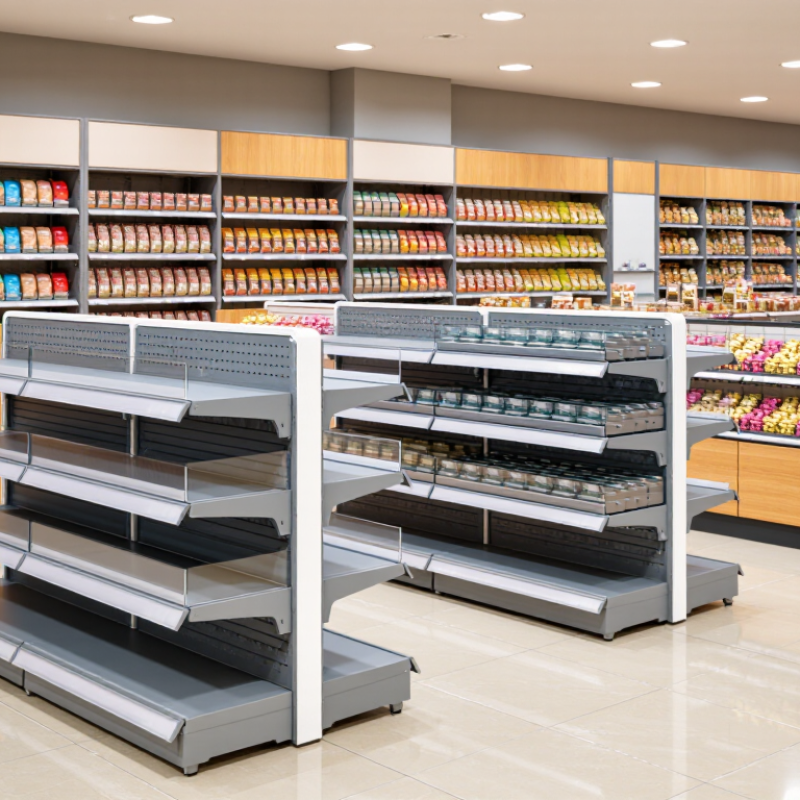
| Material Selection | Powder-coated steel, stainless steel, aluminum, tempered glass, or certified wood-based panels suitable for retail interiors. | Request material specifications, coating details, thickness information, and declarations for restricted substances. | Candy shelves must withstand frequent cleaning, product handling, humidity, and continuous retail use without excessive corrosion or surface deterioration. | High |
| Load Capacity | Common retail shelf configurations should support approximately 30–80 kg per shelf, depending on span, depth, and construction. | Ask for tested load ratings, shelf-span limits, evenly distributed-load conditions, and safety factors. | Packaged candy can create concentrated loads, particularly on lower shelves and promotional display areas. | High |
| Dimensional Accuracy | Finished dimensions should normally remain within approximately ±1–2 mm for critical assembled components. | Review dimensional inspection records, assembly drawings, tolerance requirements, and pre-shipment inspection procedures. | Accurate dimensions reduce installation problems and help shelves fit standardized retail layouts. | High |
| Surface Finish | Uniform powder coating or plating with consistent color, adhesion, edge coverage, and scratch resistance. | Check coating thickness, adhesion-test results, color references, sample approval procedures, and defect criteria. | Clean, durable surfaces improve visual presentation and reduce maintenance costs in high-traffic candy shops. | High |
| Food-Contact Safety | Display surfaces that directly contact unpackaged candy should comply with the destination market’s applicable food-contact requirements. | Confirm whether products are intended for packaged or unpackaged food, and request relevant material declarations or test reports. | Regulatory requirements can differ by market, and ordinary decorative materials may not be suitable for direct food contact. | High |
| Safety and Stability | Stable base design, rounded or protected edges, secure brackets, anti-tip features, and no exposed sharp points. | Review structural drawings, stability tests, installation instructions, and anchoring recommendations. | Retail shelving is used by staff and customers; stability and edge protection help prevent accidents and product loss. | High |
| Modular Design | Adjustable shelf heights, interchangeable hooks or baskets, compatible accessories, and expandable bays. | Request a component compatibility list, adjustment range, accessory catalog, and replacement-part policy. | Candy packaging varies in size, so flexible displays improve merchandising efficiency and seasonal reconfiguration. | High |
| Customization Capability | Ability to modify dimensions, colors, headers, signage areas, shelf depths, lighting provisions, and packaging. | Evaluate engineering drawings, prototype procedures, sample approval steps, and tooling or development charges. | Custom dimensions help buyers match local store layouts, product assortments, and visual merchandising guidelines. | Medium |
| Production Capacity | Capacity should be matched to the project schedule, with documented monthly output and reserved production windows. | Ask for capacity planning, production lead-time estimates, subcontracting information, and peak-season contingency plans. | Reliable capacity is important when opening multiple stores or completing promotional displays before fixed launch dates. | High |
| Minimum Order Quantity | Standard products may offer lower order quantities; customized projects often require higher quantities or setup charges. | Obtain separate quotations for standard, semi-custom, and fully customized orders, including tooling and sample costs. | Understanding order thresholds helps small retailers control inventory risk and compare suppliers fairly. | Medium |
| Quality Management | A documented quality system with incoming-material inspection, in-process checks, final inspection, and corrective-action records. | Request quality-control procedures, inspection checklists, nonconformity records, and audit evidence where available. | Consistent inspection reduces variation in dimensions, color, welding, hardware, and final assembly quality. | High |
| Testing and Compliance | Testing should be selected according to product materials, retail use, destination country, and applicable safety regulations. | Verify the issuing laboratory, report date, tested model, test scope, and whether the report matches the supplied product. | Valid, product-specific documentation supports customs clearance and reduces compliance risks in international markets. | High |
| Packaging Protection | Export packaging should protect corners, coated surfaces, glass, hardware, and assembled frames during repeated handling. | Review packaging drawings, carton specifications, drop-test procedures, moisture protection, and container-loading photographs. | Effective packaging lowers the likelihood of scratches, dents, breakage, and missing installation components. | High |
| Shipping and Incoterms | Quotations should clearly identify trade terms, port or destination, shipment method, packing basis, and documentation fees. | Compare EXW, FOB, CIF, and DAP quotations on the same specification and confirm export-document responsibilities. | Transparent shipping terms prevent hidden costs and make landed-cost comparisons more accurate. | High |
| Lead Time | Typical production schedules may range from approximately 20–60 days after design approval, depending on customization and quantity. | Confirm sample lead time, bulk production time, raw-material availability, holiday impacts, and delay procedures in writing. | Accurate lead-time planning helps coordinate store construction, merchandising, freight, and opening schedules. | High |
| After-Sales Support | Clear warranty terms, installation guidance, spare-part availability, and response procedures for quality claims. | Review warranty duration, exclusions, claim evidence requirements, replacement policy, and technical-support channels. | Prompt support limits downtime and simplifies repairs when displays are installed across multiple locations. | Medium |
| Sustainability | Efficient material use, recyclable packaging, durable construction, low-emission finishes, and repairable components. | Request recycled-content information, packaging-material details, environmental declarations, and waste-reduction practices. | Longer product life and reduced packaging waste can support sustainability goals and lower replacement costs. | Medium |
| Total Landed Cost | Evaluation should include product price, customization, tooling, inspection, packaging, freight, duties, installation, and maintenance. | Use a comparable cost sheet based on identical specifications, quantities, delivery terms, and destination requirements. | The lowest unit price may not provide the lowest total cost after freight, damage, installation, and replacement expenses. | High |