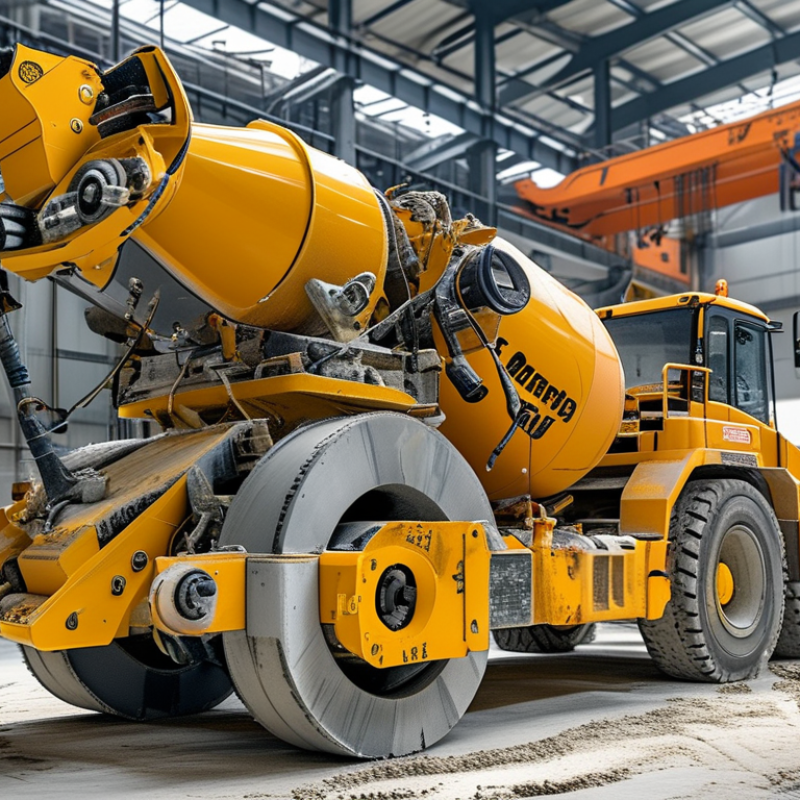
| Definition | A concrete intensive mixer is a high-shear mixing machine designed to rapidly blend cement, aggregates, water, admixtures, and other materials into a uniform concrete mixture. | It is suitable when consistent dispersion, short mixing cycles, and reliable material quality are required. |
| Mixing Principle | Rotating tools, paddles, or blades create strong turbulence, impact, folding, and shear inside a fixed mixing vessel. | The intensive action helps reduce material segregation and improves the uniformity of the final mix. |
| Common Mixer Types | Pan mixers, planetary mixers, twin-shaft mixers, and high-shear batch mixers. | The best configuration depends on concrete formulation, required output, moisture level, and installation layout. |
| Typical Batch Capacity | Approximately 0.25 to 6 cubic meters per batch for many industrial and precast applications. | Actual output depends on the mixer size, material density, loading ratio, and mixing cycle. |
| Mixing Cycle | Usually about 30 to 120 seconds after all main ingredients have entered the mixer; specialized formulations may require more time. | Cycle time should be confirmed through trials because aggregate size, moisture, additives, and workability affect performance. |
| Drive Power Range | Common installations may use roughly 15 to 250 kW, depending on mixer capacity, material resistance, and mixer design. | Motor selection should consider peak starting torque, continuous load, batch size, and local electrical standards. |
| Suitable Concrete Types | Ordinary concrete, dry-mix concrete, precast concrete, fiber-reinforced concrete, colored concrete, and high-performance concrete. | The mixer can be selected according to the required moisture content, fiber length, aggregate grading, and recipe complexity. |
| Aggregate Size | Many models handle aggregate sizes from fine powder up to approximately 40–80 mm, subject to the equipment design. | The maximum aggregate size must match the mixing chamber, blade clearance, and discharge system. |
| Discharge Method | Pneumatic, hydraulic, or mechanically operated bottom discharge gates are commonly used. | A well-designed discharge system reduces residue and supports faster batch turnover. |
| Key Wear Components | Mixing tools, liners, scraper arms, discharge seals, bearings, and shaft protection components. | Replaceable wear parts and abrasion-resistant materials can reduce maintenance downtime and operating costs. |
| Main Advantages | High mixing intensity, good homogeneity, short cycle times, efficient additive dispersion, and adaptable batch production. | These features are valuable for precast plants, concrete product factories, and demanding construction-material applications. |
| Limitations | Higher energy demand, greater wear under abrasive conditions, and a higher initial investment than basic low-intensity mixers. | A lifecycle cost comparison should include electricity, wear parts, maintenance, labor, and expected production volume. |
| Recommended Applications | Precast components, paving blocks, concrete pipes, dry-cast products, ready-mix plants, and specialized cement-based materials. | The equipment is especially useful where repeatable recipes and stable product quality are important. |
| Selection Criteria | Batch volume, concrete recipe, aggregate size, moisture content, required cycle time, available power, layout, and automation requirements. | A supplier should evaluate the complete production process rather than selecting equipment only by nominal capacity. |
| Maintenance Considerations | Routine inspection of wear liners, mixing tools, seals, bearings, lubrication points, safety devices, and discharge gates. | Regular maintenance helps preserve mixing quality, prevent leakage, and extend equipment service life. |