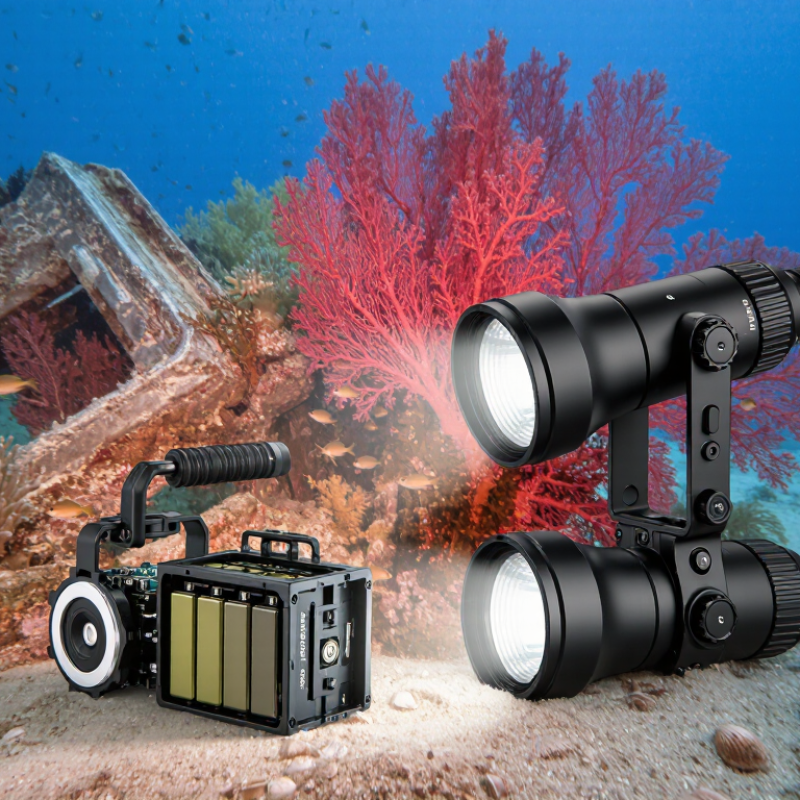
| LED light engine | High-power light-emitting diodes convert electrical energy into visible light. Multiple LEDs may be arranged to provide broad, even illumination. | LEDs offer efficient, compact lighting and can provide continuous illumination for video as well as still photography. | Review stated output, beam coverage, color characteristics, and whether performance figures describe the complete light or individual LEDs. |
| Optical beam shaping | Reflectors, lenses, and diffusers direct and spread light from the LED array. | A suitably wide, even beam helps illuminate a scene without creating harsh hotspots or dark edges. | Compare beam angle and underwater coverage. A diffuser can soften the beam but may reduce intensity. |
| Color temperature and color rendering | LED selection and optical design determine the light’s color appearance and how well it reveals subject colors. | Water absorbs and scatters light, so artificial illumination can help restore color in nearby subjects. Results also depend on distance, water clarity, and camera settings. | Check published color-temperature and color-rendering data when available; do not assume that similar-looking lights render colors identically. |
| Thermal management | Heat moves from the LEDs and driver into a heat spreader or housing. The surrounding water can help carry heat away during use. | Controlling heat helps maintain stable operation and reduces the risk of thermal damage or output reduction. | Look for a robust heat-conducting design and clear guidance about operation in and out of water. |
| Pressure-resistant housing | A sealed enclosure protects the light’s electronics from water pressure at its specified operating depth. | Housing strength and sealing are essential for underwater reliability; a depth rating applies only to the tested or specified configuration. | Check the stated depth rating, test conditions, service guidance, and whether accessories affect the rating. |
| O-ring sealing system | Elastomer O-rings create seals at interfaces such as battery compartments and charging ports. | Clean, undamaged, correctly lubricated seals help prevent water ingress during dives. | Confirm seal locations, inspection instructions, replacement availability, and recommended maintenance practices. |
| Battery and power management | A rechargeable battery supplies power through a driver circuit that regulates current to the LEDs. | Regulated power can support consistent illumination, while battery capacity affects runtime and overall system weight. | Compare runtime at each output setting, charging method, battery replacement options, and low-battery indications. |
| Output control and protection | Electronic controls may provide selectable brightness levels and protections such as over-temperature or low-voltage response. | Adjustable output helps manage exposure, conserve battery power, and adapt illumination to different subjects. | Check control usability with gloves, available output settings, and documented protection features. |
| Mounting and camera integration | Mounting interfaces, arms, and compatible adapters attach the light to an underwater camera rig. | Secure mounting allows the photographer to position the beam independently of the camera lens and reduce unwanted reflections. | Verify mount compatibility, adjustment range, and the rig’s balance with the light installed. |
| Quality assurance and validation | Manufacturers may use inspection and functional tests to check illumination, controls, charging, and sealing. | Consistent production and documented testing can help identify defects before equipment is used underwater. | Ask for applicable test procedures, warranty terms, and maintenance instructions. A test claim should specify what was tested and under which conditions. |