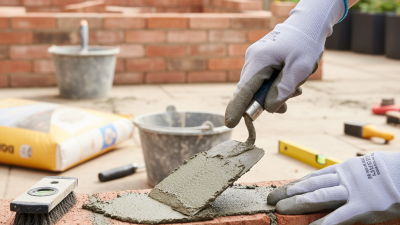
China Best Mortar Cement Manufacturers and Suppliers

China’s mortar cement industry is expanding through infrastructure, housing, and renovation demand. Yet product selection requires more than comparing factory prices. Strength, workability, setting time, water retention, and compatibility with local masonry standards can change project performance.

The International Energy Agency reports that cement production contributes about 7% of global energy-related and process carbon dioxide emissions. The Global Cement and Concrete Association also estimates that more than 14 billion cubic metres of concrete are produced globally each year. These figures explain why buyers increasingly examine clinker content, alternative fuels, recycled materials, and verified environmental declarations. China’s manufacturers are responding, but quality still differs between plants and batches.

Masonry specialist David Biggs describes mortar as “the sacrificial joint” in masonry construction. This practical view matters. A mortar joint should protect the masonry units, accommodate movement, and allow maintenance. It should not simply be the hardest material on the wall.

This guide reviews China’s best mortar cement manufacturers and suppliers through technical capability, certification, export experience, laboratory control, and after-sales support. It considers dry-mix mortar, cement-based masonry mortar, repair products, and application-specific formulations. Buyers should request test reports, safety data sheets, production dates, and samples before signing large contracts. Small details matter, especially a bag stored beside a damp warehouse door.

Some industry rankings remain imperfect. Supplier capacity figures are not always independently audited. “Mortar cement” may also describe different products across markets. Careful verification remains essential.

China Best Mortar Cement Manufacturers and Suppliers

Definition and Role of Mortar Cement in Construction

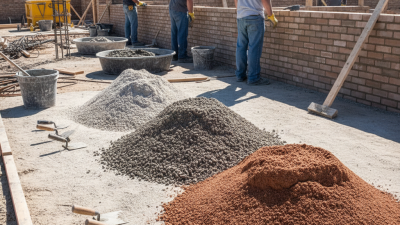
In construction, mortar cement is the hydraulic binder used to join masonry units. Mortar is not concrete. When mixed with sand, water, and selected admixtures, it forms a workable material for walls, joints, rendering, and repairs. After curing, it bonds bricks or blocks, transfers loads, seals gaps, and helps walls resist rain and temperature changes. Site experience shows that workability often matters as much as strength.

According to the International Energy Agency’s 2023 cement tracking report, cement production creates about 7% of global carbon dioxide emissions. This figure makes binder selection an important construction decision. The report identifies clinker reduction and improved material efficiency as major decarbonization measures. Supplementary cementitious materials can reduce clinker demand, but lower carbon does not automatically mean better mortar. An under-strength mix may crack, absorb water, or fail at the joint.

EN 998-2 classifies masonry mortars through declared compressive-strength classes, including M5, M10, and M20. ASTM C270 also evaluates mortar by strength and proportion specifications. These standards support reliable specification, but field conditions still matter. On a hot wall, rapid water loss can weaken adhesion. Excess water may improve handling briefly, then reduce durability. Small errors matter. A practical mix should balance strength, water retention, bond, and movement tolerance. More cement is not a complete solution. That assumption deserves review.

Key Product Types Offered by Chinese Mortar Cement Manufacturers

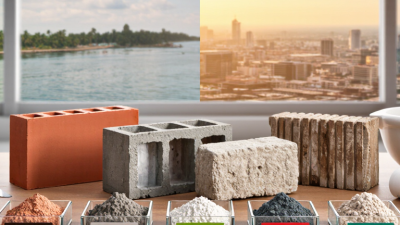
Chinese mortar cement manufacturers commonly supply dry-mix products for different construction tasks. Masonry mortar supports brick and block walls, with grades tailored to load and absorption. Plastering mortar creates a smoother wall surface. Some formulations include fibers or polymers to reduce cracking. Factory blending improves proportion control, yet site water can still change workability. That detail is easy to underestimate.

Tile adhesive is another major category, ranging from standard cement-based mixes to flexible products for large-format tiles. Repair mortar suits chipped concrete, shallow holes, and edge restoration. Non-shrink grout fills gaps beneath machinery bases or structural plates. Self-leveling mortar spreads across interior floors and forms a flatter base for finishes. Each type needs a compatible substrate, thickness, and curing period.

Reliable suppliers usually provide technical data sheets, batch numbers, mixing ratios, and test records. Buyers should check bond strength, compressive strength, water retention, setting time, and freeze-thaw performance when relevant. A sample trial on the actual substrate is more useful than a catalogue claim. Packaging must resist moisture during transport and storage. Even experienced contractors can misjudge open time in hot, windy weather. Not every premium mix solves poor surface preparation.

Manufacturing Standards and Quality Control in China

China Best Mortar Cement Manufacturers and Suppliers

Manufacturing Standards and Quality Control in China

Reliable mortar cement production starts with controlled raw materials. Suppliers should test limestone, clay, gypsum, and mineral additives before batching. Moisture levels can change grinding efficiency and mortar consistency. Small details matter.

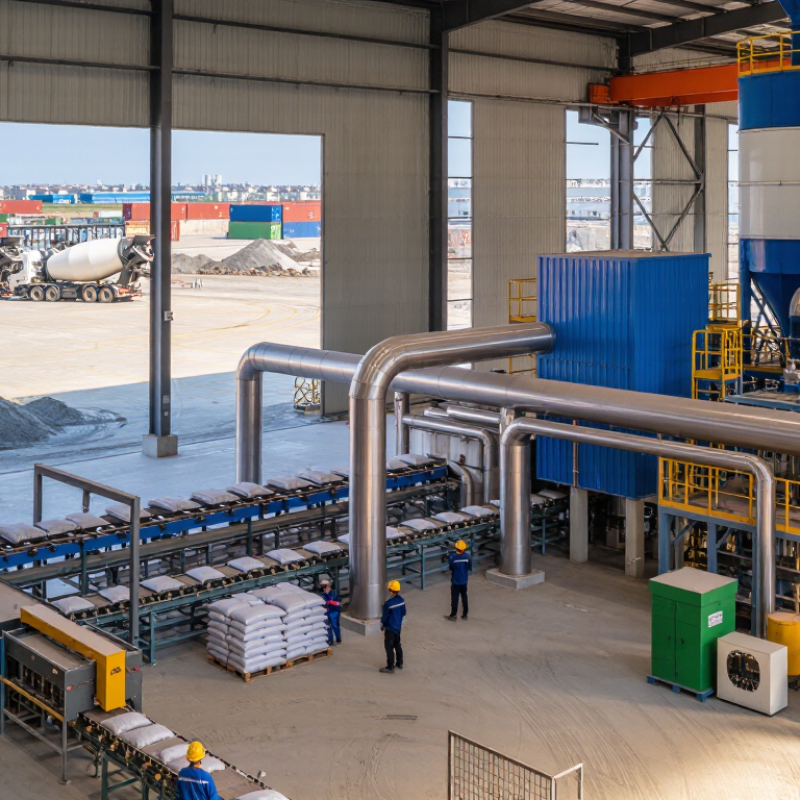
Qualified factories normally follow applicable Chinese GB or GB/T standards, project specifications, and documented internal procedures. Their laboratories should check fineness, setting time, soundness, strength, and chemical composition. For dry-mix mortar, technicians also measure water retention, workability, bulk density, and sieve residue. Calibrated balances and testing machines are essential. Records tell the story.

Strong quality control continues after production. Each batch needs a traceable code, production date, test report, and controlled storage location. Professional suppliers can provide certificates of analysis, safety data, and independent laboratory results when required. Auditors should inspect silos, packing lines, dust collection systems, and moisture protection. A clean warehouse is not enough. Staff training and corrective-action records matter too. Site inspections often reveal practical weaknesses, such as torn bags or unclear labels. No factory is flawless. The important question is whether problems are detected, investigated, and corrected. Buyers should compare retained samples with delivered material and test trial mixes before full-scale use. One overlooked variable can affect adhesion, cracking resistance, and curing performance on site.

How to Evaluate Chinese Mortar Cement Suppliers

China Best Mortar Cement Manufacturers and Suppliers

How to Evaluate Chinese Mortar Cement Suppliers

China’s cement output reached about 2.02 billion tonnes in 2023, according to China’s National Bureau of Statistics. This scale creates many supplier choices, but volume does not prove mortar quality. Request recent test reports for compressive strength, water retention, setting time, and particle size. Check whether laboratories use recognized standards, such as EN 998-2 or ASTM methods. Ask for batch numbers and production dates. A serious supplier should explain variations clearly.

I also examine factory controls, not only product samples. The International Energy Agency reports that cement production causes roughly 7% of global energy-related carbon dioxide emissions. Therefore, ask about clinker content, alternative materials, energy records, and dust-control systems. Audit the mixing line if possible. Observe sealed bags, clean storage areas, and moisture protection. A polished sample may hide weak process discipline. I once trusted a detailed specification too quickly; the delivered mortar behaved differently under humid site conditions. That mistake still matters.

Tips: Compare at least three quotations using the same specification. Test an independent sample before signing a large order. Verify certificates with the issuing laboratory. Check packaging strength after transport simulation. Ask for a small pilot shipment. Do not accept vague claims such as “high quality.” Record delivery consistency, complaint response time, and replacement terms. No checklist is perfect. Local climate and masonry type can change the result.

Export Services, Pricing Factors, and Buyer Considerations

China Best Mortar Cement Manufacturers and Suppliers

Export Services, Pricing Factors, and Buyer Considerations

Reliable mortar cement suppliers should provide more than a competitive quotation. Experienced exporters usually confirm the intended application, substrate, climate, and required strength before recommending a formulation. Masonry mortar for interior walls differs from render mortar exposed to heavy rain. Ask for technical data, safety documents, batch numbers, and recent test results. Independent laboratory verification is useful when projects involve strict performance requirements.

Export pricing depends on cement grade, polymer additives, packaging, order volume, and production timing. Freight rates, port charges, currency changes, and delivery terms can also alter the final cost. A low factory price may hide expensive moisture damage during transit. I have seen poorly sealed bags arrive with hard lumps, making the apparent saving meaningless. Waterproof inner packaging, pallet wrapping, and container loading photos deserve attention.

Professional suppliers should explain lead times and provide clear export documents. Confirm whether prices include inspection, palletization, customs paperwork, and ocean freight. Request a small sample before placing a large order. Test its workability, setting time, adhesion, and water retention on the actual substrate. Do not rely only on a polished brochure. Some technical advice sounds precise but remains untested in your local conditions. A written quality agreement can define acceptable strength, packaging condition, shelf life, and procedures for handling inconsistent batches.

China Best Mortar Cement Manufacturers and Suppliers - Export Services, Pricing Factors, and Buyer Considerations

Buyer-oriented comparison of commonly available mortar cement products, export services, commercial terms, and quality checks. Figures are indicative industry ranges and should be confirmed in the final quotation.

Supplier or Product Category Typical Product and Technical Characteristics Common Export Format or Commercial Range Key Buyer Considerations
General-purpose masonry cement Cementitious material formulated for mortar, masonry, rendering, and general non-structural applications. Performance depends on strength class, setting time, water retention, and compatibility with sand.
  • Usually supplied in 25 kg, 40 kg, or 50 kg bags
  • Bulk shipment may be available for large projects
  • Common order planning: one or more full containers
Request a technical data sheet, recommended mix proportions, storage instructions, and test results for compressive strength and setting time. Confirm whether the product is intended for masonry mortar, plastering, or both.
Portland cement used in mortar blends Hydraulic cement commonly blended with sand, lime, mineral additions, or proprietary admixtures. Strength and durability depend on the cement type, blend design, curing conditions, and local standards.
  • Bagged or bulk delivery
  • Typical international grades include 32.5, 42.5, or equivalent local classifications
  • ASTM, EN, or other national-standard documentation may be available
Match the requested grade and standard to the destination market. Do not compare prices across different strength classes without checking clinker content, test age, and applicable conformity requirements.
Factory-produced dry mortar supplier Pre-blended dry mortar may include cement, graded aggregates, mineral fillers, and chemical admixtures. It can provide more consistent site performance than manually proportioned materials when correctly applied.
  • Often packed in moisture-resistant multi-layer bags
  • Product types may include masonry mortar, plastering mortar, tile adhesive, repair mortar, and grout
  • Requires dry storage and controlled water addition
Evaluate formulation, aggregate grading, open time, adhesion, water retention, and application method. Confirm whether the product requires local sand adjustment or specialized mixing equipment.
Bulk cement export supplier Suitable for large construction programs, ready-mix operations, precast facilities, and projects with silo or pneumatic unloading equipment.
  • Delivered in bulk vessels, pneumatic trucks, or bulk containers
  • Lower packaging cost than bagged shipment
  • Requires compatible storage and unloading infrastructure
Confirm silo capacity, moisture protection, unloading connections, port restrictions, demurrage terms, and whether the quoted price includes inland transport, loading, inspection, and port handling.
Bagged cement export supplier Designed for markets where retail or job-site handling is required. Packaging may use paper sacks, woven polypropylene bags, or laminated moisture-resistant bags.
  • Common bag sizes: 25 kg, 40 kg, and 50 kg
  • Container loading is affected by bag weight, palletization, and local weight limits
  • Private-label packaging may be available, subject to order volume
Check bag strength, stitching or valve quality, pallet configuration, container moisture protection, printed batch information, and net-weight tolerance. Ask for loading photos before shipment when appropriate.
Typical export documentation service Export support commonly includes commercial documents and product compliance records required for customs clearance and technical review.
  • Commercial invoice and packing list
  • Bill of lading or equivalent transport document
  • Certificate of origin where applicable
  • Inspection or laboratory test report when required
Confirm document availability before placing the order. The buyer should verify destination-country labeling, import permits, conformity certificates, safety data requirements, and legalization or notarization needs.
Indicative production and dispatch timing Manufacturing time depends on stock status, formulation, packaging design, testing requirements, production capacity, and port schedules.
  • Stock products may dispatch faster than customized products
  • Customized packaging generally requires artwork approval and production planning
  • Ocean transit time varies substantially by destination and route
Obtain a written production schedule, inspection date, estimated vessel departure, transshipment information, and contingency plan for port congestion or weather-related delays.
Main pricing factors The quoted export price is influenced by raw materials, energy, cement type, strength class, packaging, order volume, inland freight, port charges, ocean freight, insurance, and exchange-rate movements.
  • Ex-works, FOB, CFR, CIF, and other Incoterms produce different landed costs
  • Bagged products usually carry higher packing and handling costs than bulk products
  • Smaller orders generally have higher unit logistics costs
Compare offers on the same basis: product grade, packing method, quantity, Incoterm, destination port, inspection scope, payment terms, and validity period. Calculate total landed cost rather than comparing the factory price alone.
Minimum order and container planning Minimum order quantity varies by product, packaging format, production schedule, and shipping method. A full container is often more economical than a small mixed shipment.
  • Full-container orders are commonly planned around the container's permitted payload
  • Actual loading weight depends on port, carrier, road, and destination regulations
  • Mixed products may require additional handling or approval
Ask for the maximum legal payload, loading pattern, pallet or loose-bag arrangement, container type, and whether moisture absorbers or liners are included. Confirm all weight restrictions before booking.
Quality-control checkpoints Important checks include chemical composition, fineness, soundness, setting time, compressive strength, moisture, packaging integrity, and batch consistency.
  • Pre-shipment inspection can be arranged by the buyer or an independent agency
  • Retained samples support later dispute resolution
  • Test methods must correspond to the declared standard
Include acceptance criteria in the purchase contract. Define sampling method, testing laboratory, allowable deviations, claim period, replacement obligations, and responsibility for inspection costs.
Payment and contract terms Commercial terms may include a deposit with balance before shipment, documentary payment arrangements, or other methods agreed after commercial and compliance review.
  • Payment risk increases when specifications and inspection rights are unclear
  • Contracts should identify product standard, quantity tolerance, packing, delivery term, and dispute process
  • Quotation validity should be stated because freight and energy costs can change
Use a detailed pro forma invoice and purchase contract. Verify the legal entity, bank-account consistency, export capability, insurance responsibilities, and procedure for handling quality or quantity claims.
Storage and shelf-life considerations Cement is moisture-sensitive. Exposure to humidity can cause premature hydration, hard lumps, reduced workability, and lower performance.
  • Store on pallets in a dry, covered, well-ventilated area
  • Keep bags away from direct contact with floors and walls
  • Use stock rotation based on manufacturing date and batch number
Confirm the recommended storage period from the technical documentation and local regulations. Inspect bags on arrival and record damaged packaging, visible lumps, batch numbers, and container condition.

Important: Product standards, test values, order quantities, delivery schedules, and prices vary by specification, destination, and market conditions. Buyers should obtain current technical documents, a formal quotation, and independent verification before signing a purchase contract.

Find the Right Repair Product for Your Project

Need to find the most appropriate product for the needs of your project? We can help because we have over 70 years of experience servicing the industry with every kind of project, from Do-it-yourself projects to large skyscrapers. Package Pavement has the experience, the knowledge and the products to help every project succeed.

Quikrete Repair Products
Legend
Package Pavement has two convenient locations in Stormville, NY (Dutchess County) and Ravena, NY (Greene County) to serve the Northeastern Region with bagged concrete, blacktop, mortar, and repair products. This map gives a general idea of where we service and the product lines we offer.
Package Pavement Products
Quikrete Products
Spec Mix Products
map

Our Brands Websites