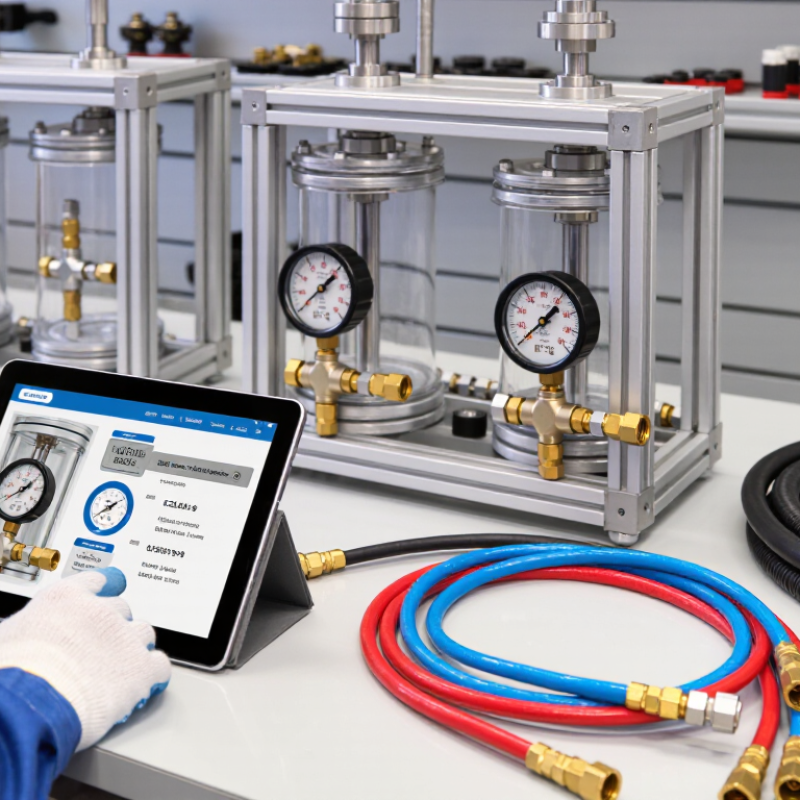
When comparing hydraulic hose pressure testers from Chinese manufacturers, start with measurable specifications, not catalog claims. ISO 1402:2021 requires hydraulic hose assemblies to undergo hydrostatic pressure testing. ISO 6803:2017 also defines impulse testing conditions. A suitable tester should support these methods, with calibrated pressure sensors, automatic data recording, and emergency shutdown protection.
Pressure range is critical. Choose a working range that exceeds the hose’s rated pressure without sacrificing measurement accuracy. Many industrial hoses operate between 10 and 40 MPa, while specialized assemblies may require higher levels. The 2024 Global Hydraulic Hose Market analysis estimates steady market growth through 2030, driven by construction, agriculture, and industrial equipment. This suggests wider testing demand, but not every low-cost tester offers stable results.
Check impulse frequency, cycle capacity, temperature control, and fixture compatibility. A practical system should handle repeated pulses, visible leakage detection, and test reports with timestamps. Ask for calibration certificates traceable to recognized laboratories. Confirm whether replacement seals and sensors are available locally. Small details matter.
One overlooked issue is software usability. Complex screens slow inspections. I have seen technically capable testers lose value because operators misunderstood alarm settings. Request sample reports, factory acceptance records, and video evidence of a full test cycle. Certification alone is not enough. Verify the details.