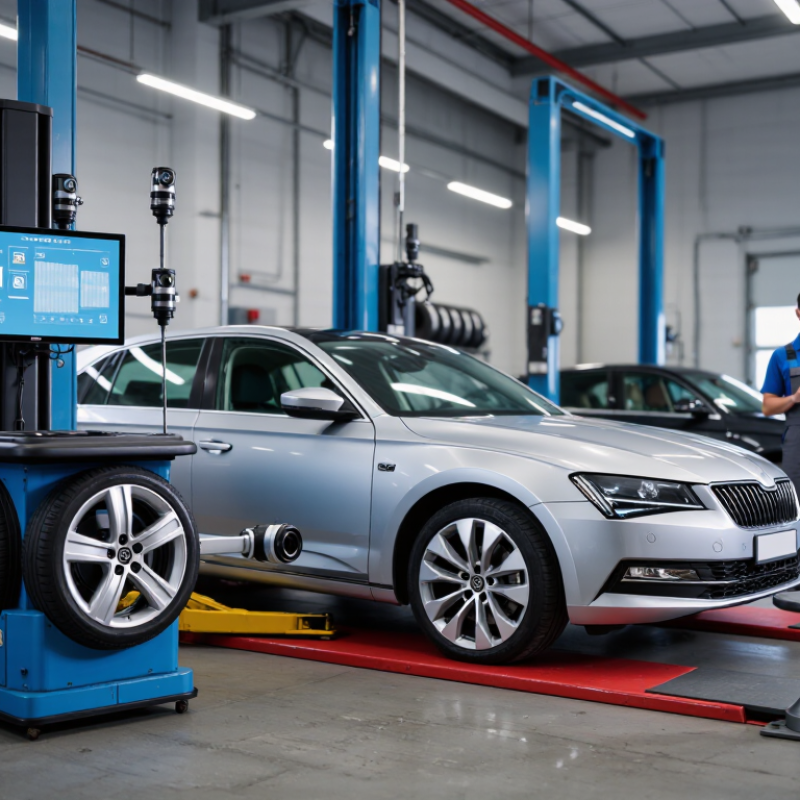
Best Front Wheel Alignment Machine Manufacturer in China
Key Features to Compare When Choosing a Machine
A front wheel alignment machine should deliver repeatable readings, not merely impressive graphics. Compare measurement accuracy, target durability, and how quickly the system identifies caster, camber, and toe errors. Ask for documented accuracy specifications and a live demonstration using a vehicle with uneven tire wear. A large screen can still hide a weak workflow.
Confirm that the vehicle database covers your common models and receives regular updates. S&P Global Mobility reported that the average age of U.S. light vehicles reached 12.6 years in 2024, making broad coverage of older vehicles important for many repair shops.
Check the basics. Ensure the machine fits your lift, bay width, and available floor space. Verify that turntables and rear slip plates move freely, since binding can affect measurements. Compare how the system compensates for wheel runout, stores before-and-after readings, and produces customer-friendly reports.
Ask about calibration intervals, spare parts, training, and remote technical support. These details shape daily uptime as much as the sensor design. A quick setup may sound ideal, but test it with real staff and a typical workday. I would not choose on headline accuracy alone; ease of use and dependable service can matter more once the machine is installed.