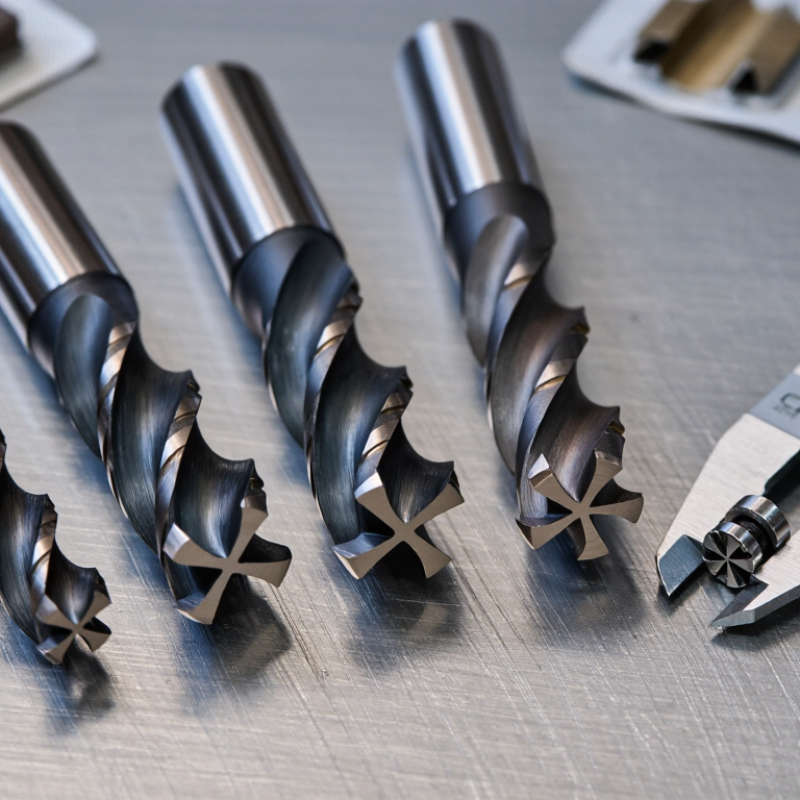
| Tool material | Solid carbide and high-speed steel are common material categories. Solid carbide is often selected for high-speed machining and rigidity; high-speed steel may suit less demanding applications. | Confirm the material grade, workpiece material, machine capability, and recommended cutting conditions. |
| Cutting geometry | Two-flute and multi-flute designs are available. A Ball Nose End Mill has a rounded cutting end for 3D contours, radiused surfaces, and finishing operations. | Specify flute count, neck or reach length, overall length, and whether roughing or finishing is the priority. |
| Dimensions | Common specification fields include cutting diameter, ball radius, shank diameter, flute length, and overall length. Metric and inch-based specifications can be requested. | Provide a drawing or dimensioned specification. Confirm tolerances and measurement methods before production. |
| Coating and surface treatment | Uncoated tools and coatings such as TiAlN or AlTiN are offered in the market. Suitable coating choice depends on the workpiece, cutting temperature, and machining conditions. | Ask for the coating type, intended application, and compatibility with the material being machined. |
| Customization | Custom diameter, radius, flute length, shank size, overall length, geometry, and packaging may be available subject to the supplier's production capability. | Submit a drawing, required quantity, material, application, and any inspection or marking requirements. |
| Quality documentation | Buyers may request dimensional inspection records, material information, coating details, or a sample for evaluation. | Agree on the inspection scope, acceptance criteria, sample approval process, and documents required before ordering. |
| Export quotation | A quotation commonly identifies the specification, quantity, unit price, currency, packaging, lead time, and delivery term. | Confirm the named place of delivery, shipping method, quotation validity, payment terms, and which party arranges freight and export clearance. |
| Packaging and shipment | Tools are generally packed to protect cutting edges during handling and transport. Carton or pallet arrangements depend on order size and shipping requirements. | Confirm packaging quantity, labeling, destination details, shipping documents, and any import or marking requirements. |
| Supplier communication | Clear communication typically covers technical clarification, quotation follow-up, sample approval, production updates, and shipment tracking. | Agree on a primary contact, response channel, update frequency, and the documents or photos to be shared at each stage. |
| Order planning | Production lead time and minimum order quantity vary by specification, customization, and current capacity. | Request confirmation of lead time and quantity requirements for the exact specification before placing the order. |