| Raw materials | Copper and copper alloys, electrical steel, engineering plastics, thermosetting insulating materials, and contact materials. | Provide the conductive paths, magnetic parts, insulation, and switching contacts used in breaker assemblies. | Check material specifications, traceability where required, and suitability for the intended current, temperature, and operating environment. |
| Component manufacturing | Contacts, terminals, arc chutes, springs, molded housings, trip units, and operating mechanisms. | Specialist component makers supply parts that are assembled into miniature, molded-case, air, residual-current, and related breaker products. | Confirm component consistency, drawings and revision control, incoming inspection, and whether critical parts are made in-house or sourced from subcontractors. |
| Breaker design and engineering | Product ratings, pole configurations, thermal-magnetic or electronic trip settings, and enclosure designs. | Defines how a breaker responds to overloads, short circuits, or residual-current conditions, depending on product type. | Match rated voltage, current, breaking capacity, frequency, trip characteristics, and installation conditions to the application and local requirements. |
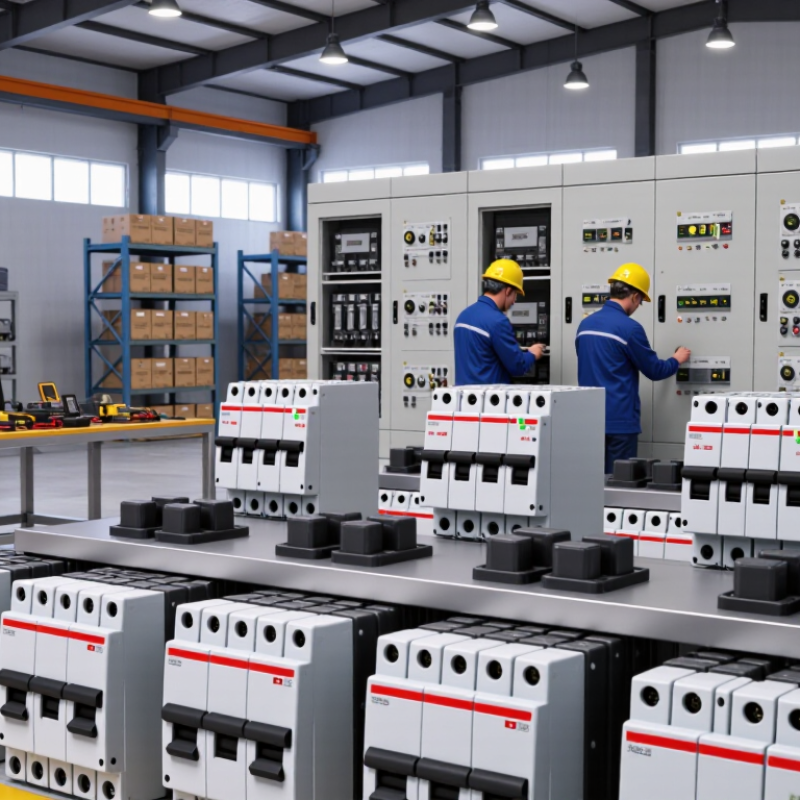
| Assembly and production | Subassemblies, molded parts, contacts, mechanisms, labels, and product-specific accessories. | Assembly lines bring together mechanical, electrical, and protective components; production methods and automation vary by product and manufacturer. | Ask about process controls, calibration, production records, lot identification, change management, and inspection of outsourced operations. |
| Testing and quality control | Routine checks and, where applicable, design or type testing against relevant product requirements. | Checks may cover electrical performance, operation, temperature rise, dielectric properties, and short-circuit performance, according to the applicable standard and product scope. | Review reports for the exact model and rating. Verify the test laboratory, report scope, certificate validity, and whether the tested configuration matches the supplied product. |
| Product standards and conformity | Applicable standards may include IEC 60898-1 for certain household and similar-installation circuit breakers, IEC 60947-2 for circuit breakers within its scope, IEC 61008-1 for RCCBs, and IEC 61009-1 for RCBOs. | Standards differ by device type, intended use, rating, and destination market; a single standard does not cover every breaker category. | Confirm the applicable edition and national adoption, required certification or marking, and any local approval rules before placing an order. |
| Packaging and export logistics | Individual packaging, cartons, pallets, shipping documents, and product labels. | Finished goods move from production or consolidation points to ports, distributors, project sites, or other destinations. | Agree on packaging, labeling language, carton quantities, delivery terms, export documentation, lead-time assumptions, and responsibility for freight and insurance. |
| Import, distribution, and after-sales support | Import clearance, local warehousing, technical documentation, replacement products, and warranty handling. | Importers and distributors help connect exported products with local installation channels and service requirements. | Establish warranty terms, spare-parts availability, complaint handling, technical support response, and responsibility for local compliance and installation guidance. |