



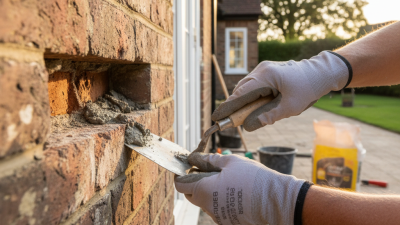
What is Cement Repair and How Can It Benefit Your Projects?

Cement repair is a crucial aspect of maintaining and enhancing various construction projects. Its significance lies in the ability to restore damaged concrete surfaces effectively. This process not only improves the aesthetics but also extends the lifespan of structures. Many construction professionals recognize that cement repair can save costs by avoiding complete replacements.

Understanding the nuances of cement repair is essential for successful project outcomes. Knowledgeable contractors apply specific techniques to address cracks, surface imperfections, and overall degradation. Using high-quality materials and following best practices ensures long-lasting results. However, improper application can lead to recurring issues, highlighting the need for experience in the field.

In exploring cement repair, it’s vital to acknowledge potential challenges. Each project may present unique conditions, requiring tailored solutions. As such, the importance of expert guidance cannot be overstated. A well-executed cement repair project not only enhances safety but also reflects professionalism. Investing time and resources into this process can yield significant benefits for any construction endeavor.

What is Cement Repair and How Can It Benefit Your Projects?

What Is Cement Repair and Its Role in Construction Projects?

Cement repair plays a vital role in the construction industry. It addresses common issues like cracking and spalling, which can arise from environmental wear or poor installation. According to a recent industry report, up to 28% of concrete structures face deterioration within the first few years. This emphasizes the need for effective repair methods.

In many projects, the focus on cement repair can save time and resources. For example, a study revealed that investing in repair can lead to a 50% reduction in future maintenance costs. When repair is prioritized, projects can maintain structural integrity over time. This approach often translates to fewer disruptions and lower safety hazards.

However, challenges exist. Many contractors may overlook regular inspections, potentially leading to higher repair costs later. This negligence can result in project delays and budget overruns. Awareness and active management are crucial for successful outcomes. Investing in training for workers on the latest repair techniques can yield long-term benefits.

Types of Cement Repair Techniques Used in the Industry

What is Cement Repair and How Can It Benefit Your Projects?

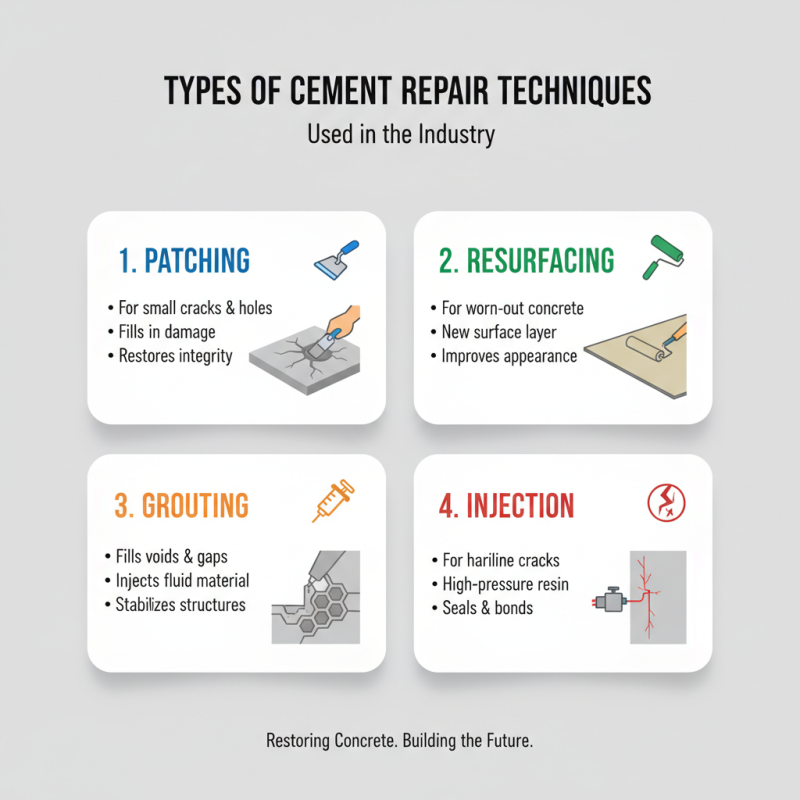
Cement repair encompasses various techniques designed to restore the integrity and appearance of concrete structures. Common methods include patching, resurfacing, grouting, and injection. Each technique serves a specific purpose, addressing different types of damage. Patching is ideal for filling small cracks and holes, while resurfacing provides a new surface layer for worn out concrete.

Grouting is essential for stabilizing soil and filling voids beneath slabs. Injection techniques target structural cracks, preventing water infiltration and further deterioration. These methods require expertise to choose the right application. Inexperienced use could lead to inadequate repairs and more issues.

Proper assessment is key before embarking on any repair. Not all techniques are suitable for every situation. The choice of the wrong method can cause future complications. This highlights the importance of consulting with professionals who understand the nuances of cement repair techniques.

Benefits of Cement Repair for Longevity and Structural Integrity

Cement repair offers significant benefits for longevity and structural integrity. According to the American Concrete Institute (ACI), properly repaired concrete can extend the life of structures by 30% or more. This contributes to lower maintenance costs over time, making it a valuable investment for both residential and commercial projects.

Effective cement repair addresses common issues like cracking and spalling. The World of Concrete estimates that up to 50% of existing concrete structures require repair. Ignoring these problems can lead to serious safety hazards. Immediate attention to repairs can enhance the overall durability of the structure.

However, not all repair methods are foolproof. Poor workmanship or subpar materials can result in short-lived solutions. Regular inspection and maintenance are crucial. Professionals recommend assessing concrete structures every five years to catch early signs of deterioration. Awareness and proactive measures are key to preserving structural integrity.

Benefits of Cement Repair for Longevity and Structural Integrity

Cost-Effectiveness of Cement Repair Compared to Full Replacement

Cement repair is becoming a viable option for many construction projects, offering significant cost savings over full replacements. According to a report by the American Concrete Institute, repair costs can be as low as 30% of the expenses associated with complete concrete replacement. This statistic shows that, in many cases, repair not only saves money but also time.

The benefits extend beyond finances. Repairing existing structures can reduce waste and minimize disruption. A study by the Federal Highway Administration states that rehabilitation can extend the lifespan of concrete by an average of 10 to 15 years if done correctly. However, it's important to assess the original damage accurately. Overlooking critical factors can lead to inadequate fixes and recurring issues.

Skill and expertise are paramount in cement repair. A poorly executed repair might only provide a temporary solution, leading to further repairs down the line. Investing in quality workmanship and using appropriate materials is essential to ensure durability and reliability. Knowing that nearly 20% of repairs fail within a few years highlights the importance of these factors.

Industry Statistics on Cement Repair Efficiency and Success Rates

What is Cement Repair and How Can It Benefit Your Projects?

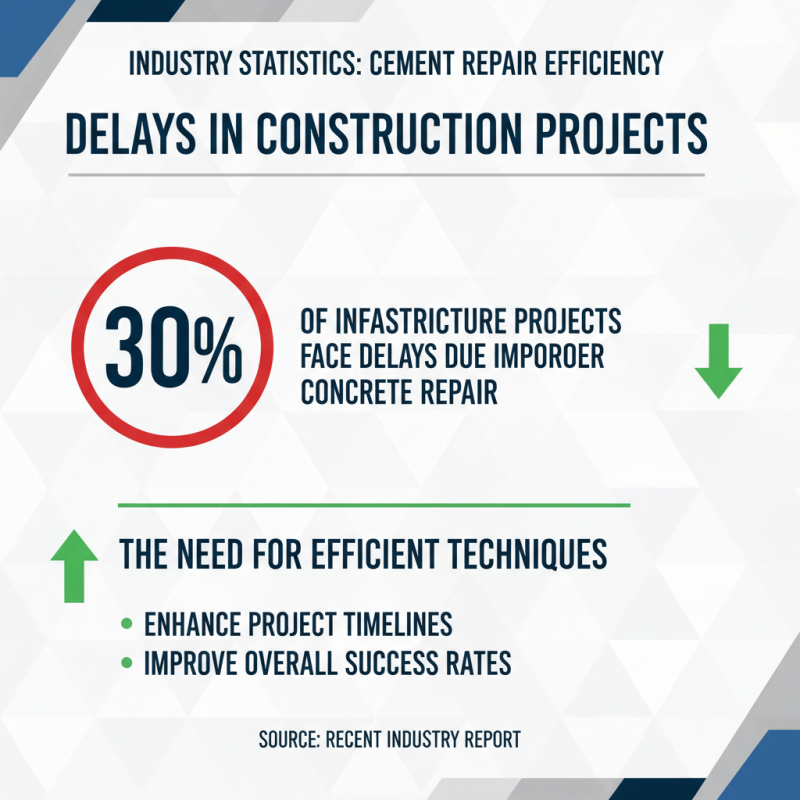
Cement repair plays a crucial role in the construction industry. According to a recent industry report, more than 30% of infrastructure projects face delays due to improper concrete repair methods. This statistic highlights the need for efficient techniques that can enhance project timelines and overall success rates.

The same report indicates that successful cement repairs can boost durability by nearly 40%. This durability translates into cost savings over time, as structures require less frequent maintenance. Moreover, approximately 80% of professionals surveyed believe that investing in quality repair methods improves project reliability. However, only about 50% of projects utilize best practices, leading to inconsistencies in outcomes.

Not all repair methods achieve expected results. Many workers report challenges due to inadequate training and improperly mixed materials. These factors can undermine the entire project, making it vital to prioritize skilled labor and proper guidelines. Addressing these gaps can significantly elevate the success rates of cement repair projects, leading to more sustainable and reliable infrastructure.

Find the Right Repair Product for Your Project

Need to find the most appropriate product for the needs of your project? We can help because we have over 70 years of experience servicing the industry with every kind of project, from Do-it-yourself projects to large skyscrapers. Package Pavement has the experience, the knowledge and the products to help every project succeed.

Quikrete Repair Products
Legend
Package Pavement has two convenient locations in Stormville, NY (Dutchess County) and Ravena, NY (Greene County) to serve the Northeastern Region with bagged concrete, blacktop, mortar, and repair products. This map gives a general idea of where we service and the product lines we offer.
Package Pavement Products
Quikrete Products
Spec Mix Products
map

Our Brands Websites