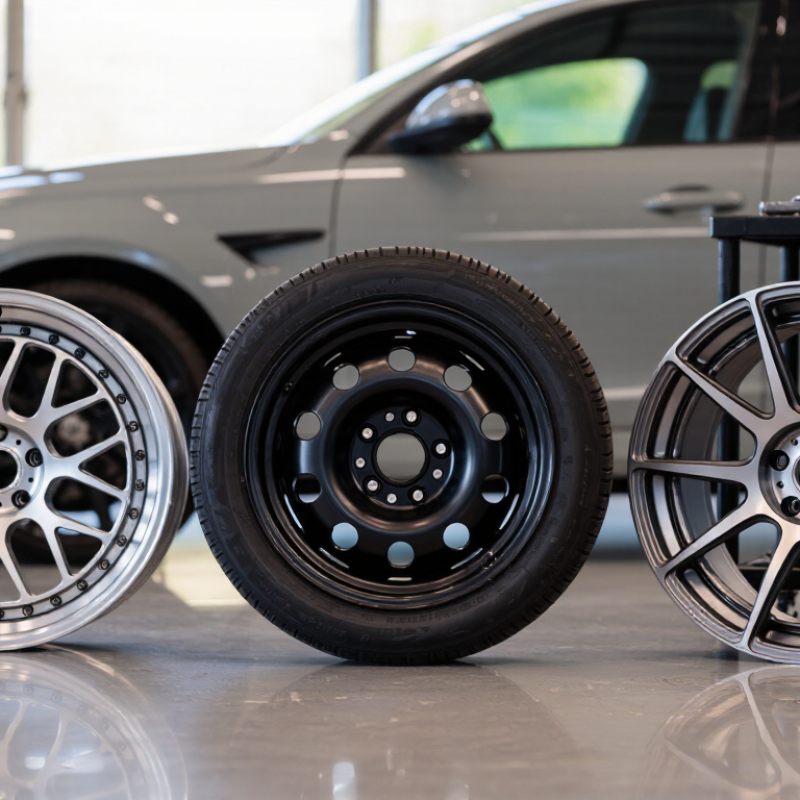
| Pressed Steel Wheels | Steel sheets formed and welded into a wheel, commonly protected with paint or a coating. | Provide durable support for the tire and withstand regular road impacts. | Strong, cost-effective, widely repairable, and generally suitable for heavy loads. | Heavier than many alloy wheels; may corrode if protective coatings are damaged. | Daily driving, commercial vehicles, winter conditions, and utility applications. |
| Cast Aluminum Alloy Wheels | Molten aluminum alloy poured into a mold and then machined and finished. | Reduce unsprung mass while providing a balance of strength, appearance, and handling performance. | Lighter than many steel designs, available in varied shapes, and effective at dissipating heat. | Can crack under severe impact and may be more expensive to replace than steel wheels. | Passenger cars, crossovers, sport-oriented vehicles, and general road use. |
| Forged Aluminum Alloy Wheels | A solid aluminum billet is shaped under high pressure and heat, followed by machining and heat treatment. | Deliver a high strength-to-weight ratio for responsive handling and performance use. | Typically lighter and stronger than comparable cast designs when properly engineered. | Higher manufacturing and replacement cost; design and load ratings still determine suitability. | Performance vehicles, track use, premium applications, and weight-sensitive builds. |
| Multi-Piece Wheels | Separate rim sections are joined with fasteners or welded components, depending on the design. | Allow specialized control of wheel width, offset, and component configuration. | Flexible fitment options and the possibility of replacing individual sections on serviceable designs. | More complex maintenance, higher cost, and sealing or fastener issues may occur if improperly serviced. | Motorsport, specialist vehicles, custom fitments, and applications requiring precise dimensions. |
| Carbon-Fiber Composite Wheels | Carbon-fiber reinforcement embedded in a polymer matrix, often combined with metal components at mounting areas. | Minimize rotational and unsprung mass while maintaining high stiffness. | Very low weight, high stiffness, and potential improvements in steering response and ride control. | Very expensive, specialized to inspect, and potentially sensitive to hidden damage after severe impacts. | High-performance road cars, competition vehicles, and specialist weight-reduction projects. |
| Off-Road Beadlock Wheels | A mechanical beadlock ring clamps the tire bead to the wheel flange on designs intended for off-road use. | Help keep the tire bead seated during low-pressure off-road driving. | Useful for demanding terrain where reduced tire pressure can improve traction and flotation. | Heavier and more maintenance-intensive; road legality and installation requirements vary by jurisdiction. | Dedicated off-road vehicles and controlled trail use, subject to applicable regulations. |
| Aero-Designed Wheels | Wheels shaped with covers, fewer spokes, or smoother surfaces to reduce airflow disturbance. | Improve aerodynamic efficiency and, in some applications, reduce energy consumption. | Can lower aerodynamic drag while retaining the wheel’s basic structural and mounting functions. | May limit brake cooling airflow or make cleaning and access more difficult, depending on the design. | Electric vehicles, fuel-efficient cars, and vehicles designed for highway efficiency. |