| Lift category | EN 81-31 applies to permanently installed, accessible goods-only lifts serving defined landing levels. | Confirm that the proposed equipment is designed and documented as a goods-only lift, rather than assuming every service or trolley lift falls within the same standard. |
| Rated load | The EN 81-31 scope covers rated loads of 300 kg or more. | Calculate the combined weight of the trolley, goods, and any loading accessories. Select a rated load that accommodates the maximum intended load without exceeding the lift’s stated capacity. |
| Rated speed | The standard’s scope includes rated speeds not exceeding 1.0 m/s. | Check the lift’s declared rated speed and confirm that the applicable installation requirements are met in the destination country. |
| People inside the car | A goods-only lift is intended for goods, not for carrying passengers. | Use clear operating instructions and access controls. If people must travel in the car, assess a suitable passenger-lift category instead. |
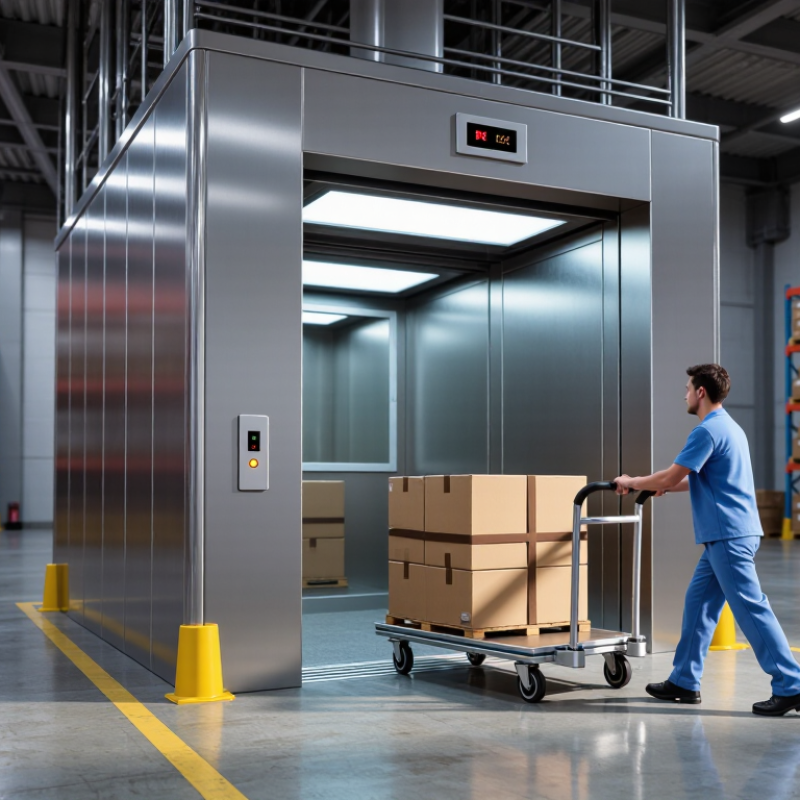
| Trolley and car fit | EN 81-31’s load and speed thresholds do not determine a suitable car size for a particular trolley. | Measure the loaded trolley’s length, width, height, turning space, and handle projection. Check the clear car opening and usable car dimensions against those measurements. |
| Landing doors and route | The lift serves defined landing levels; the building layout and installation must be considered alongside the lift design. | Check door clearances, approach space, thresholds, floor levels, and the trolley’s route to and from each landing. |
| Loading and unloading | Loading arrangements depend on the lift, trolley, goods, and site; a rated load alone does not establish safe handling. | Review whether the trolley can be positioned and secured safely, and whether staff need ramps, restraints, or other site-specific handling measures. |
| Safety documentation | EN 81-31 is a technical standard for a defined goods-only-lift scope; legal obligations may also depend on local regulations. | Request the applicable conformity and installation documentation, operating instructions, rated-load marking, and maintenance requirements. Confirm local compliance with a qualified lift professional. |
| Best-fit decision | There is no universally best trolley elevator: suitability depends on the load, trolley dimensions, travel, landings, duty, and site. | Compare documented capacity and speed with the actual operating needs, then assess fit, access, installation constraints, safety provisions, and service arrangements. |