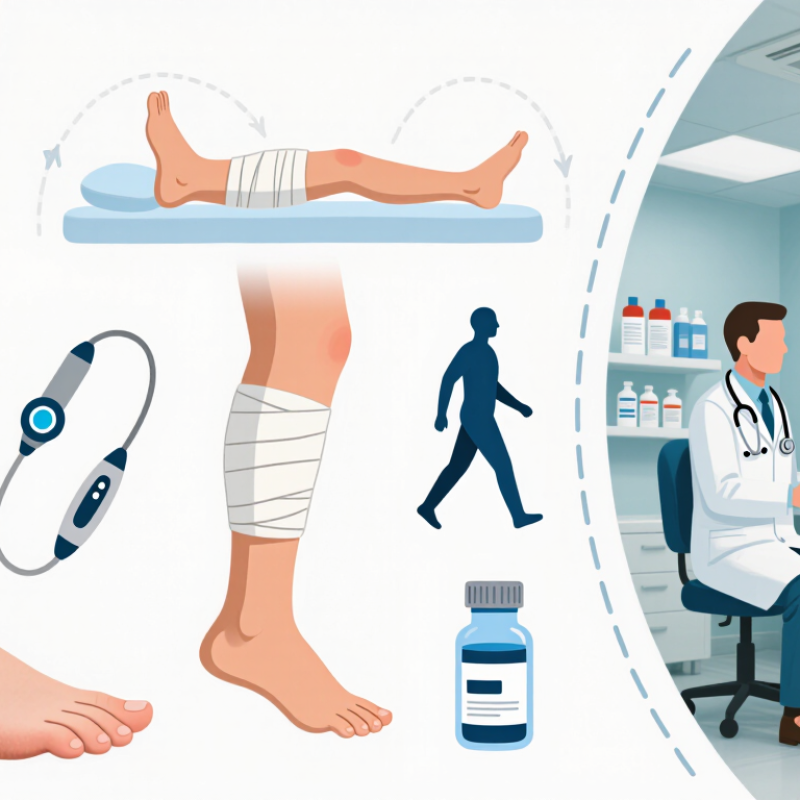
| Confirm the cause and assess circulation | Assess the ulcer and surrounding skin, check leg pulses, and evaluate for venous disease. Measure the ankle–brachial pressure index (ABPI) or use another appropriate arterial assessment before applying strong compression. | Consider duplex ultrasound when venous reflux or obstruction needs assessment, or when planning a venous procedure. Investigate atypical, rapidly worsening, or non-healing ulcers for other causes. | Compression strength must be matched to arterial circulation and the person’s overall clinical condition. ABPI interpretation can be unreliable in some people, including those with heavily calcified arteries. |
Compression therapy
Foundation of treatment | For a confirmed venous ulcer with adequate arterial supply, use therapeutic compression to reduce venous hypertension and swelling. Multilayer bandaging or a suitable compression system can be selected according to the patient and care setting. | When clinically appropriate, commonly used high-compression systems aim for about 30–40 mmHg at the ankle. A trained clinician should select, apply, and monitor the system; fit and consistent use matter. | Do not apply routine high compression without checking arterial supply. Severe peripheral arterial disease, significant heart failure, neuropathy, or intolerance requires individualized assessment. Stop and seek clinical advice for new severe pain, numbness, colour change, or a cold foot. |
| Modified compression when arterial disease is present | Some people with mixed venous and arterial disease may be considered for reduced or modified compression under specialist supervision. | Thresholds vary across guidelines and clinical circumstances. An ABPI around 0.5–0.8 may prompt consideration of modified compression with close monitoring; absolute ankle and toe pressures and the overall assessment also matter. | With very low arterial pressures—for example, ABPI below about 0.5, ankle pressure below 60 mmHg, or toe pressure below 30 mmHg—sustained compression is generally avoided pending vascular assessment. |
| Wound cleansing and dressings | Cleanse the wound and use an appropriate dressing to manage exudate and protect the wound and surrounding skin. Compression, rather than a particular dressing type, is the key treatment for venous hypertension. | Choose a dressing based on wound moisture, comfort, skin condition, and how often the compression system needs changing. Protect fragile or macerated surrounding skin. | No single dressing type has been shown to be best for every venous ulcer. Reassess if the wound deteriorates, exudate changes substantially, or contact sensitivity is suspected. |
| Leg elevation and mobility | Encourage regular walking and ankle movement when feasible, alongside compression. Elevating the leg while resting can help reduce dependent swelling. | Adapt activity and elevation advice to mobility, balance, pain, and other health conditions. | These measures support care but do not replace appropriate compression or assessment of the underlying venous disease. |
| Infection management | Use antibiotics only when there are clinical signs of infection, such as spreading redness or warmth, increasing pain, fever, or systemic illness. | Assess the patient and wound clinically; select treatment according to local guidance and the likely infection. | Colonization or a positive wound culture alone does not necessarily mean antibiotics are needed. Urgent assessment is appropriate for systemic illness or rapidly spreading infection. |
| Venous intervention | For suitable patients with superficial venous reflux, early endovenous treatment alongside compression can accelerate healing compared with compression while waiting for intervention. | Duplex ultrasound helps identify reflux and guide assessment for procedures such as endovenous ablation. Suitability depends on anatomy, health, and patient preference. | Intervention complements rather than automatically replaces wound care and compression. Discuss benefits, risks, and alternatives with a vascular specialist. |
| Adjunctive medicines | Pentoxifylline may be considered as an adjunct to compression for selected patients, subject to local guidance and individual contraindications. | Review medication interactions, side effects, and the patient’s clinical history before use. | Medicines do not replace compression when compression is safe and appropriate. Routine antibiotics are not a treatment for an uninfected ulcer. |
| Review, healing, and recurrence prevention | Monitor wound size, pain, swelling, skin condition, and tolerance of compression. After healing, ongoing compression hosiery is often recommended to reduce recurrence when arterial assessment and fit allow. | Review progress regularly and check the fit and condition of bandages or hosiery. Reassess the diagnosis and care plan if the ulcer fails to improve or worsens. | Recurrence prevention usually requires continued attention to venous disease, skin care, mobility, and long-term compression where suitable. |
| Clinical note: This table is a general educational overview, not an individualized treatment plan. Compression pressure, arterial thresholds, and treatment choices should be determined by a qualified clinician using current local guidance and a complete assessment. |