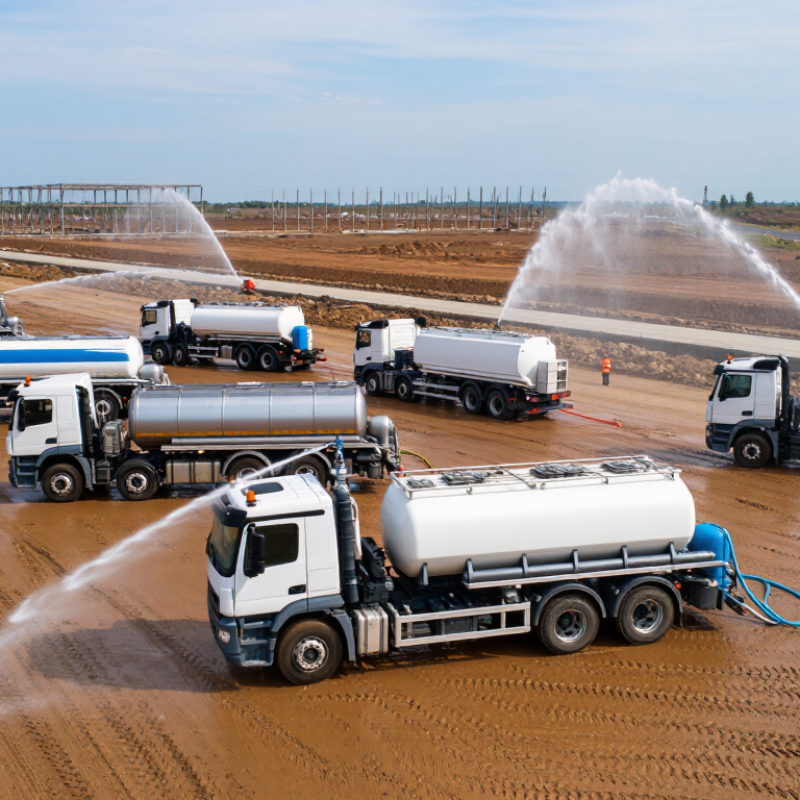
| Compact urban sprinkler truck | 1,000–1,500 US gal (3,785–5,678 L) | Medium-duty, 4×2; commonly 26,000–33,000 lb GVWR | Rear spray bar, adjustable nozzles, and hose connection; pump commonly around 100–300 gpm | Street cleaning, small parks, narrow roads, and municipal watering routes | Confirm legal payload, turning clearance, tank baffling, and that the filled truck meets axle limits. |
| General-purpose municipal water truck | 1,500–2,500 US gal (5,678–9,464 L) | Medium- or heavy-duty, usually 4×2; GVWR selected for the loaded weight | Front spray heads, rear spray bar, side sprays, and a pump-fed hose outlet | Road washing, landscaping, dust suppression, and routine public-works operations | Test each spray zone, valve, pump, and hose outlet; inspect tank interior and corrosion protection. |
| Construction-site dust-control truck | 2,000–3,500 US gal (7,571–13,249 L) | Heavy-duty, typically 6×4; often a multi-axle configuration for payload | Rear spray bar with multiple independently controlled nozzles; pump commonly around 200–500 gpm | Haul roads, earthworks, quarries, and large construction sites | Check nozzle coverage, pump condition, ground clearance, and site access requirements. |
| High-capacity highway water truck | 3,000–5,000 US gal (11,356–18,927 L) | Heavy multi-axle chassis; GVWR and axle ratings must match the loaded tank | High-flow pump, rear spray bar, front sprays, and hose connections | Long work zones, large road projects, and applications where fewer refill stops are valuable | Verify tank capacity against legal weight limits, braking capacity, tire ratings, and route restrictions. |
| All-wheel-drive off-road water truck | 2,000–4,000 US gal (7,571–15,142 L) | Off-road 6×6 or other driven-axle arrangement; chassis ratings vary | Spray bar and pump-fed hose; controls may be accessible from the cab | Unpaved worksites, remote projects, and rough or low-traction terrain | Inspect drivetrain, suspension, tires, underbody, and the truck’s actual off-road payload rating. |
| Fine-mist dust-suppression truck | 1,500–3,000 US gal (5,678–11,356 L) | Heavy-duty 4×2 or 6×4, depending on tank size and site conditions | Fine-spray nozzles or a misting attachment, usually supplied by a dedicated pump | Dust-sensitive work areas where controlled water application is preferred | Ask for nozzle specifications, filtration details, water-quality requirements, and cleaning instructions. |
| Landscape and irrigation support truck | 1,000–2,500 US gal (3,785–9,464 L) | Medium- or heavy-duty 4×2; configuration depends on payload and route | Hose reel, controlled-flow outlet, and optional spray heads for broad watering | Tree establishment, parks, planted medians, and temporary irrigation | Check hose length, reel condition, flow control, tank access, and compatibility with the water source. |
| Road-maintenance flushing truck | 2,000–4,000 US gal (7,571–15,142 L) | Heavy-duty 6×4 is common for larger tanks and equipment loads | Pressure pump, directed front or side sprays, rear bar, and hose outlet | Washing road surfaces, clearing light debris, and supporting maintenance crews | Distinguish high-pressure washing equipment from a standard sprinkler pump; inspect hoses and pressure controls. |
| Compact 4×4 site-service water truck | 500–1,200 US gal (1,893–4,542 L) | Light- or medium-duty 4×4; payload is limited by the vehicle rating | Small pump, hose outlet, and a compact rear spray bar | Small, constrained, or remote sites that need maneuverability more than maximum capacity | Calculate loaded weight carefully; water alone weighs about 8.34 lb per US gallon. |
| Multi-zone sprinkler truck | 2,500–4,000 US gal (9,464–15,142 L) | Heavy-duty 6×4 or 6×6, selected for payload and terrain | Separately valved front, side, and rear spray zones, plus a pump-fed hose outlet | Mixed-use fleets that switch between road spraying, dust control, and hose work | Operate every valve and control; confirm zone isolation, pump priming, tank baffling, and service access. |