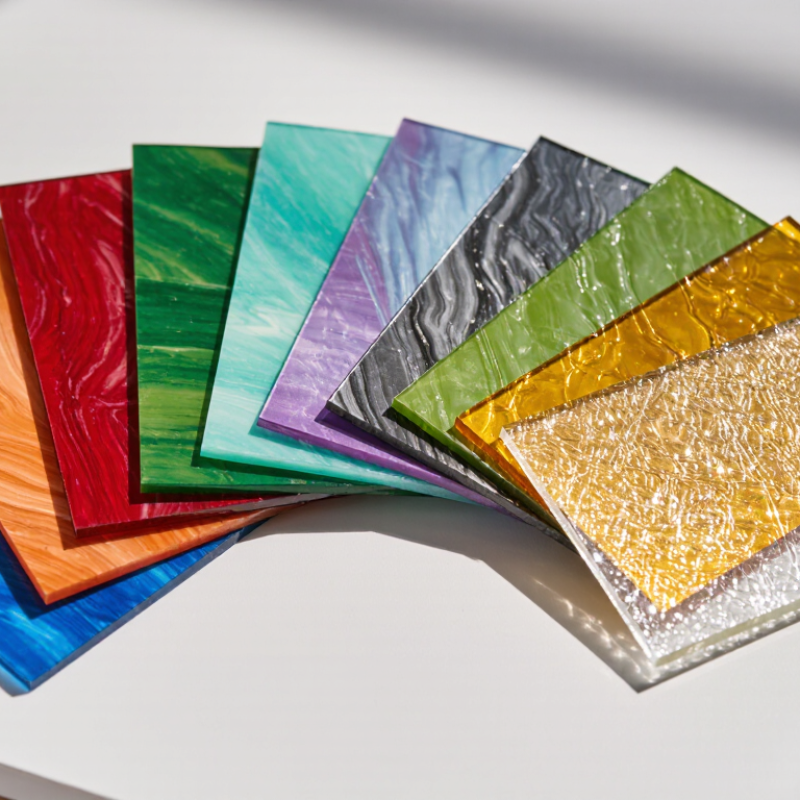
| 1 | Transparent Cathedral Glass | Clear, saturated color with strong light transmission; usually has a relatively even surface. | About 3 mm (1/8 in); varies by sheet and maker. | Molten glass is formed into a sheet, commonly by rolling or other continuous forming methods, then annealed to cool gradually. | Windows, panels, lampshades, and projects where colored light and clear detail are desired. |
| 2 | Opalescent Glass | Cloudy or milky color that diffuses light and can partially obscure objects behind it. | Often around 3 mm (1/8 in); thickness may vary. | Different glass compositions or colors are combined during forming to create an opaque or partly translucent appearance. | Decorative panels, floral designs, and areas where privacy or softened light is useful. |
| 3 | Wispy Glass | Fine strands or cloudy streaks of contrasting color appear within a translucent or opaque base. | Commonly near 3 mm (1/8 in). | Colored glass is drawn, rolled, or layered into the base while the material is hot, producing irregular wisps. | Organic patterns, landscapes, foliage, and decorative accents. |
| 4 | Streaky Glass | Visible bands or streaks of one or more colors; light transmission depends on the base glass. | Commonly near 3 mm (1/8 in). | Contrasting molten glasses are brought together and worked into a sheet, leaving flowing color bands. | Water, skies, architectural details, and pieces that benefit from directional color. |
| 5 | Ripple-Textured Glass | Undulating surface distorts light and creates a flowing, water-like effect. | Often about 3 mm (1/8 in), with variation across textures. | A patterned roller or textured forming surface impresses a repeated ripple into the softened glass. | Water effects, borders, lamps, and panels with added surface movement. |
| 6 | Hammered-Textured Glass | Irregular, dimpled surface scatters light and softens shapes viewed through the sheet. | Typically around 3 mm (1/8 in); check the individual sheet. | A textured roller or mold forms a hammered pattern while the glass is hot and workable. | Decorative backgrounds, privacy panels, and designs needing varied reflections. |
| 7 | Granite-Textured Glass | Fine, pebbled texture gives the surface a granular appearance and diffuses transmitted light. | Often near 3 mm (1/8 in). | Surface texture is formed with a patterned roller or mold during sheet forming. | Background areas, foliage, stone-like effects, and small decorative pieces. |
| 8 | Seedy Glass | Contains small bubbles, or “seeds,” that create points of sparkle and visual texture. | Commonly around 3 mm (1/8 in). | Small bubbles remain in the glass during manufacture; their number and distribution vary between sheets. | Antique-style windows, highlights, and designs where a lively surface is desired. |
| 9 | Iridescent Glass | Reflective surface shows shifting color highlights as viewing angle and lighting change. | Often about 3 mm (1/8 in); confirm before cutting. | A thin metallic-oxide coating is applied to the glass surface, typically during a controlled heating process. | Accents, jewelry, mosaics, and decorative panels; coated surfaces may affect adhesives or soldering. |
| 10 | Flashed Glass | A thin layer of colored glass sits over a lighter or clear base, allowing color contrasts when cut or etched. | Varies by construction; check the stated sheet specification. | A layer of colored molten glass is applied to a base glass during forming and fused as the sheet is made. | Engraved details, layered color effects, and designs that reveal the base glass through surface work. |