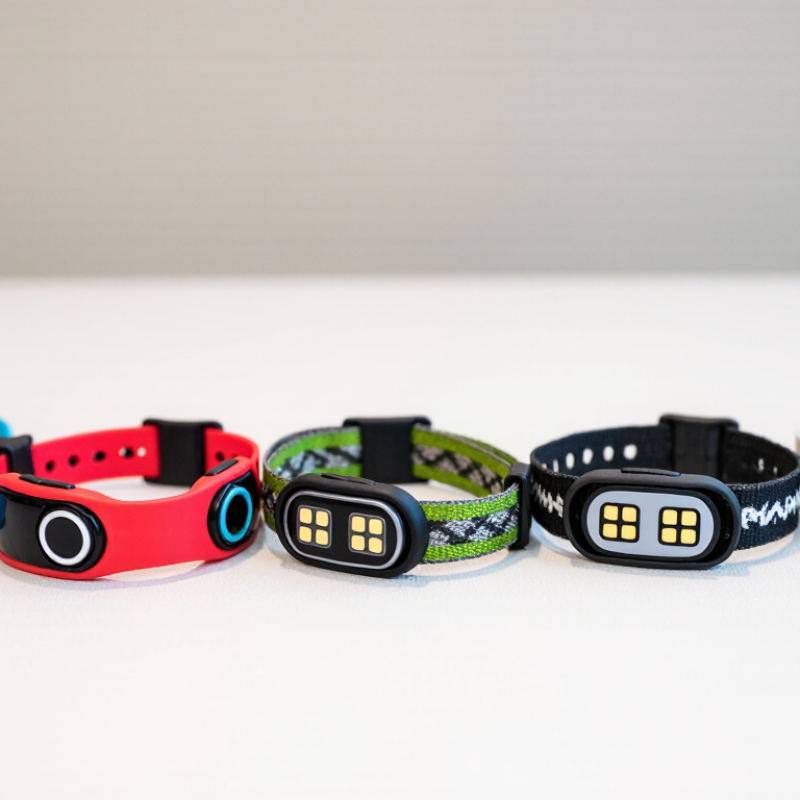
| 1 | HF/NFC Passive Wristband | 13.56 MHz; commonly ISO/IEC 14443 or NFC Forum compatible | Approximately 1–10 cm with a handheld or gate reader | Typically 48 bytes to several kilobytes, depending on the integrated circuit | Ticket validation, cashless payments, access gates, check-in, loyalty, and interactive attendee experiences | Short range helps reduce accidental reads. Secure variants may support password protection or AES-based authentication; avoid storing names, payment details, or other directly identifying data on the tag. | Works well with tap-to-read workflows. Readers and wristbands should be tested together because metal, water, and dense crowds can reduce performance. |
| 2 | Reusable Silicone HF Wristband | 13.56 MHz; usually based on ISO/IEC 14443 or related HF technology | Approximately 1–10 cm | Commonly 48 bytes to several kilobytes, depending on the chip | Multi-day festivals, water parks, resorts, clubs, recurring venues, and reusable season-pass programs | Use a unique random identifier rather than personal data. Apply access controls in the backend, define revocation procedures, and securely erase or reassign wristbands between users. | Silicone is durable and water-resistant, but cleaning, inventory tracking, and return logistics are required. Check the enclosure rating and temperature limits before outdoor deployment. |
| 3 | Disposable Paper or Tyvek HF Wristband | 13.56 MHz; commonly ISO/IEC 14443 or NFC compatible | Approximately 1–10 cm | Typically 48 bytes to several kilobytes, depending on the chip and inlay | Single-day concerts, conferences, fairs, temporary access control, and high-volume registration areas | The short read distance limits remote scanning, but lost wristbands remain a risk. Disable lost credentials quickly and keep personal information in the event system rather than on the tag. | Low cost and easy to distribute. Confirm resistance to sweat, rain, tearing, and adhesive failure; encode and test wristbands before opening the gates. |
| 4 | HF ISO/IEC 15693 Wristband | 13.56 MHz; ISO/IEC 15693 vicinity cards and compatible ICs | Typically 5–50 cm in wristband installations; specialized systems may achieve more | Commonly 128 bytes to several kilobytes, depending on the IC | Longer-range checkpointing, inventory-linked access, museum or venue circulation, and applications needing more read tolerance than NFC | Security features vary significantly by chip. Use password-protected memory or cryptographic authentication where available, and do not assume that every ISO/IEC 15693 product provides encryption. | Reader antenna design has a major effect on range. Establish read zones carefully to prevent unintended reads at adjacent doors or checkpoints. |
| 5 | UHF Passive EPC Wristband | Approximately 860–960 MHz, depending on region; commonly EPC Class 1 Gen 2 / ISO/IEC 18000-63 | About 1–10 m with suitable fixed readers; real range depends on antenna, power, orientation, and local regulations | EPC memory is commonly 96 bits or more; user memory may range from none to several kilobits | Hands-free entry counting, vehicle or staff checkpoints, crowd-flow monitoring, equipment control, and rapid bulk identification | Longer range increases the risk of unnoticed reads. Use access passwords, kill or lock functions where supported, encrypted backend links, and clear privacy notices. Do not encode readable personal data. | Requires careful antenna placement and regional frequency configuration. Water and the human body can detune or weaken the signal, so wrist placement and orientation testing are important. |
| 6 | LF Passive Access Wristband | Typically 125–134.2 kHz; often used with legacy proximity access systems | Usually 1–10 cm | Often a fixed identifier; writable memory and capacity vary by chip and system | Basic door access, locker control, staff identification, and environments requiring close-proximity presentation | Many legacy LF systems use static identifiers and may lack strong cryptographic protection. Avoid deploying them for high-risk access without an additional authentication factor or a modern secure credential. | Reliable near water and through many non-metallic materials, but limited data capacity and short range make it unsuitable for hands-free event analytics. |
| 7 | Dual-Frequency LF + HF/NFC Wristband | Two independent technologies, typically LF at 125–134.2 kHz and HF/NFC at 13.56 MHz | LF: approximately 1–10 cm; HF/NFC: approximately 1–10 cm | Capacity is independent for each chip and may range from a fixed identifier to several kilobytes | Venues upgrading legacy access systems while adding NFC check-in, cashless services, or mobile-compatible interactions | More credentials create more lifecycle and privacy responsibilities. Secure each technology separately, document which identifier is used for each purpose, and revoke both when a wristband is lost. | Provides migration flexibility but increases tag cost, encoding complexity, and the chance of mismatched records. Use a single backend identity with separate technology-specific identifiers. |