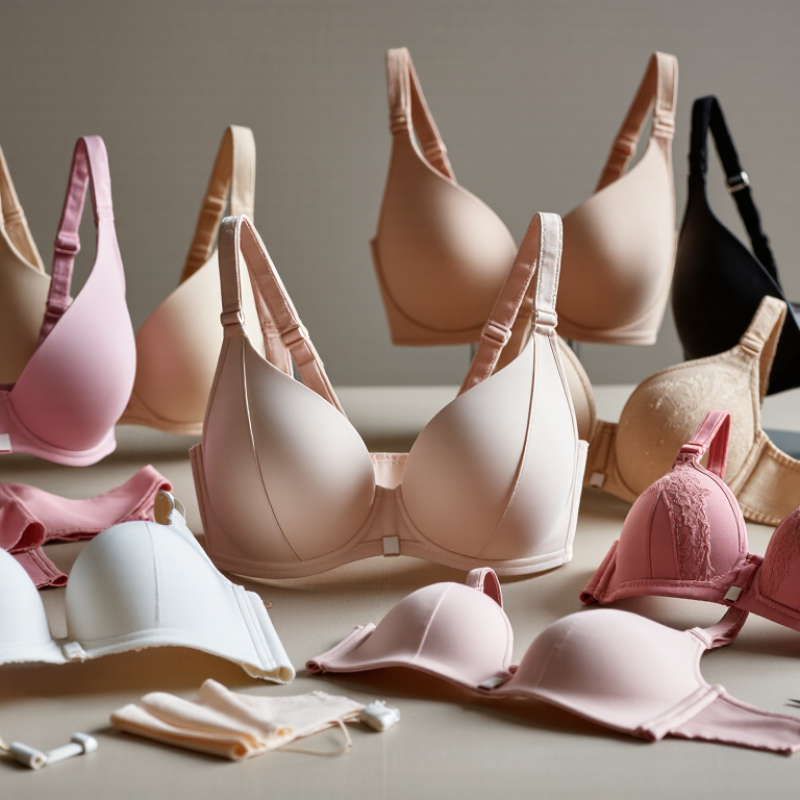
| Design brief and fit goals | The product team defines the intended lift, coverage, neckline, strap position, and target size range before pattern development. | Document the target wearer, garment measurements, fabric choices, support level, and fit preferences. | A clear brief helps keep the design, sample, and production requirements aligned. |
| Pattern and size grading | A base-size pattern is developed and then graded into additional sizes using measurements and fit rules. | Check underband, cup, wire, strap, and center-front measurements across the size range; grading increments are design- and size-dependent. | Consistent grading helps maintain the intended fit and support from one size to another. |
| Cup construction | Push-up cups may use shaped foam, padding, molded components, or layered fabric to create lift and shape. | Assess cup symmetry, edge smoothness, padding placement, shape retention, and comfort against the body. | Cup construction determines much of the bra’s profile, shaping, and feel. |
| Padding and lift placement | Padding is positioned within or against the lower or side portion of the cup, depending on the desired shaping effect. | Confirm that padding stays in position and does not create abrupt edges, visible ridges, or uneven cup shape. | Balanced placement supports a natural-looking shape and helps reduce discomfort. |
| Underband and back-wing support | The underband and back wings provide much of the garment’s anchoring and help keep the cups in position. | Review elastic recovery, band tension, seam strength, and the fit of the band when fastened on the intended hook setting. | A well-fitted band helps distribute support instead of relying only on the shoulder straps. |
| Materials and component selection | Fabric, lining, elastic, thread, closures, straps, and any wires or padding are selected to meet the design and care requirements. | Check material composition, stretch and recovery, color consistency, component compatibility, and care-label requirements. | Compatible materials can improve comfort, durability, and consistency during sewing and wear. |
| Prototype and fit evaluation | Sample garments are made and assessed on fit models or dress forms; patterns and construction details are adjusted as needed. | Review cup coverage, center-front position, band level, strap comfort, wrinkles, gaping, and pressure points. | Fit evaluation can identify problems before production materials are cut in larger quantities. |
| Cutting and component preparation | Fabric and components are prepared and cut according to the approved patterns and production plan. | Check fabric direction, pattern alignment, component counts, cutting accuracy, and shade grouping where relevant. | Accurate preparation helps reduce mismatched parts and avoidable material waste. |
| Sewing and assembly | Operators assemble cups, wings, straps, closures, elastics, and other components in a planned sequence. | Inspect seam placement, stitch consistency, elastic tension, strap attachment, and clean finishing. | Controlled assembly supports strength, comfort, and a consistent appearance. |
| In-process and final quality checks | Checks may take place during assembly and again after the garment is complete. | Use approved measurement tolerances and inspect seams, symmetry, components, appearance, and function against the specification. | Documented checks help identify defects and keep finished goods aligned with the approved sample. |
| Wash and wear performance | Samples or finished products may be assessed under care conditions relevant to the product’s labeling and intended use. | Look for changes in shape, color, elastic recovery, seam condition, and padding or component position after care testing. | Performance checks help assess whether the garment retains its intended appearance and function over use. |
| Manufacturer evaluation criteria | Manufacturers can be compared by reviewing their technical capability and documented process controls rather than relying on claims alone. | Request a clear specification process, fit-sample review, material traceability, quality records, and confirmation of production requirements. | The most suitable manufacturing partner depends on the product’s fit, materials, quality needs, order requirements, and communication process. |
| Specifications vary by design, materials, size range, and buyer requirements. Values and checks should be agreed in the product specification and verified against approved samples. |