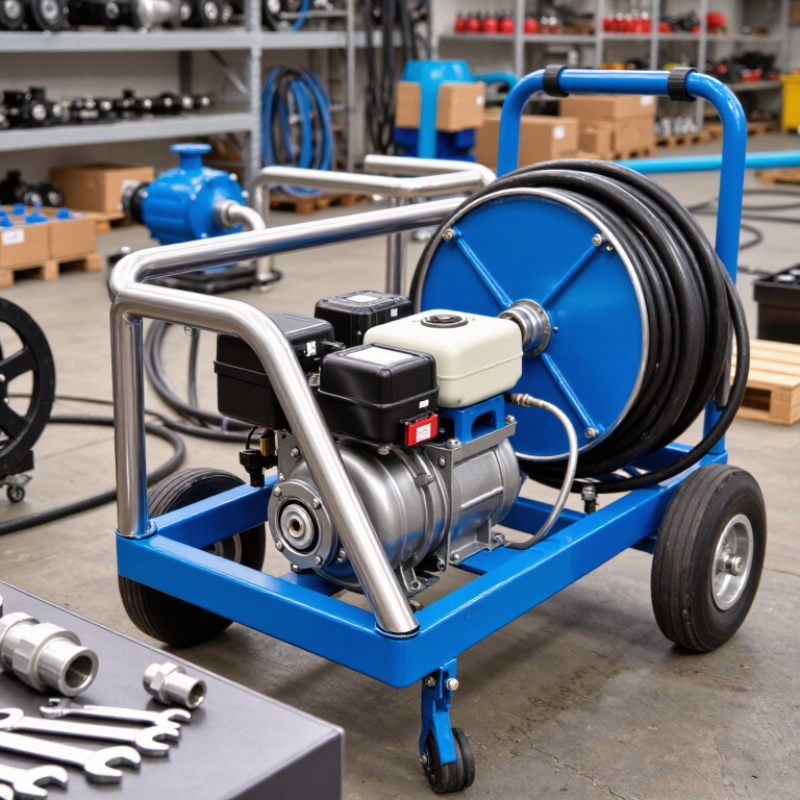
| Portable drain jetter | Often around 1,000–3,000 psi and 1–5 gpm; specifications vary by model. | Residential drains, small-diameter pipes, and routine maintenance in kitchens, bathrooms, and floor drains. | Check the pipe diameter, hose length, water supply, portability, and the machine’s rated pressure and flow. | Compact frame, hose reel, pressure control, and compatible nozzles for flushing and light blockage removal. |
| Professional mobile jetter | Commonly available in configurations of approximately 2,000–4,000 psi and 3–10 gpm. | Drain-service work in homes, commercial buildings, and smaller municipal lines. | Choose pressure and flow to suit the pipe and blockage; consider transport, setup time, and expected daily use. | Transport wheels or a vehicle-mounting option, hose storage, pressure regulation, and accessible service points. |
| Trailer-mounted sewer jetter | Configurations often range from about 2,000–4,000 psi and 10–25 gpm, with model-specific variations. | Longer sewer runs, larger drain lines, municipal maintenance, and work requiring higher water flow. | Assess tank capacity, refill access, hose length, vehicle towing limits, and the pipe sizes serviced. | Water tank, hose reel, stable trailer chassis, engine protection, and controls accessible to the operator. |
| High-flow sewer cleaning unit | Some heavy-duty units deliver roughly 10–60 gpm; operating pressure depends on the pump and system design. | Large-diameter sewers, sediment removal, and applications where moving debris with water volume is important. | Confirm that the pump, hose, nozzle, and pipe conditions are compatible; higher flow can require a substantial water supply. | High-capacity water storage or refill arrangements, heavy-duty hose handling, and adjustable operating controls. |
| Industrial water-jetting system | Pressure and flow are engineered for the task; specialized water-blasting systems may operate at pressures far above ordinary drain jetters. | Industrial cleaning tasks such as surface preparation or equipment cleaning, where the process and materials allow water jetting. | Specify the application, target material, required cleaning result, duty cycle, and applicable safety requirements before selecting a system. | Application-specific pump and nozzle configuration, guarded controls, emergency stop, and documented operating limits. |
| Pipe size and nozzle match | There is no single suitable pressure or flow for every pipe; operating limits depend on equipment and pipe condition. | All drain and sewer jetting work, including flushing, grease removal, and selected blockage-clearing tasks. | Match nozzle type and jet direction to the task. Inspect pipe material and condition, and avoid exceeding the equipment or pipe limits. | Interchangeable nozzles, clear pressure gauges, hose inspection access, and a documented maintenance schedule. |