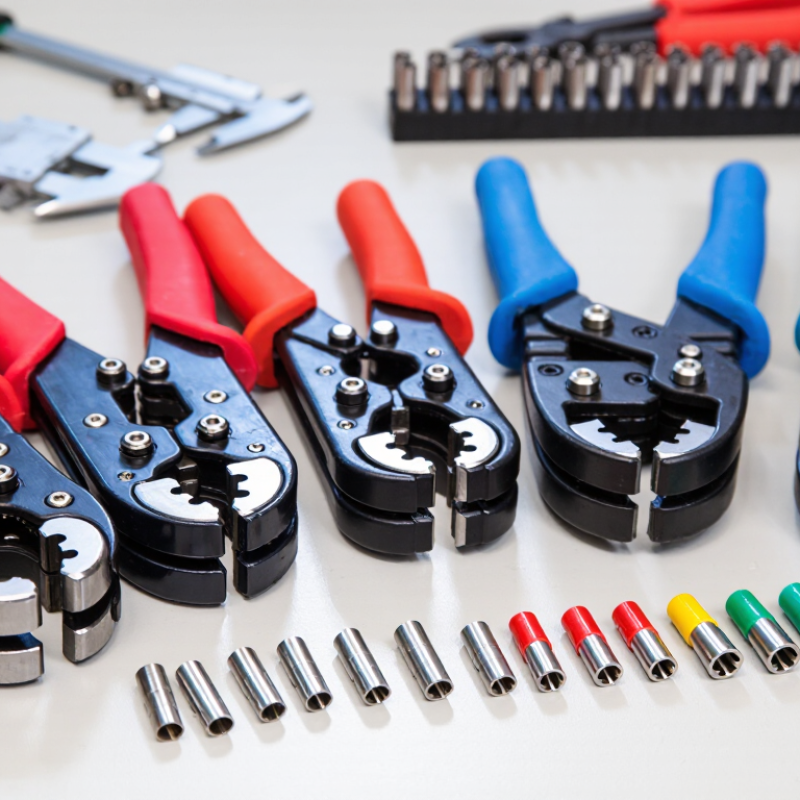
| Crimping Range | 0.25–6 mm² for insulated or non-insulated terminal work; larger tools may support up to 16 mm². | The correct range helps produce consistent compression without damaging the conductor or terminal. | Electrical wiring, control panels, appliances, and light automotive repairs. |
| Crimp Profile | Ratchet, hexagonal, square, or oval profiles selected according to terminal design. | A suitable profile creates stable mechanical retention and reliable electrical contact. | Ferrules, ring terminals, butt connectors, open-barrel terminals, and coaxial connectors. |
| Jaw Material | Hardened carbon steel or alloy steel jaws with a corrosion-resistant surface finish. | Hard, accurately machined jaws resist deformation and maintain the crimp profile over time. | Frequent workshop use and repeated production-line assembly. |
| Handle Construction | Forged or stamped steel handles with non-slip, insulated, ergonomic grips. | Rigid handles improve force transfer, while shaped grips reduce hand fatigue and slipping. | Professional maintenance, installation, and repetitive crimping tasks. |
| Ratchet Mechanism | Full-cycle ratchet with controlled release and an emergency opening function. | It helps prevent incomplete crimps and allows the jaws to be released if a terminal is positioned incorrectly. | Applications requiring repeatable results and consistent operator technique. |
| Adjustment Control | Adjustable crimp-force wheel or calibrated tension mechanism. | Adjustment compensates for terminal tolerances and helps prevent loose or over-compressed connections. | Mixed terminal sizes, custom wiring, and maintenance work. |
| Insulation Protection | Insulated handles with a clearly stated voltage rating when electrical safety is required. | The grip reduces the risk of accidental contact with energized surfaces; it does not replace proper isolation procedures. | Low-voltage electrical installation and service environments. |
| Length and Weight | Approximately 180–250 mm long and 350–650 g for common manual terminal crimpers. | A balanced size provides sufficient leverage while remaining practical for toolboxes and field work. | Portable repair kits, workshops, and installation teams. |
| Terminal Compatibility | Compatibility should be stated for the exact terminal type, conductor size, and insulation diameter. | A crimper is not automatically suitable for every terminal within the same wire-size range. | Insulated terminals, ferrules, solar cable connectors, and automotive terminals. |
| Surface Treatment | Black oxide, nickel plating, or another protective finish applied evenly to steel components. | A protective finish helps reduce corrosion during storage and normal workshop use. | Humid workshops, transportation, and long-term tool storage. |
| Quality Verification | Visual inspection, jaw alignment check, ratchet-cycle testing, and pull-test verification using matched terminals and wire sizes. | Testing confirms that the tool performs consistently rather than only appearing well finished. | Supplier qualification, incoming inspection, and professional tool selection. |
| Applicable Standards | The product documentation should identify relevant requirements for the tool, terminals, insulation, or electrical installation. | Standards and documented test methods make performance and safety claims easier to verify. | Commercial procurement, export projects, and regulated electrical work. |
| Best Overall Choice | A ratcheting hand crimper with hardened interchangeable or accurately matched dies, an adjustable force mechanism, ergonomic grips, and documented test results. | This combination offers repeatability, durability, user comfort, and broader terminal compatibility. | General professional use where one tool must cover several common crimping tasks. |