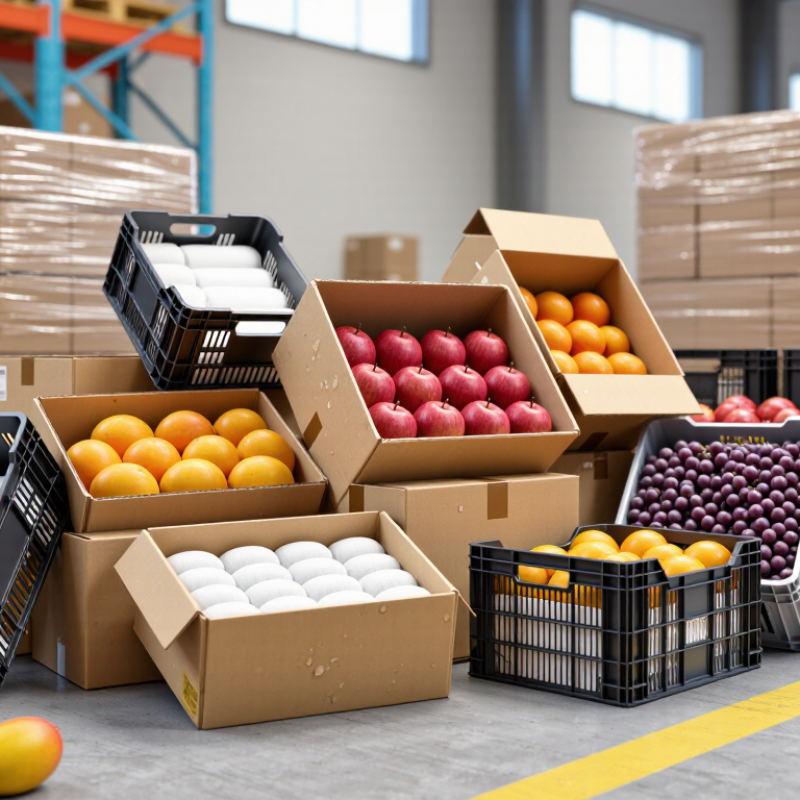
| Citrus Fruit | Ventilated corrugated fibreboard carton with a stackable design, moisture-resistant coating, and paper-based internal cushioning where required. | 10 kg carton
Typical footprint: approximately 40 × 30 cm
Ventilation openings: positioned to support airflow without weakening the carton. | Protection against compression, abrasion, condensation, and temperature fluctuations during palletized transport. | Product name, country of origin, packer or dispatcher information, class or size where applicable, lot identification, net weight, and storage instructions when necessary. | Use recyclable fibreboard, water-based inks, and right-sized cartons. Avoid unnecessary plastic liners and mixed-material components. | Codex CXS 1-1985; Codex CXS 245-2004 for citrus fruits; Regulation (EC) No 1935/2004 for food-contact materials where applicable. |
| Apples and Pears | High-strength corrugated carton or reusable plastic crate with molded or fiber-pulp partitions to reduce bruising and movement. | 12–18 kg carton
Common configurations include single-layer trays or multiple-layer cartons with fruit separators. | Compression resistance, adequate ventilation, stable pallet stacking, and cushioning that limits impact damage during handling. | Variety or product name, country of origin, class, size or count where required by the destination market, net weight, lot code, and packer or dispatcher details. | Prefer recycled-content corrugated board, fiber-pulp trays, and reusable crates for closed-loop distribution. Design packaging for easy material separation. | Codex CXS 1-1985; UNECE FFV-50 for apples; UNECE FFV-51 for pears; ISPM 15 applies if solid wood pallets or wood packaging are used. |
| Table Grapes | Vented corrugated carton with food-contact-compatible liner or recyclable punnet system designed to manage condensation and berry compression. | 4.5–9 kg carton
Common retail units: 500 g to 1 kg punnets or bags inside a transport carton. | High ventilation, moisture management, secure closure, and sufficient rigidity to prevent crushing of lower layers. | Product name, country of origin, net weight, lot identification, packer or dispatcher information, and date or storage information when required by the importing market. | Replace unnecessary plastic overwrap with recyclable mono-material formats or fibre-based components. Use only the quantity of packaging needed for product protection. | Codex CXS 1-1985; UNECE FFV-19 for table grapes; destination-market food-contact and recycling-label rules. |
| Berries | Rigid vented punnet or tray with a tamper-evident closure, packed in a ventilated secondary carton for cold-chain transport. | 125–500 g retail unit
Typical transport case: approximately 1–4 kg, depending on fruit type and market. | Condensation control, airflow through the pack, leak resistance, tamper evidence, and protection from vibration and compression. | Product name, net quantity, country of origin, lot code, responsible food business operator or importer information, and use-by or best-before marking where legally applicable. | Use recyclable mono-material plastic or certified fibre-based packs where performance is adequate. Eliminate unnecessary absorbent pads and oversized lids. | Codex CXS 1-1985; destination-market food-contact legislation; cold-chain and fresh-produce handling requirements. |
| Mangoes and Avocados | Ventilated corrugated carton with molded pulp dividers, fruit sleeves, or protective trays to limit skin scuffing and impact damage. | 4–6 kg carton
Retail formats commonly range from 1 to 4 pieces per consumer pack. | Resistance to compression and vibration, sufficient ventilation, and protection from contact damage during ripening and long-distance transport. | Product name, country of origin, packer or dispatcher information, class or size where applicable, net weight or count, lot identification, and storage guidance when needed. | Use lightweight cartons with high recycled fibre content, avoid PVC components, and use paper-based dividers when they provide equivalent protection. | Codex CXS 1-1985; relevant UNECE fresh-fruit standards where adopted by the destination market; Regulation (EC) No 1935/2004 where applicable. |
| Bananas | Ventilated corrugated carton with internal support and a design compatible with controlled-atmosphere or temperature-managed transport. | 13–18 kg carton
Carton dimensions vary according to loading pattern, pallet configuration, and destination requirements. | Adequate ventilation, high stacking strength, resistance to humidity, and protection from pressure marks during refrigerated or controlled-temperature transport. | Product name, country of origin, net weight, lot identification, packer or dispatcher information, and any mandatory importer or traceability information. | Reduce carton grammage only after compression testing, increase recycled fibre content where moisture performance remains adequate, and optimize pallet utilization to reduce transport emissions. | Codex CXS 1-1985; Codex CXS 205-1997 for bananas; destination-market packaging, traceability, and food-contact requirements. |
| Stone Fruit | Rigid vented tray, molded-pulp insert, or partitioned corrugated carton designed to prevent fruit-to-fruit impact and stem-end damage. | 2–5 kg carton
Retail packs commonly range from 500 g to 2 kg. | Shock absorption, secure fruit positioning, ventilation, and sufficient carton stiffness for multi-layer pallet stacking. | Product name, country of origin, class or size where required, net weight, lot code, packer or dispatcher details, and date marking when required by law. | Substitute expanded polystyrene and unnecessary plastic trays with molded fibre or recyclable mono-material alternatives after validation testing. | Codex CXS 1-1985; destination-market standards for peaches, nectarines, plums, cherries, and other stone fruit. |
| All Fresh Fruit Export Shipments | Unitized pallet system using compatible cartons, corner protection, stretch film or reusable straps, and documented load-stability testing. | Standardized pallet load
Pallet dimensions and maximum height should follow the importer, carrier, warehouse, and destination-market specifications. | Stable load formation, adequate airflow, moisture control, traceability from grower or packhouse to shipment, and protection from contamination. | Commercial invoice, packing list, certificate of origin where required, phytosanitary certificate where required, lot or batch code, net quantity, country of origin, and importer information. | Use certified or compliant wood packaging when applicable, optimize pallet cube utilization, minimize empty space, and select packaging materials that are recyclable in the destination country. | Codex CXS 1-1985; IPPC ISPM 15 for regulated solid wood packaging; importing-country customs, plant-health, labeling, and packaging laws. |