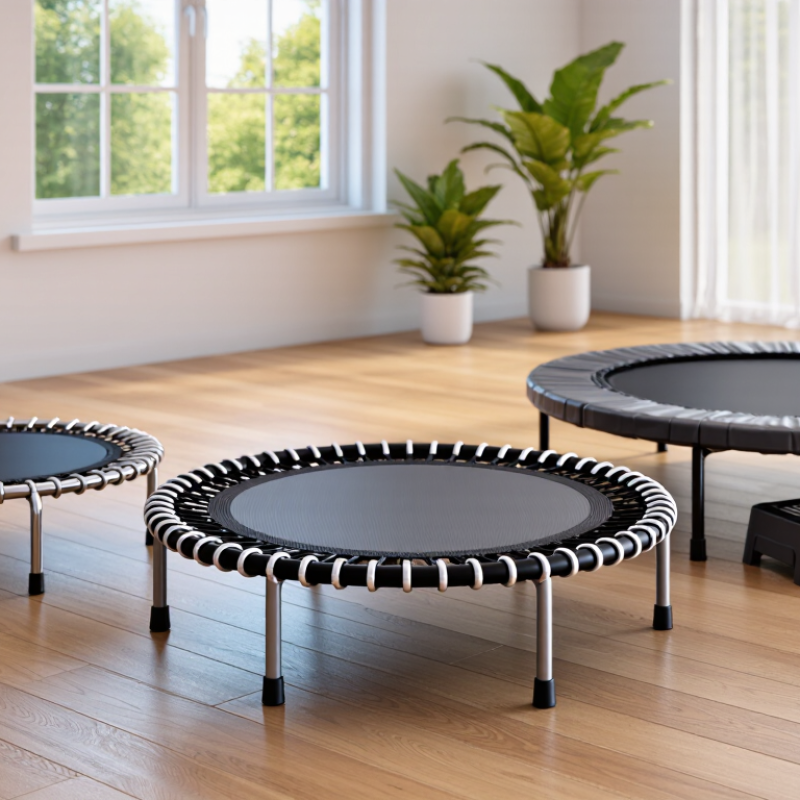
| Compact bungee rebounder | About 36–40 in (91–102 cm) | Elastic cords or bungee loops; usually designed for a quieter, lower-impact-feeling bounce | Often listed around 250–330 lb (113–150 kg); varies by model | Some frames fold; others only have removable legs. Confirm folded dimensions and whether folding requires tools. | Look for non-slip feet and a firmly tensioned mat; a handlebar may be optional. | Small rooms and users who prefer a quieter suspension system | Check cord replacement availability, assembly instructions, frame warranty, and the manufacturer’s stated weight limit. |
| Compact spring rebounder | About 36–40 in (91–102 cm) | Metal springs connect the mat to the frame; bounce feel and noise depend on spring design and construction. | Common listings range roughly from 220–300 lb (100–136 kg); verify the individual product rating | Usually has detachable legs; folding-frame designs are available but are not universal. | Assess the number and placement of feet, frame rigidity, and whether spring covers are included. | Users who want a straightforward mini-trampoline for basic indoor cardio | Inspect spring coverage, pinch-point protection, replacement-part access, and whether the stated capacity is a user-weight limit. |
| Rebounder with adjustable handlebar | Typically about 36–40 in (91–102 cm) | May use springs or elastic cords; the handlebar is an added balance aid, not a substitute for careful setup. | Varies by frame and suspension; commonly listed in the approximate 250–330 lb (113–150 kg) range | Handlebars may detach or adjust in height. Allow extra room around the frame during exercise. | Prefer a securely fastened bar with multiple height settings and a wide, stable base. | Beginners or anyone who wants an optional handhold during controlled routines | Confirm handlebar height range, attachment method, wobble resistance, and whether the capacity changes when the bar is used. |
| Large-diameter fitness rebounder | About 40–48 in (102–122 cm) | Spring or bungee suspension, depending on the model | Product-specific; check the manufacturer’s published limit rather than assuming a higher capacity from size alone. | Requires more floor space; many models have fixed frames or removable legs rather than a folding frame. | A wider stance can provide more room for movement, but frame and leg construction still determine stability. | Users who want a larger jumping surface and have sufficient clearance | Measure the full assembled footprint, including any handlebar, and leave clear space around the equipment. |
| Foldable rebounder | Usually around 36–40 in (91–102 cm) | May use springs or elastic cords; folding mechanism is separate from suspension type. | Highly model-dependent; compare the published user-weight limit and warranty. | Designed to reduce storage footprint, but folding can require removing the mat, legs, or other parts on some designs. | Check that locking points engage fully and that the frame sits evenly on the floor after unfolding. | Homes where the equipment needs to be stored between workouts | Review the complete fold/unfold process, folded size, required clearance, and any inspection or maintenance guidance. |