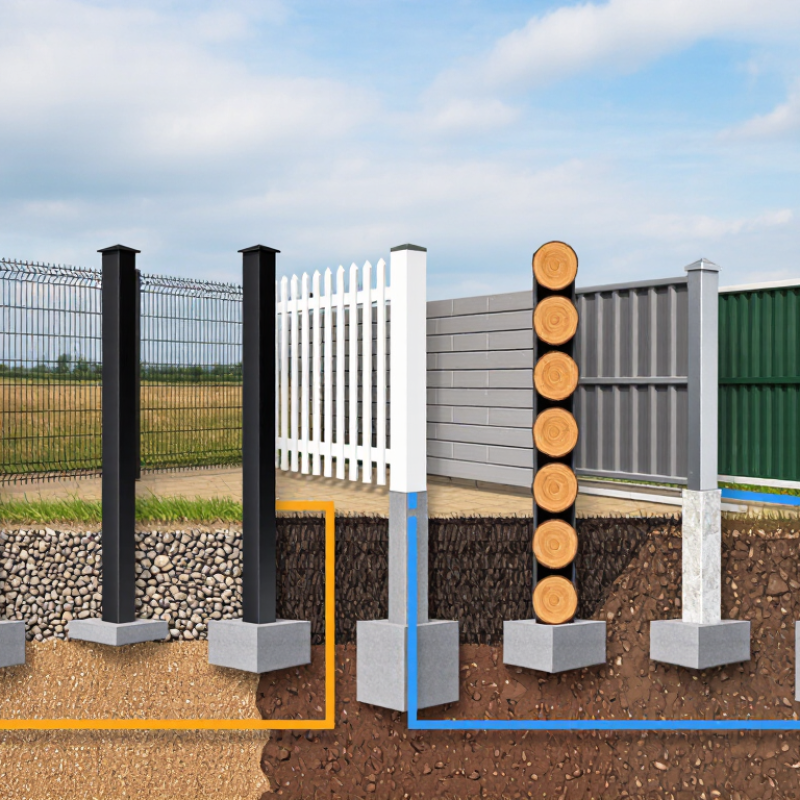
| 1 | Pressure-Treated Wood Post | 4 × 4 in; 5 × 5 in; 6 × 6 in
Common lengths: 8–12 ft | Privacy fences, picket fences, garden fencing, and general residential projects | Approximately 15–30 years when properly treated, installed, and maintained | 6–8 ft for most residential fences | At least one-third of the post length, usually 24–36 in | Dig a hole, add drainage gravel, set the post in concrete or compacted soil, and check alignment | Widely available, easy to cut, versatile, and compatible with most fence materials | Can rot at the ground line if drainage is poor; requires periodic inspection and sealing |
| 2 | Cedar Post | 4 × 4 in; 5 × 5 in; 6 × 6 in
Common lengths: 8–12 ft | Decorative privacy fences, residential boundaries, and projects where appearance matters | Approximately 15–25 years, depending on soil moisture and maintenance | 6–8 ft | 24–36 in, or about one-third of the post length | Use gravel for drainage and concrete where appropriate; keep the post end protected from prolonged standing water | Naturally resistant to decay, lightweight, attractive, and easy to work with | Usually costs more than standard treated pine and can split if fasteners are installed incorrectly |
| 3 | Galvanized Steel Post | 1⅝–2⅜ in outside diameter for many residential systems; heavier sections are also available | Chain-link fences, wood privacy fence frames, high-wind areas, and long-lasting structural supports | Approximately 20–50 years, depending on coating quality, soil, and exposure | 5–10 ft, based on fence height, wind load, and panel weight | 24–36 in for many residential installations | Drive into suitable soil or set in concrete; use corrosion-resistant fittings and caps | High strength, consistent dimensions, resistance to insects, and low maintenance | Difficult to modify on site and may require specialized brackets, tools, or adapters |
| 4 | Aluminum Post | 2 × 2 in; 2½ × 2½ in; 3 × 3 in
Common wall thicknesses vary by system | Ornamental fencing, pool fencing, lightweight boundaries, and areas exposed to moisture | Approximately 25–50 years with suitable alloy and protective finish | 6–8 ft for many ornamental panels | 24–36 in, according to local frost and wind conditions | Set in concrete with compatible fasteners; avoid direct contact between incompatible metals | Lightweight, corrosion-resistant, clean-looking, and easy to maintain | Less resistant to impact and heavy lateral loads than steel; not ideal for very heavy privacy panels |
| 5 | Concrete Post | Approximately 4 × 4 in to 6 × 6 in
Lengths commonly range from 6–10 ft | Heavy-duty boundary fencing, masonry-style panels, and installations requiring substantial mass | Approximately 40–75 years when properly reinforced and protected from severe freeze-thaw damage | 6–8 ft, depending on panel weight and design | 24–36 in or deeper in unstable soil | Lift into a prepared hole, provide drainage, brace carefully, and backfill with concrete or compacted material | Very durable, fire-resistant, resistant to insects, and highly stable after installation | Heavy to transport, difficult to cut or repair, and vulnerable to cracking from poor drainage or movement |
| 6 | Fiberglass-Composite Post | 2½–4 in square or round profiles
Lengths commonly range from 6–10 ft | Wet locations, electric-fence support, lightweight agricultural fencing, and low-maintenance projects | Approximately 20–40 years, depending on ultraviolet exposure and loading | 6–10 ft for lightweight fencing | 18–30 in, adjusted for soil and fence height | Drive or set in concrete; drill with care and use fasteners designed for composite materials | Resistant to rot, rust, insects, and many chemicals; relatively lightweight | Can flex under heavy loads and may cost more than basic wood posts |
| 7 | Vinyl-Coated Steel Post | Commonly 1⅝–2⅜ in outside diameter
Coating thickness varies by product | Chain-link fences where a coordinated appearance and added surface protection are desired | Approximately 20–40 years when the coating remains intact | 5–10 ft, determined by fence height and wind exposure | 24–36 in | Drive or concrete-set the post; prevent cuts and scratches in the protective coating | Strong steel core, improved appearance, and additional protection against surface corrosion | Cut edges and deep scratches can become corrosion points if left unprotected |
| 8 | Metal T-Post | Common lengths: 5–8 ft
Typical weights: approximately 0.85–1.33 lb per foot | Temporary fencing, livestock fencing, garden fencing, and wire-mesh support | Approximately 10–25 years, depending on coating, soil, and impact | 8–12 ft for many wire-fence layouts | 18–30 in, with deeper setting for high wind or loose soil | Drive directly into the ground with a post driver; attach wire using clips or ties | Fast installation, economical, reusable, and suitable for many lightweight wire fences | Not intended for heavy privacy panels, gates, or high-tension loads without additional structural support |
| 9 | Black Locust Wood Post | Typically 3–6 in diameter
Lengths commonly range from 6–12 ft | Rural fencing, agricultural fencing, rustic boundaries, and projects emphasizing natural durability | Approximately 25–50 years in favorable ground-contact conditions | 6–10 ft, depending on fence type and post diameter | 24–36 in, or deeper for high-tension fencing | Use a pointed or drilled end, provide drainage, and compact the surrounding soil thoroughly | Exceptionally durable natural wood, strong, and naturally resistant to decay | Irregular shapes can complicate alignment, drilling, and attachment of standard hardware |
| 10 | Recycled Plastic Post | 3–5 in square or round profiles
Lengths commonly range from 6–10 ft | Garden fencing, boardwalk-adjacent areas, landscaping barriers, and low-impact boundary fences | Approximately 20–40 years, depending on ultraviolet exposure and structural loading | 6–8 ft for lightweight fencing | 18–30 in; use deeper installation for loose or wet soil | Drive or set in concrete according to the post design; use compatible screws and brackets | Resistant to rot, insects, and moisture; does not require paint or chemical wood treatment | May bend in heat or under heavy loads and can require closer spacing than wood or steel |