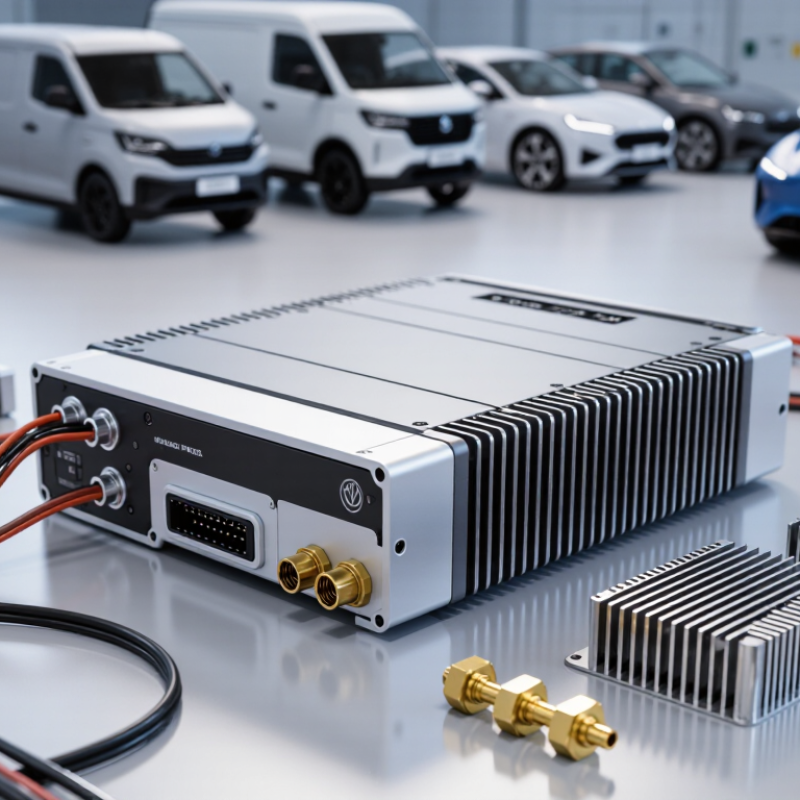
10 Best EV Motor Controller Manufacturers in 2026

Choosing an EV motor controller is not a box-checking exercise. It is a decision about how smoothly a vehicle launches, climbs, and manages heat. The controller translates battery power into precise motor commands. A poor match can waste energy, limit torque, or strain components during repeated acceleration. Details matter: voltage range, continuous current, cooling design, software support, and integration with the motor all deserve close attention.

Professor Ali Emadi, an electric-drive researcher, offers a useful perspective through his work on electric vehicle propulsion: effective electrification depends on coordinating the drive system, not treating each component in isolation. That principle helps explain why an EV motor controller manufacturer should be assessed beyond headline power ratings. Manufacturing consistency, testing methods, customization, and technical support can matter just as much. A large specification sheet is not proof of a reliable product.

This guide examines 10 manufacturers to help readers compare their capabilities in 2026. It considers product focus, application experience, and the practical evidence buyers can verify. Some companies serve high-volume vehicle programs; others may suit specialized platforms or demanding prototypes. There is no universal winner. That is an inconvenient truth. A controller that performs well in a compact delivery vehicle may not fit a high-performance passenger car. Buyers should confirm claims against their own motor, battery, duty cycle, and thermal limits. No list can replace that engineering review, but a careful comparison can make the shortlist more useful—and reveal where the available information remains thin.

10 Best EV Motor Controller Manufacturers in 2026

How EV Motor Controllers Work and Why They Matter

An EV motor controller converts battery power into the electrical signals that drive the motor. In many designs, its inverter switches direct current into rapidly changing three-phase current. The controller adjusts that output to manage motor speed and torque. It also reads signals from sensors, such as rotor position and temperature. That loop matters.

A driver feels its decisions through smooth starts, predictable acceleration, and regenerative braking. On a steep climb, the controller may limit output to protect the motor or battery from excessive heat. Poor control can waste energy, create rough response, or stress components. Yet performance depends on the whole system, including motor design, cooling, and software. A controller alone cannot fix every weakness.

Tips: Compare controllers by voltage and current range, cooling method, sensor compatibility, and communication interfaces. Check how they behave under sustained load, not only brief peak output. Ask for clear test conditions and protection limits. Real-world installation details can change results, so treat headline specifications as a starting point, not a guarantee.

Criteria for Evaluating EV Motor Controller Manufacturers in 2026

A credible evaluation of an EV motor controller manufacturer starts with the vehicle’s real operating needs, not a headline power rating. Ask for efficiency maps across the intended speed and torque range. Check performance at low battery voltage, during repeated acceleration, and under sustained load. Numbers matter. A single peak-efficiency figure says little about stop-and-go traffic or a long climb.

Thermal behavior deserves close attention. Request derating curves and test conditions, then compare them with the vehicle’s cooling space and duty cycle. Review protections for overcurrent, excess temperature, and voltage fluctuations. Ask how faults are recorded and diagnosed; clear error codes can shorten workshop troubleshooting. A polished demonstration can still hide weak performance after the enclosure heats up.

Reliability evidence should include vibration and environmental test methods, production traceability, and field-service procedures. Review firmware update controls, integration documentation, warranty terms, and technical support response times. If possible, test a sample controller with the intended motor, sensors, and battery. Log temperatures, current, and response during repeatable runs. One limitation: supplier test data may not match your installation, so verify key claims independently. A low purchase price can become expensive when tuning takes weeks or replacement parts arrive slowly.

10 Best EV Motor Controller Manufacturers in 2026 — Criteria for Evaluating EV Motor Controller Manufacturers in 2026

An evidence-based evaluation framework for comparing manufacturers without company or brand names. Suggested weights total 100% and should be adjusted to the vehicle, motor, operating environment, and applicable regulations. Verify specifications against current product documentation and test records.

Evaluation criterion Suggested weight What to evaluate Evidence to request Strong evaluation signal
Electrical ratings and motor compatibility 15% Continuous and peak voltage and current ratings; supported motor types; phase-current limits; speed range; and compatibility with the intended battery and motor. Datasheet, operating-limit curves, motor compatibility information, and clearly defined test conditions for peak ratings. Ratings are stated with duration, temperature, cooling, and voltage conditions, and include suitable operating margin for the application.
Efficiency and controllability 10% Efficiency across relevant speed and torque conditions, low-speed control, torque response, regenerative-braking behavior, and calibration capability. Efficiency maps or test reports covering the intended operating region; control-function descriptions; and applicable motor-control test results. Performance data covers more than a single peak-efficiency point and corresponds to the specified motor, voltage, and thermal conditions.
Thermal design and derating 10% Cooling method, operating-temperature limits, thermal monitoring, heat-sink or coolant requirements, and behavior when temperatures approach limits. Thermal specifications, installation guidance, derating curves, and temperature-protection descriptions. Thermal limits and derating behavior are documented, testable, and appropriate for the vehicle’s expected duty cycle and cooling system.
Protection and fault handling 10% Response to overcurrent, overvoltage, undervoltage, overtemperature, short circuit, sensor faults, and loss of communication. Fault lists, diagnostic documentation, protection thresholds where publishable, fault-response behavior, and recovery procedures. Faults are detected and reported with defined responses; protective behavior is validated under relevant operating conditions.
Reliability and environmental suitability 10% Resistance to vibration, shock, moisture, dust, temperature cycling, and other conditions expected in the installation. Environmental test plans and reports, enclosure-rating documentation where applicable, operating limits, and reliability data with test conditions. Claims are supported by documented tests relevant to the intended mounting location and vehicle environment.
Functional safety and engineering process 10% Safety-related development practices, hazard analysis, fault detection, safe-state behavior, and the scope of any claimed safety compliance. Safety documentation, development-process evidence, safety manuals, and certificates or assessment reports with clearly stated scope. Safety claims identify the specific product, functions, assumptions, and assessment scope rather than relying on general statements.
EMC and electrical integration 8% Electromagnetic emissions and immunity, grounding and shielding guidance, cable requirements, and compatibility with vehicle electrical systems. Applicable EMC test reports or declarations, installation guidance, and details of test configuration and operating modes. Evidence reflects the relevant product configuration and operating conditions, with practical guidance for system-level integration.
Communication and software integration 8% Supported communication interfaces and protocols, command and diagnostic access, software tools, configuration control, and update process. Interface specifications, protocol documentation, software and firmware release information, and integration support materials. Interfaces are documented, versioned, and suitable for the vehicle architecture, with a controlled process for configuration and updates.
Manufacturing quality and traceability 10% Production controls, component and revision traceability, inspection and end-of-line testing, change management, and quality-system oversight. Quality-system documentation, production-test descriptions, traceability examples, and product-change notification procedures. Production controls and traceability are documented, and design or component changes are communicated and managed consistently.
Technical support and lifecycle readiness 9% Engineering support, documentation quality, sample and production availability, repair or replacement arrangements, and product-lifecycle planning. Support process details, documentation package, availability information, warranty terms, and lifecycle or discontinuation notices where applicable. Support responsibilities and product-lifecycle expectations are clear enough to plan integration, validation, and ongoing vehicle service.
Total suggested weighting 100% — Score each criterion using comparable evidence and application-specific requirements.

10 Leading EV Motor Controller Manufacturers in 2026

Leading EV motor controller manufacturers in 2026 are judged by more than peak power ratings. Buyers compare voltage range, continuous current, thermal performance, and compatibility with the motor and battery. A controller may handle a brief acceleration surge but struggle on a long hill. Test conditions matter.

Strong manufacturers provide clear technical documentation, including wiring diagrams, operating limits, and fault-response behavior. Look for evidence of testing across temperature changes, vibration, and repeated load cycles. Useful features include regenerative braking control, sensor support, and diagnostic data that helps technicians trace a fault. Details matter.

The leading ten are not necessarily the ten with the loudest claims. A reliable supplier should explain how its controller behaves when temperatures rise or signals become inconsistent. Ask about firmware updates, integration support, and expected service life, then compare answers against documented test results. One gap is common: public specifications rarely show how performance changes after years of real-world use. Independent fleet data can help, though it may be difficult to compare across vehicles. A careful review should weigh measurable evidence alongside practical support, not just headline efficiency figures.

EV Market Growth: Demand Context for Motor Controllers

Global electric car sales have grown rapidly, increasing demand for the motor controllers used in electric vehicles.

Figures are approximate and include battery-electric and plug-in hybrid cars. Source: International Energy Agency, Global EV Outlook 2025.

How Manufacturers Differ in Technology, Scale, and Applications

EV motor-controller manufacturers serve different engineering priorities. Some specialize in compact controllers for city cars, where low weight and cost matter. Others build high-voltage systems for heavy vehicles, where continuous power and cooling capacity become critical. Integration also varies: an inverter, motor, and control software may arrive as one unit, or as separately engineered components. The IEA’s Global EV Outlook 2024 reported nearly 14 million electric-car sales worldwide in 2023, about 18% of all car sales. That growing volume increases pressure on manufacturers to deliver consistent output, not just impressive peak-power figures. Scale matters.

Technology choices shape real-world performance. Silicon-carbide power electronics can support efficient operation at higher voltages, while advanced thermal design helps controllers sustain output on steep climbs or repeated acceleration. Buyers should compare operating voltage, continuous versus peak power, cooling method, diagnostic functions, and software flexibility. These details often matter more than a single efficiency claim. The right controller for a delivery van may be a poor fit for a lightweight passenger car. Comparisons also have limits: published specifications do not always use identical test conditions, and vehicle integration can change results. A neat ranking can hide that. Check the application data and test assumptions before judging manufacturers.

How to Select an EV Motor Controller Supplier for a Specific Project

Selecting an EV motor controller supplier starts with the vehicle’s actual duty cycle, not a catalogue headline. Define battery voltage, peak and continuous current, motor type, wheel size, and expected load. A delivery van climbing steep streets needs different thermal headroom from a light urban vehicle. Ask how the controller handles regenerative braking, low-speed torque, and sudden load changes. Small details matter.

Request clear interface documents before discussing production volumes. Check encoder compatibility, communication protocols, wiring diagrams, fault codes, and software tools. A controller may meet its power rating yet prove difficult to integrate. Ask for test data at realistic temperatures and loads, plus details on cooling and vibration testing. A neat datasheet is not proof. Bench testing helps, but vehicle testing can reveal surprises.

Evaluate engineering support as carefully as hardware. Can the supplier explain protection limits, component tolerances, and firmware update procedures? Confirm how sample units, revisions, and field failures are handled. Compare response times and documentation quality, not only price. I would leave room for integration work in the schedule; it often takes longer than expected. No supplier can remove every project risk, and early assumptions sometimes need revisiting. A small pilot run can expose those gaps before a larger commitment.

Find the Right Repair Product for Your Project

Need to find the most appropriate product for the needs of your project? We can help because we have over 70 years of experience servicing the industry with every kind of project, from Do-it-yourself projects to large skyscrapers. Package Pavement has the experience, the knowledge and the products to help every project succeed.

Quikrete Repair Products
Legend
Package Pavement has two convenient locations in Stormville, NY (Dutchess County) and Ravena, NY (Greene County) to serve the Northeastern Region with bagged concrete, blacktop, mortar, and repair products. This map gives a general idea of where we service and the product lines we offer.
Package Pavement Products
Quikrete Products
Spec Mix Products
map

Our Brands Websites