2026 Best Concrete Restoration Techniques and Innovations?

The field of concrete restoration is evolving rapidly. With advancements in technology and materials, new techniques emerge each year. These innovations improve durability and aesthetics.

Concrete restoration plays a crucial role in preserving structures. Cracks, discoloration, and wear can compromise their integrity. Addressing these issues timely can extend a structure's lifespan. However, not all methods yield lasting results. Some techniques may fail due to poor application or material selection.

As we explore the best concrete restoration techniques for 2026, it is essential to reflect on past approaches. Have they been effective? Are we using the right solutions? Balancing effectiveness and cost is always a challenge. Embracing new technologies while learning from failures will shape the future of concrete restoration.

2026 Best Concrete Restoration Techniques and Innovations?

2026 Overview of Concrete Restoration Techniques and Innovations

2026 Best Concrete Restoration Techniques and Innovations?

Concrete restoration techniques have evolved significantly in recent years. Innovations now focus on durability, sustainability, and efficiency. According to a recent industry report, over 50% of concrete structures exceed their intended lifespan. This underscores the need for effective restoration methods.

One innovative technique is the use of polymer-modified mortars. These materials enhance adhesion and flexibility. When applied correctly, they can extend the lifespan of existing structures. However, failure to properly prepare the surface can lead to peeling and delamination. It's crucial to conduct a thorough assessment before application.

Tips: Always test a small area first. This helps gauge the material’s compatibility with the existing concrete.

Another promising development involves self-healing concrete. This unique material incorporates microcapsules that release healing agents when cracks form. While the concept is groundbreaking, implementation can be tricky. Environmental conditions can impact effectiveness. Further research is needed to optimize its use in varying climates.

Tips: Keep track of local climate data. Adjust restoration techniques based on these factors to achieve better results.

Concrete restoration is a dynamic field. Each technique has strengths and weaknesses. Staying informed about new innovations is essential for successful outcomes.

Key Innovations in Concrete Repair Materials for Longevity

Innovations in concrete repair materials play a crucial role in enhancing the longevity of structures. Recent studies indicate that nearly 70% of concrete structures require repairs within 30 years. This high rate of deterioration highlights the need for effective solutions. New materials are emerging that improve adhesion, durability, and resistance to environmental factors. For instance, fiber-reinforced polymers can significantly increase tensile strength, thus prolonging the lifespan of repaired areas.


Moreover, the use of ultra-high-performance concrete (UHPC) is gaining traction. Reports show that structures using UHPC can last over 100 years with minimal maintenance. However, challenges remain. These materials can be cost-prohibitive for some projects. Additionally, the application process can be complex, requiring skilled labor. Exploration of self-healing concrete also shows promise. This innovative approach involves bacteria that activate when cracks occur. Though still in the experimental phase, it could revolutionize the repair industry.


The need for continued research and development is evident. While advancements have been made, the concrete repair industry must address cost, accessibility, and application challenges. Balancing innovation with practicality is essential for future success. The integration of these advanced materials could reshape our approach to concrete restoration.

Techniques for Assessing Concrete Damage: Data-Driven Approaches

Assessing concrete damage requires a meticulous approach. Data-driven techniques are revolutionizing this field. They offer a clear method for understanding deterioration. Infrared thermography, for example, can identify moisture within concrete structures. This tool provides a visual map of problem areas. Yet, false positives can sometimes occur. Dependence on technology may lead to oversight of subtle signs.

Another innovative method is using drones equipped with advanced sensors. These drones can scan hard-to-reach areas quickly. They gather data on surface conditions and cracks. Still, there are limitations. Environmental factors can affect the accuracy of the readings. Relying solely on aerial assessments might miss critical ground-level issues. A blend of methods is often necessary.

Effective assessment also requires interpretation of data. Engineers must analyze results critically. Data on its own can be misleading. A well-rounded approach balances data with hands-on inspections. Human insight remains vital in this process. The fusion of technology and experience can provide the best outcomes. Balancing innovation with caution is crucial for success in concrete restoration.

Emerging Technologies in Concrete Restoration: A 2026 Perspective

2026 Best Concrete Restoration Techniques and Innovations?

The concrete restoration landscape is rapidly changing. In 2026, new technologies are shaping how we approach repairs. Advanced materials are making historic buildings last longer. For instance, self-healing concrete uses bacteria to fill cracks. This innovation not only extends lifespan but reduces maintenance costs.

Another emerging technique involves 3D printing for repairs. This method allows for precise and efficient restoration. However, there’s a concern about quality control. Not every structure will benefit equally from 3D methods. The technology is promising, yet many artisans still prefer traditional methods.

Additionally, nanotechnology is revolutionizing concrete. It enhances strength while reducing weight. This can lead to lighter structures that are still durable. Yet, the use of nanomaterials raises questions about safety and environmental impact. There’s a balance to find here, and it requires ongoing reflection. Each innovation has its pros and cons, and we must learn from both.

Sustainable Practices in Concrete Restoration: Industry Standards and Metrics

Sustainable practices in concrete restoration are gaining momentum. The industry is shifting towards environmentally friendly materials and methods. According to a recent report by the Global Concrete Sustainability Council, up to 30% of concrete used in repairs can be derived from recycled materials. This not only reduces waste but also lowers the carbon footprint associated with production.

Tips: When planning a restoration project, consider using locally sourced materials. This can further reduce transportation emissions and promote local economies. Additionally, implementing techniques like pervious concrete can improve water management and enhance environmental sustainability.

While innovations exist, challenges remain. The adoption of sustainable practices is still inconsistent across regions and projects. Some contractors may rely on traditional methods, overlooking more eco-friendly options. It's essential to raise awareness within the industry about the benefits of these techniques. More training might be necessary to bridge this knowledge gap.

Tips: Engage with training programs focusing on sustainable techniques. Collaboration among contractors, engineers, and environmental specialists is crucial. This can lead to better understanding and integration of advanced practices into existing workflows.

Find the Right Repair Product for Your Project

Need to find the most appropriate product for the needs of your project? We can help because we have over 70 years of experience servicing the industry with every kind of project, from Do-it-yourself projects to large skyscrapers. Package Pavement has the experience, the knowledge and the products to help every project succeed.
Quikrete Repair Products
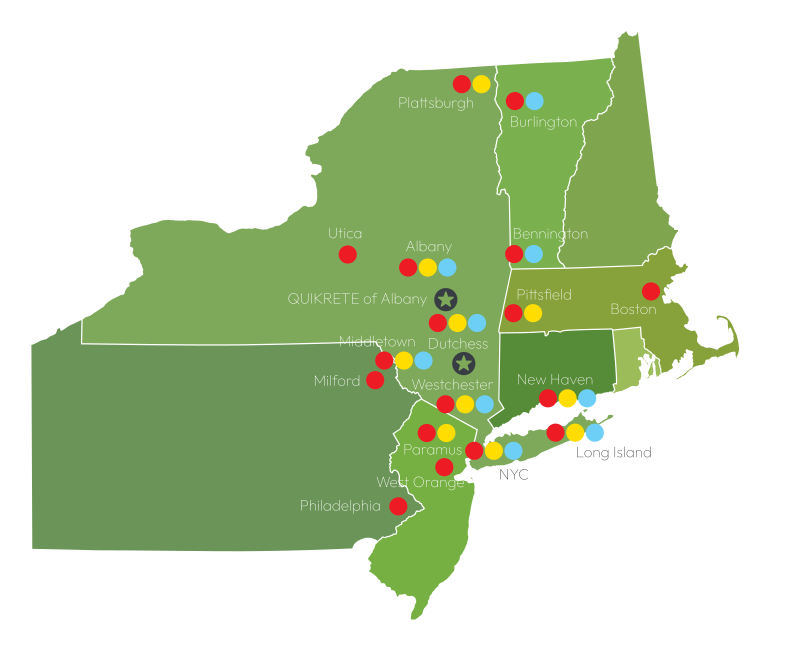
Legend
Package Pavement has two convenient locations in Stormville, NY (Dutchess County) and Ravena, NY (Greene County) to serve the Northeastern Region with bagged concrete, blacktop, mortar, and repair products. This map gives a general idea of where we service and the product lines we offer.
Package Pavement Products
Quikrete Products
Spec Mix Products
map

Our Brands Websites