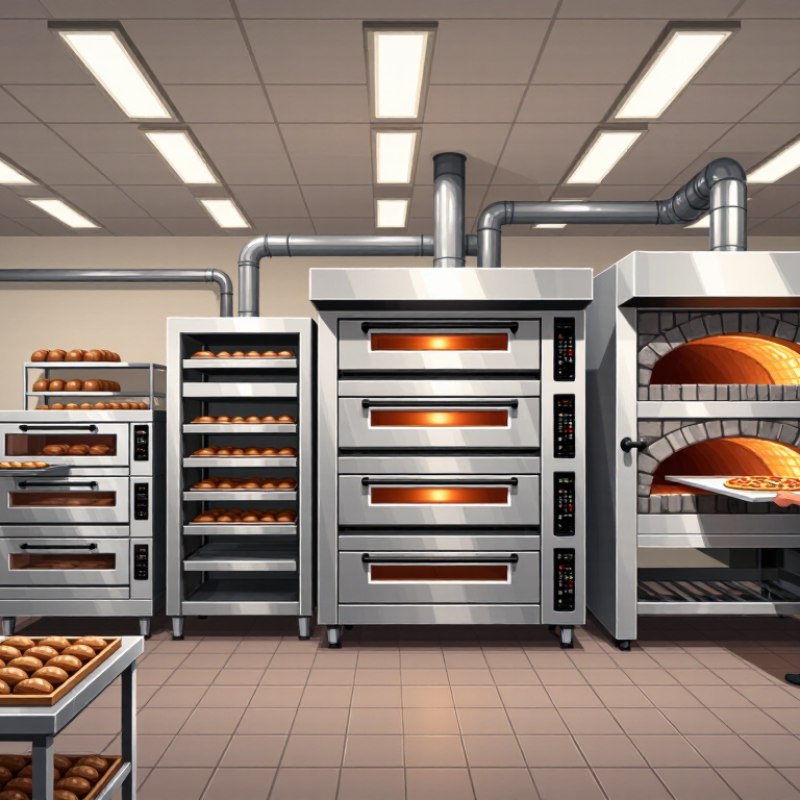
| Electric Deck Oven | Precise, consistent temperature control; independent control is often available for separate chambers or decks. | Bakeries, cafés, restaurants, and smaller kitchens that prioritize repeatable results and do not have a suitable gas supply. | Electric elements heat the chamber and deck. Many commercial models can reach high baking temperatures, but the actual range and recovery rate vary by model and load. | Requires electrical capacity suitable for the oven’s rated load. Larger or multi-deck units may need a dedicated circuit and professional electrical installation. | High-output models can require substantial electrical capacity. Preheating and recovery performance depend on the oven design, supply, and workload. | Consistent control, straightforward operation, and the available utility supply matter more than using gas or wood. |
| Gas-Fired Deck Oven | Direct gas-fired heating can provide strong heat output and may suit kitchens with an established commercial gas connection. | High-volume bakeries, pizzerias, and food-service operations that already have suitable gas infrastructure. | Burners heat the baking chamber and deck through the oven’s designed heat path. Heat distribution and recovery vary with burner layout, deck material, and operation. | Needs an approved gas connection, correct ventilation, and installation that meets local fire, fuel-gas, and building requirements. Some models also require electricity for controls or fans. | Installation and ventilation can be more involved. Fuel availability, local energy costs, and maintenance requirements should be checked. | The kitchen has compliant gas service and needs a production oven with gas-fired heating. |
| Wood-Fired Deck Oven | Produces distinctive wood-fired cooking characteristics and can support a visible, craft-focused cooking style. | Artisan pizzerias, specialty bakeries, and restaurants where wood-fired products are central to the menu. | Temperature is managed through fuel, airflow, fire placement, and heat retained by the oven mass. Cooking conditions can vary more with operator technique and fire management. | Requires suitable flue or chimney arrangements, combustion-air planning, fuel storage, and compliance with local emissions, fire, and building rules. | Needs trained operators, regular ash and fire management, and more space and installation planning than many electric models. | Wood-fired flavor and presentation are key menu features, and the site can accommodate the required ventilation and fuel handling. |
| Multi-Deck Commercial Oven | Multiple stacked baking chambers increase capacity within a relatively compact floor footprint; decks may offer separate temperature controls. | Production bakeries, busy pizzerias, and kitchens baking several batches or products at the same time. | Available with different heating systems, including electric and gas. Performance depends on the fuel type, deck construction, chamber controls, and the number of chambers in use. | Confirm floor loading, equipment clearance, access for delivery, utility capacity, ventilation, and the manufacturer’s installation requirements. | Higher purchase and installation costs than a small single-deck unit; stacking does not guarantee equal results across every chamber. | Demand is high enough to use several chambers and the kitchen has the utilities and space for a larger installation. |