Best Colored Mortar Manufacturers in China?
Choosing the best colored mortar manufacturers in China requires more than comparing prices or viewing polished product photographs. Buyers need evidence of stable pigments, reliable bonding, consistent batches, and practical support for sampling and delivery. Small differences matter. A shade that looks warm under a showroom lamp may appear cooler on a north-facing wall.
The market sits within a large construction sector. China’s National Bureau of Statistics reported that construction-industry output reached RMB 31.6 trillion in 2023, an increase of 5.8% year over year. This figure describes the wider sector, not colored mortar sales. Still, it shows why supplier capability and quality control deserve close attention. The Ministry of Housing and Urban-Rural Development’s technical standards for ready-mixed mortar also provide useful reference points for buyers assessing production and performance. Standards alone, however, cannot confirm how a particular product performs on site.
This guide examines Chinese manufacturers through practical criteria: product range, pigment consistency, technical documentation, testing practices, production capacity, and export experience. Ask for recent test reports and a sample made from the same production process as the quoted product. Check color variation after curing, not only in the wet mix. That step is easy to miss. Supplier claims may sound precise, yet public information can be incomplete, and factory visits or independent testing may not always be possible. A careful shortlist should therefore distinguish verified evidence from marketing language—and leave room for questions that the available data cannot answer.
What Is Colored Mortar and Where Is It Used?
Colored mortar is a cement-based jointing material tinted with mineral pigments. It fills the spaces between bricks, stone, or concrete blocks while helping create a consistent surface. Unlike plain gray mortar, it can blend with masonry or provide a deliberate contrast. A warm sand-colored joint, for example, can soften the look of red brick. A charcoal joint can make pale stone edges stand out.
It is used in brick walls, stone facades, garden walls, fireplaces, and some interior feature walls. The right choice depends on the masonry, exposure, and joint width. Outdoor walls face rain and temperature changes, so the mortar should be suitable for those conditions. On a small test panel, check the color after it dries. Wet mortar often looks darker. Small differences matter.
Installation affects the final appearance. Keep the mix ratio and water amount consistent, and apply the mortar at a steady depth. Too much water can weaken the mix or make color less uniform. Clean the masonry carefully; aggressive scrubbing can stain porous surfaces. Even with careful work, a finished wall may vary slightly in tone. That is worth checking before the whole project begins.
Colored mortar is masonry mortar tinted with pigments and used in applications such as brick, stone, and block joints. Its performance depends on the specified mortar type, not the color. The chart shows ASTM C270 minimum compressive strength requirements measured at 28 days; actual requirements and selection should follow the applicable standard and project specifications.
How Is Colored Mortar Manufactured in China?
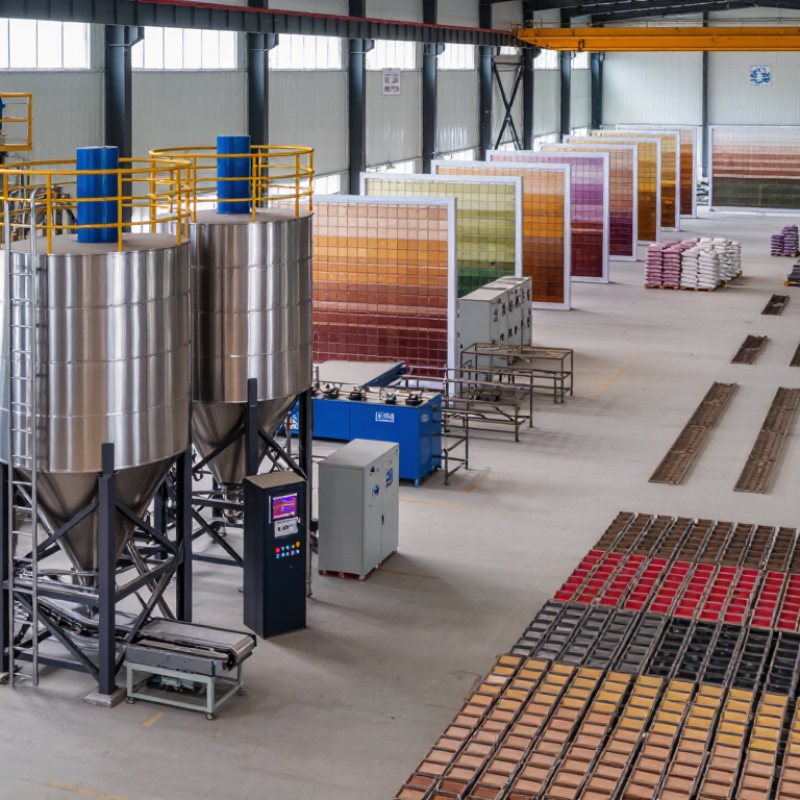
Colored mortar production in China begins with carefully selected dry materials. Cement or other suitable binders are blended with graded sand, mineral pigments, and performance additives. Pigments are typically measured by weight, since small changes can noticeably shift the final shade. The sand is screened to control particle size and remove unwanted debris. Details matter.
In a controlled production line, automated scales feed the ingredients into a dry-mixing system. Mixing time and sequence are adjusted to distribute pigment evenly without damaging the blend. Additives such as cellulose ether may improve water retention and workability, depending on the mortar’s intended use. Moisture control is important; damp sand or poorly sealed storage can affect flow and color. Then the powder is packed in moisture-resistant bags.
Quality checks may include testing color against a retained sample, measuring consistency between batches, and assessing workability after water is added. A factory should also keep production records and identify batches clearly, so results can be traced. Practices differ between manufacturers, and a sample alone cannot guarantee identical color on every wall. Lighting, water dosage, substrate, and curing conditions all influence appearance. That part is easy to underestimate. Even a well-made mix needs careful application and a small site trial.
Which Factors Help Identify a Reliable Colored Mortar Manufacturer?
A reliable colored-mortar manufacturer proves repeatability, not just a vivid sample. Ask for batch-level color records, calibrated dosing logs, and retained samples from recent production. Request independent test reports for compressive strength, water absorption, adhesion, and workability, using applicable EN 1015 methods or equivalent standards. A glossy brochure is not evidence.
Check pigment resistance to ultraviolet exposure, alkali, and weathering. Compare cured panels in daylight and shade. Inspect at least two production batches; small shade shifts can become obvious across a long masonry wall. Ask how the plant controls cement source, aggregate grading, moisture, and mixing time. A dependable supplier explains tolerances plainly and provides installation guidance, storage limits, and troubleshooting support. Some variation remains.
Environmental records matter too. The World Green Building Council’s 2019 report, Bringing Embodied Carbon Upfront, attributes 11% of global energy-related carbon emissions to building materials and construction. Product-specific environmental declarations and transparent sourcing can inform selection, though they do not prove mortar performance.
Compare like-for-like declarations, verify laboratory details and report dates, and request a trial panel before specifying a large order. If answers rely on vague claims, keep looking.
What Should Buyers Compare When Choosing a Chinese Supplier?
Best Colored Mortar Manufacturers in China?
What Should Buyers Compare When Choosing a Chinese Supplier?
Compare product performance against the project, not just the color chart. Ask for technical data on adhesion, compressive strength, water absorption, and weather resistance. A mortar for interior joints may not suit an exposed façade. Request a sample and check its shade after mixing and curing. Details matter. A clean sample alone cannot show how consistent a full production batch will be.
Review how the supplier controls color and quality between batches. Ask whether pigment dosage is measured, batch records are retained, and test reports match the product you plan to order. Confirm minimum order quantities, production lead times, packaging, and shipping arrangements in writing. Technical support matters too; a clear mixing guide can prevent uneven color on site. One point buyers sometimes overlook: your local sand, water, and application conditions may change the final appearance.
Tips: Compare samples under the project’s actual lighting, and keep a retained sample for reference. Ask the supplier how complaints are investigated and documented. If an answer is vague, ask again; even a capable supplier may not explain every detail clearly at first.
