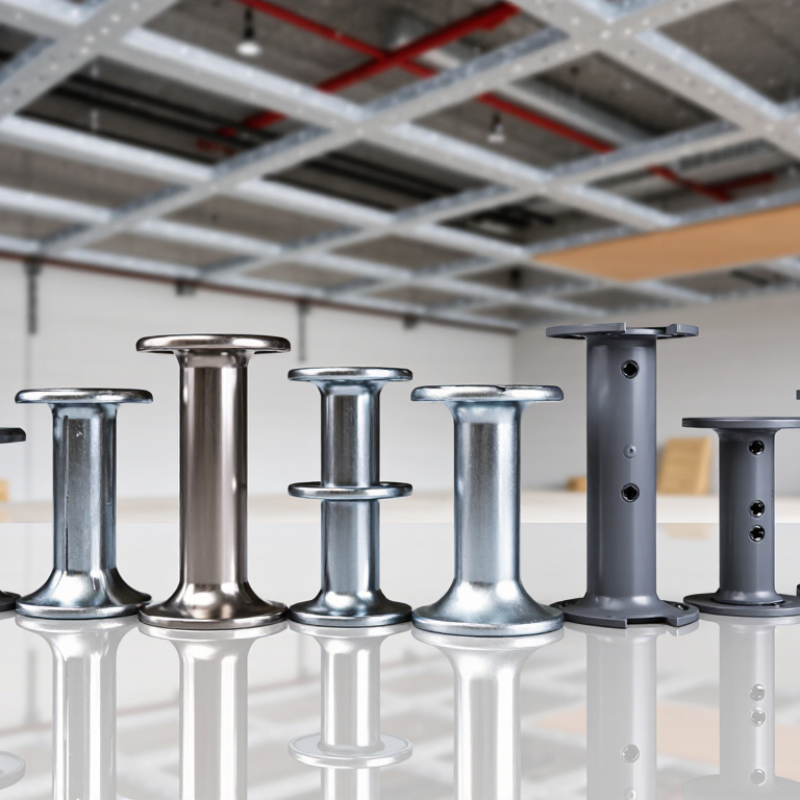
10 Best Ceiling Studs for Global Buyers?

Choosing the right Ceiling Stud is not a simple matter of comparing prices. Global buyers face different load requirements, climate conditions, fire codes, and installation practices. A stud that performs well in a dry office may fail in a humid coastal project. Small details matter, including galvanized coating, flange width, thickness, and connection strength.

Steel-framing consultant Mark Lawson offers a practical reminder: “A reliable stud is selected for the load, not the label.” This principle should guide every purchase. The strongest-looking profile is not always the best option. Buyers should request mill certificates, coating details, dimensional tolerances, and test reports before placing large orders. Those documents reveal more than attractive product photographs.

This guide reviews ten Ceiling Stud options for international projects. It considers strength, corrosion resistance, acoustic performance, fire behavior, compatibility, and supply consistency. Some products suit lightweight suspended ceilings. Others support heavier boards, insulation, or service equipment. The difference can be visible on site: a twisted flange, a loose screw, or a sagging ceiling grid.

There is no universal winner.

Project conditions decide.

Experience also exposes an uncomfortable truth. Low-cost studs can create higher expenses through waste, delays, and replacement work. However, premium materials may be unnecessary for simple interiors. Buyers must balance performance with transport distance, local labor skills, and after-sales support. This comparison aims to make that judgment clearer, while recognizing that regional standards and engineering advice should never be overlooked.

10 Best Ceiling Studs for Global Buyers?

What Ceiling Studs Are and Why They Matter in Construction

10 Best Ceiling Studs for Global Buyers

What Ceiling Studs Are and Why They Matter in Construction

Ceiling studs are framing members that support ceiling boards, insulation, lighting, and service fixtures. They create the hidden skeleton above a room. Depending on the project, studs may use galvanized steel, cold-formed steel, aluminum, or treated timber. Each material behaves differently under moisture, heat, and long-term loading. A strong-looking stud is not always the best choice. Its thickness, profile, spacing, and connection method matter more than appearance.

For global buyers comparing the ten best ceiling studs, local building conditions should guide the decision. Coastal areas may require stronger corrosion protection. Large rooms may need wider sections or closer spacing. Lightweight steel studs can simplify handling, but they may need additional bracing against vibration. Timber can be practical, although humidity and insects require careful control. Ceiling systems also carry real risks when installers ignore deflection, access panels, or the weight of suspended equipment. This is where professional review becomes valuable. Small errors can create visible cracks later.

Tips: Confirm the required load rating, coating, dimensions, and fire performance before ordering. Request test documents and installation guidance from the supplier. Check whether the profile matches local standards. Measure the ceiling layout twice. It sounds basic, but rushed measurements cause expensive waste. One point deserves reflection: the cheapest stud may reduce purchase cost, yet increase labor, maintenance, and replacement expenses over time.

Key Materials and Structural Types of Ceiling Studs

10 Best Ceiling Studs for Global Buyers?

Choosing ceiling studs starts with the material, not the price. Galvanized steel offers stable dimensions, fire resistance, and reliable performance in humid interiors. Its zinc coating helps resist corrosion, but damaged edges still need attention. Aluminum is lighter and easier to handle. It suits projects where transport weight matters, although it may require careful design against deflection. Engineered timber provides warmth and familiar installation methods. Moisture control remains essential.

Structural shape also changes performance. C-shaped studs are common for lightweight ceiling frames and partition connections. Furring channels create a shallow service cavity beneath concrete or timber structures. Hat channels can reduce direct contact and help level uneven surfaces. Suspended systems use main runners and cross tees, allowing access to wiring and ventilation. Timber joists remain useful for residential ceilings, especially where local workers know the method well. Each system needs compatible tracks, clips, fasteners, and load calculations.

Check span tables before ordering. Short samples can mislead. A section that feels rigid by hand may sag across a wide room. Buyers should compare thickness, coating weight, allowable loads, connection details, and packing quality. Local climate, ceiling boards, insulation, lighting, and maintenance access all affect the choice. Confirm regional building requirements with a qualified engineer, because identical profiles can perform differently under local conditions.

How to Compare Ceiling Studs for Different Building Requirements

10 Best Ceiling Studs for Global Buyers?

Comparing ceiling studs starts with the building requirement, not the product label. For light partitions and suspended ceilings, consider galvanized C-studs, furring channels, hat channels, resilient channels, and lightweight framing sections. For longer spans or service loads, heavy-gauge structural studs, boxed sections, reinforced channels, corrosion-resistant profiles, and acoustic framing may perform better. Span changes everything. Verify load tables, deflection limits, and connection details before ordering.

Check compliance with recognized standards, such as ASTM C645, AISI S220, AISI S240, or EN 14195, depending on the project location. Thickness, yield strength, flange width, and protective coating should match local design rules. In humid interiors, coating durability deserves close attention. Moisture is unforgiving. For acoustic ceilings, resilient channels can reduce vibration transfer, but poor screw placement can cancel that benefit. Fire-rated assemblies also require tested systems, not isolated studs.

Sustainability should influence comparison, although it should not replace engineering judgment. The 2023 Global Status Report for Buildings and Construction states that buildings consumed about 34% of global energy and produced roughly 37% of energy and process-related carbon emissions in 2022. Lightweight framing may reduce transport weight, yet thermal bridging and replacement frequency still matter. Ask for environmental product declarations, recycled-content evidence, test reports, and consistent dimensional tolerances. This comparison is not perfect. Regional standards, labor skills, and ceiling loads can change the ranking. Do not guess. Get a project-specific review.

10 Best Ceiling Studs for Global Buyers? - How to Compare Ceiling Studs for Different Building Requirements

No. Ceiling Stud / Framing Type Typical Material Typical Thickness Typical Profile Size Best Building Requirement Main Advantages Important Limitations Recommended Corrosion Protection Selection Priority
1 Standard Steel C-Stud Cold-formed galvanized steel 0.50–0.80 mm 50–100 mm web Standard gypsum-board ceilings, bulkheads, and light interior framing Lightweight, straight, non-combustible, and easy to cut and assemble Not intended for heavy services or long unsupported spans without engineering Zinc-coated steel for dry interiors; use a higher coating class in humid areas Balanced cost, availability, and installation speed
2 Heavy-Duty Steel C-Stud Cold-formed galvanized steel 0.80–1.20 mm 75–150 mm web Heavy gypsum board, service zones, higher ceiling loads, and deeper framing systems Higher stiffness and screw pull-out resistance than light-gauge profiles Higher material cost and more difficult manual cutting Hot-dip or continuously galvanized coating suited to the exposure category Load capacity, deflection control, and service integration
3 Hat-Shaped Furring Channel Galvanized steel 0.45–0.70 mm 22–25 mm depth Direct-fix ceilings and leveling uneven concrete or timber substrates Low profile, fast installation, and useful for creating a flat lining surface Limited load capacity and limited space for insulation or building services Standard zinc coating for interior use; protect cut edges in damp locations Low ceiling depth and substrate correction
4 Furring Channel Galvanized steel 0.50–0.80 mm 18–25 mm depth Suspended gypsum-board ceilings supported by clips or carrying channels Provides a regular fixing grid and accommodates small level adjustments Must be used with compatible hangers and primary channels; spacing is design-dependent Zinc-coated steel selected according to indoor humidity and local standards Grid compatibility and fixing stability
5 Resilient Acoustic Channel Light-gauge galvanized steel 0.50–0.60 mm 13–16 mm depth Bedrooms, cinemas, offices, studios, and ceilings requiring impact-noise reduction Reduces direct vibration transfer between the board and supporting structure Incorrect screw placement can short-circuit the acoustic isolation; not for heavy loads Galvanized coating for dry interiors; avoid prolonged wet exposure Acoustic performance and correct installation detailing
6 Primary Carrying Channel Structural galvanized steel 0.75–1.20 mm 38–50 mm depth Suspended ceilings with multiple layers of board, insulation, or service loads Forms the primary load-bearing grid and improves ceiling alignment Requires engineered hanger spacing and compatible secondary channels Higher-mass galvanized coating for the intended indoor exposure Design load, deflection limits, and hanger layout
7 Secondary Furring Channel Galvanized steel 0.45–0.60 mm 15–25 mm depth Cross-grid ceiling systems and regular gypsum-board fixing layouts Creates consistent board support and simplifies joint positioning Not a substitute for primary structural channels or independently supported services Zinc coating appropriate to the interior humidity class Board spacing, joint support, and system compatibility
8 Slotted Deflection Track Galvanized steel with elongated slots 0.60–1.20 mm 50–150 mm track width Ceiling-to-wall junctions where structural movement or deflection is expected Allows controlled vertical movement while helping reduce cracking at interfaces It is a movement-accommodation component, not a general replacement for load-bearing framing Galvanized steel selected for the surrounding exposure Movement allowance, fire stopping, and connection detailing
9 Stainless-Steel Furring Channel Stainless steel 0.60–1.00 mm 20–35 mm depth Coastal buildings, wet rooms, food-processing areas, and high-humidity interiors Superior resistance to moisture and many corrosive environments Higher purchase cost and more demanding cutting and fastening requirements Use a stainless grade suitable for the chemical and chloride exposure Corrosion resistance and service life
10 Aluminum Ceiling Channel Extruded or formed aluminum 0.80–1.50 mm 20–50 mm depth Lightweight suspended ceilings, humid interiors, and projects requiring easy handling Low weight, good natural corrosion resistance, and clean dimensional appearance Lower stiffness than steel at equal size and possible galvanic corrosion with dissimilar metals Isolate from incompatible metals and select a finish for the exposure Weight reduction, corrosion resistance, and material compatibility

Comparison note: Thickness, profile dimensions, spacing, load capacity, fire resistance, and allowable spans vary by local code and system design. Verify the complete ceiling assembly, hanger layout, corrosion exposure, board weight, service loads, and required fire or acoustic rating before procurement.

Top Ten Ceiling Stud Options for Buyers Around the World

Global buyers can choose from ten ceiling stud options:

  • galvanized steel C-studs
  • stainless steel studs
  • lightweight cold-formed sections
  • heavy-gauge steel studs
  • acoustic studs
  • fire-rated studs
  • moisture-resistant studs
  • slotted deflection studs
  • recycled-content studs
  • timber ceiling members

Each option suits a different ceiling condition. Galvanized steel handles ordinary interiors well. Stainless steel suits humid rooms and coastal projects. Lightweight sections reduce handling effort. Heavy-gauge studs support longer spans, but they need stronger fixings.

Acoustic studs can reduce vibration between rooms. Fire-rated systems require tested assemblies, not just thicker metal. Moisture-resistant choices help in kitchens and service areas. Slotted deflection studs allow controlled movement below structural slabs.

Recycled-content studs support lower-impact procurement. Timber members remain practical where local skills and dry conditions exist. Some choices look efficient on paper. They may perform poorly when installation quality is weak.

The UNEP Global Status Report for Buildings and Construction states that buildings and construction used about 30% of global final energy in 2022. It also reported roughly 26% of global energy-related emissions. This supports careful decisions about insulation depth, thermal bridging, and material quantity.

Buyers should check ASTM C645 or EN 14195 compliance for steel framing, then verify load tables, corrosion protection, and tested fire performance. Look for consistent flange dimensions, clean punched openings, and straight lengths.

A ceiling stud that arrives slightly twisted creates visible board waves. That detail is easy to underestimate. Local availability matters too, because transport delays can cancel the benefit of a technically superior option.

Always match the stud to the complete ceiling assembly.

Installation, Safety, Standards, and Long-Term Maintenance Considerations

10 Best Ceiling Studs for Global Buyers?

Choosing ceiling studs for international projects requires more than comparing price and thickness. Confirm the steel grade, coating, profile dimensions, and load tables. Check whether the system suits suspended ceilings, partitions, or exposed moisture. Local building codes may require specific fire, acoustic, seismic, or corrosion standards. Request test reports, factory quality records, and installation instructions before purchase. Documents matter.

Experienced installers inspect the ceiling layout, hanger spacing, substrate condition, and service openings before framing begins. Measure twice. Small errors matter. Studs must remain aligned without overloading the flanges or damaging protective coatings.

In coastal or humid areas, galvanized protection may need stronger corrosion resistance. In dry interiors, this issue can seem minor, but hidden condensation can still cause rust.

Long-term safety depends on maintenance, not only initial selection. Inspect accessible connections for loosened screws, deflection, staining, or cracks around fixtures. Keep heavy equipment supported by the structural system, not by ordinary ceiling studs alone. Replace bent or corroded members instead of forcing them straight.

Product names and rankings can be useful, yet conditions differ between countries and buildings. I would not call one profile universally best. A cheaper option may perform well in a dry office, but fail expectations in a humid warehouse. Review the actual environment, installer competence, and applicable standards before approving the final ten choices.

Find the Right Repair Product for Your Project

Need to find the most appropriate product for the needs of your project? We can help because we have over 70 years of experience servicing the industry with every kind of project, from Do-it-yourself projects to large skyscrapers. Package Pavement has the experience, the knowledge and the products to help every project succeed.

Quikrete Repair Products
Legend
Package Pavement has two convenient locations in Stormville, NY (Dutchess County) and Ravena, NY (Greene County) to serve the Northeastern Region with bagged concrete, blacktop, mortar, and repair products. This map gives a general idea of where we service and the product lines we offer.
Package Pavement Products
Quikrete Products
Spec Mix Products
map

Our Brands Websites