| Primary extrusion alloy | 6063 aluminum alloy is widely selected for architectural profiles because it provides good extrudability, surface quality, corrosion resistance, and moderate strength. | Supports clean architectural surfaces, detailed channels, drainage paths, and reliable finishing performance. | Chemical composition and mechanical properties should be checked against the specified aluminum alloy standard and mill certificate. |
| Higher-strength alloy option | 6061-T6 is commonly considered where higher structural strength is required, although it is generally less suitable than 6063 for very complex architectural shapes. | May reduce section size or deflection in heavily loaded beams, brackets, and connection components. | Confirm alloy, temper, yield strength, and tensile strength through the applicable material specification and test certificate. |
| Profile wall thickness | Typical architectural pergola sections use approximately 1.5–3.0 mm walls; larger load-bearing beams may require thicker walls or internal reinforcement. | Balances extrusion cost, weight, screw-holding performance, stiffness, and resistance to local denting. | Final thickness must be determined by span, wind load, snow load, connection design, and structural calculations. |
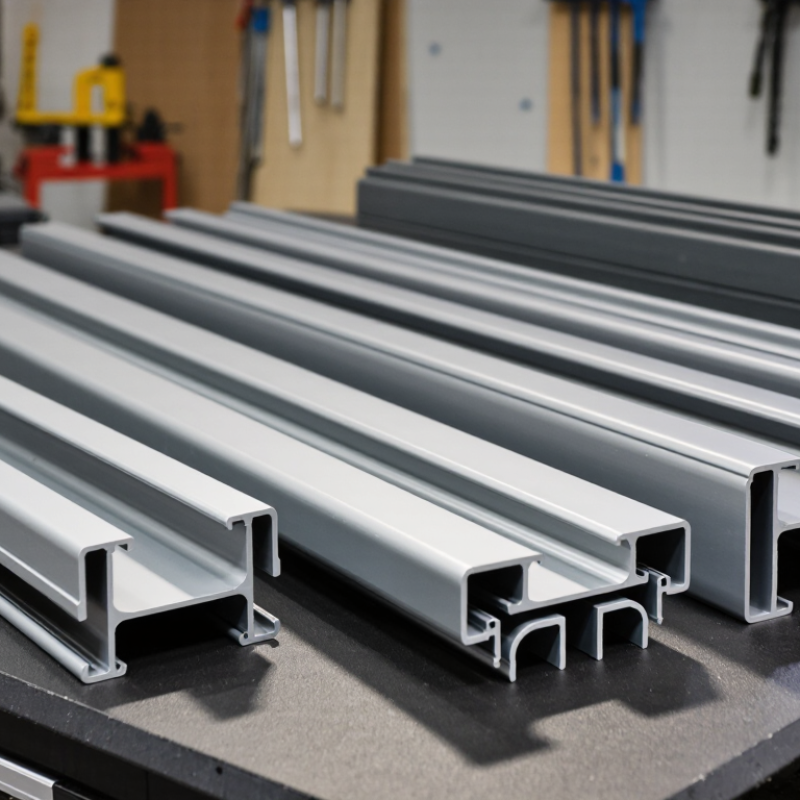
| Section geometry | Common design features include hollow box sections, ribs, screw channels, snap-fit covers, concealed-gutter cavities, and service-access grooves. | Improves bending stiffness while allowing drainage, concealed fasteners, lighting cables, louvers, and trim components. | Review 2D drawings, 3D models, section properties, and interference checks before die production. |
| Design load inputs | Wind, snow, self-weight, rainwater accumulation, louver movement, attached screens, and local code requirements must be defined before sizing the profile. | A visually strong section can still fail if its span, support spacing, or connections are not matched to site loads. | Use the applicable national or regional building code and document the design assumptions. |
| Deflection control | Project-specific serviceability limits are commonly set by the engineer; frequently used limits include span/180, span/240, or span/360 depending on the application. | Controls visible sagging, water drainage, louver alignment, gasket compression, and operating clearance. | Verify by structural calculation or finite-element analysis using the actual section properties and support conditions. |
| Die design and extrusion ratio | The die must provide balanced metal flow, adequate bearing lengths, appropriate wall transitions, and controlled hollow-section mandrels. | Balanced flow reduces twisting, uneven wall thickness, die lines, tearing, and dimensional instability. | Validate through die-flow review, first-article extrusion, dimensional inspection, and profile straightness checks. |
| Billet heating and extrusion | Aluminum billets are heated to a controlled extrusion temperature, then pressed through a custom die; actual temperature and speed depend on alloy, section complexity, and equipment. | Stable thermal control helps maintain surface quality, dimensional accuracy, and consistent mechanical properties. | Record billet, container, die, and exit temperatures together with extrusion speed and lot information. |
| Cooling, stretching, and straightening | After extrusion, profiles are cooled, stretched to remove residual stress, cut to specified lengths, and inspected for straightness and twist. | Reduces distortion during assembly and improves fit between beams, posts, covers, brackets, and drainage parts. | Dimensional tolerances should be specified using the relevant aluminum extrusion tolerance standard. |
| Heat treatment and temper | Common architectural tempers include T5 and T6. T5 is typically associated with cooling after extrusion followed by artificial aging; T6 uses solution heat treatment and artificial aging. | The selected temper affects strength, dimensional stability, machining behavior, and structural design capacity. | Verify hardness and tensile properties by batch, with heat-treatment records where required. |
| Cutting and CNC machining | Operations may include precision cutting, drilling, tapping, slotting, milling, end notching, and drainage-hole production. | Accurate machining supports concealed joints, water outlets, fastener alignment, and repeatable installation. | Use approved CNC programs, first-piece inspection, go/no-go gauges, and documented dimensional tolerances. |
| Pretreatment before coating | Cleaning, etching, rinsing, and conversion treatment remove contaminants and prepare the aluminum surface for paint adhesion and corrosion protection. | Insufficient pretreatment can cause poor adhesion, filiform corrosion, blistering, or premature coating failure. | Check bath concentration, pH, conductivity, rinse quality, surface cleanliness, and coating adhesion. |
| Powder coating | Powder coating provides a broad color range and a durable decorative layer; common architectural performance classes include AAMA 2603, AAMA 2604, and AAMA 2605. | Suitable for outdoor appearance, scratch resistance, color consistency, and weather exposure when the correct performance class is selected. | Verify film thickness, cure schedule, adhesion, impact resistance, gloss, color difference, and weathering requirements. |
| Anodizing | Anodizing creates a controlled aluminum-oxide layer; architectural anodized finishes are commonly specified by coating thickness and appearance class. | Provides a metallic appearance and durable surface while preserving the visible character of the aluminum substrate. | Specify anodizing thickness, color tolerance, surface uniformity, sealing quality, and the applicable anodizing standard. |
| Finish thickness and appearance | Required coating thickness depends on the selected finish system and exposure category; it should be defined in the purchase specification rather than assumed. | Consistent thickness and gloss help prevent visible variation between posts, beams, louvers, trims, and accessories. | Measure with calibrated dry-film or eddy-current instruments and inspect under agreed lighting conditions. |
| Drainage and water management | Integrated gutters, slopes, weep holes, end caps, and downspout channels should be designed as a continuous water-management system. | Prevents standing water, leakage at joints, staining, freeze-related damage, and unwanted discharge near foundations. | Conduct a controlled water test on assembled corners, joints, outlets, and downspout connections. |
| Fasteners and galvanic protection | Fastener material, coatings, isolation washers, sealants, and contact surfaces should be selected for the environmental exposure and adjacent materials. | Reduces galvanic corrosion, staining, loosening, and damage to the finished aluminum surface. | Review the fastener compatibility schedule and inspect torque, sealing, isolation, and edge distances during assembly. |
| Final quality inspection | Inspection should cover alloy and temper, dimensions, wall thickness, straightness, twist, machining, finish, color, packaging, and traceability. | A documented inspection plan reduces installation delays and makes profile performance more consistent across production batches. | Use an approved inspection and test plan, batch identification, calibrated equipment, and retained quality records. |