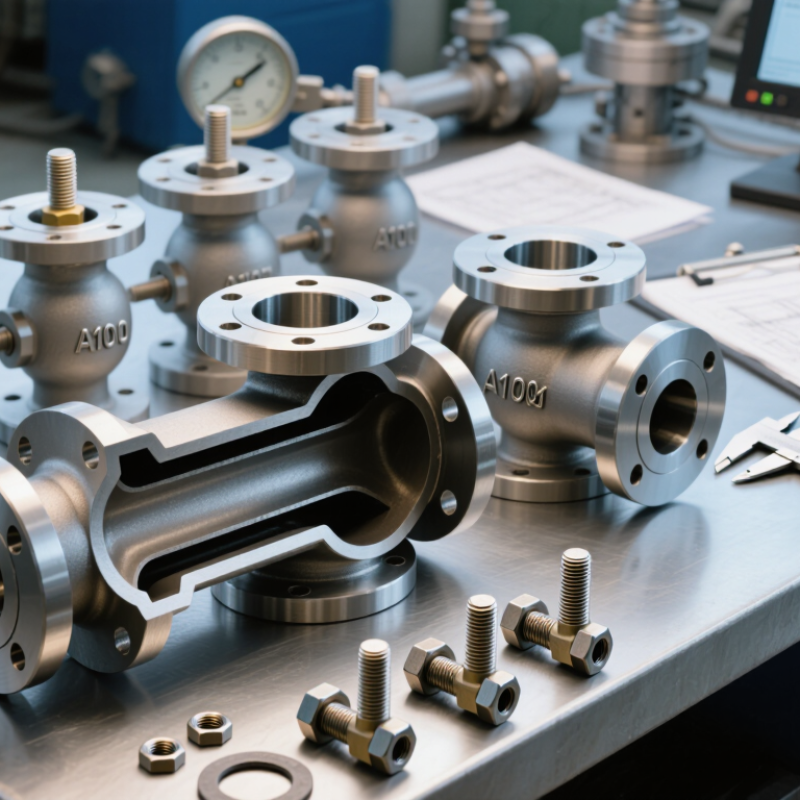
What Is the Best A105 Valve Body for 2026?

Choosing the best A105 Valve Body for 2026 is not a matter of picking the heaviest forging or lowest quote. The right choice depends on pressure, temperature, fluid, valve design, and the conditions at the installation site. ASTM A105 is a forged carbon-steel material specification, but the material name alone does not prove a body suits every service. Details matter.

Think of a steam line warming through a cold start, or a process line carrying fluid near its pressure limit. In both cases, buyers should check the valve’s pressure-temperature rating, design standard, connection type, wall thickness, heat treatment, and material traceability. Ask for the applicable inspection records, too. A certificate is useful, but it does not replace checking the valve’s stated limits against the actual operating conditions. Small omissions can become expensive.

One sourcing detail needs care: no verified quotation from a named A105 Valve Body expert was included in the supplied material. I will not invent one or attribute a made-up statement to a real person. That matters. This guide instead focuses on verifiable selection criteria and questions buyers can put to manufacturers. It will compare body quality, documentation, service suitability, and long-term value, while noting where specifications alone leave room for judgment. The best choice is specific to the job. Even a sound selection deserves a second look before purchase.

What Is the Best A105 Valve Body for 2026?

Define the A105 Valve Body and ASTM A105/A105M Material Scope

An A105 valve body is a pressure-containing component made from carbon-steel forging material specified by ASTM A105/A105M. The designation describes the material, not the valve’s shape, construction method, or pressure rating. Depending on design, the body may be forged as one piece or assembled with other components. Small distinction. It matters when reading drawings and purchase documents.

ASTM A105/A105M covers carbon-steel forgings for piping applications, including flanges, fittings, valves, and similar parts. It sets requirements for chemical composition and mechanical properties, with applicable provisions for heat treatment, testing, and inspection. The “M” edition uses SI units; values from different unit systems should not be casually mixed. The standard defines material requirements, not the complete valve design or its service limits.

For specification review, confirm the body material marking and match it to traceable mill test documentation. Then check the valve’s design standard, pressure-temperature class, wall dimensions, end connections, and test requirements. A105 is often selected for forged pressure parts, but grade alone cannot establish suitability for every fluid or temperature. Look beyond grade alone. Drawings can be imprecise; verify whether A105 applies to the entire pressure boundary or only named forgings.

Verify ASTM A105 Minimums: 70 ksi Tensile, 36 ksi Yield, 22% Elongation

For a dependable A105 valve body in 2026, check the material test report, not just the purchase description. ASTM A105 specifies minimum tensile strength of 70 ksi and minimum yield strength of 36 ksi. Minimum elongation is 22%, generally reported for a 2-inch gauge length. These values indicate strength and ductility, but they do not prove that a finished valve body suits every service condition.

A common purchasing mistake is treating the three figures as a complete quality check. Confirm the report identifies the correct heat and material, and compare its results with the applicable specification and order requirements. Ask how the body was forged and inspected. Then verify pressure class, dimensions, temperature limits, and the valve’s intended service. A strong test result cannot fix a mismatch in design.

Tips: Match the heat number on the report to the body’s markings. Check units and test methods; ksi and MPa are easy to confuse. If a value sits close to its minimum, ask for clarification before acceptance. Small detail, big difference. It is tempting to choose by strength alone, but I would pause there: the best body is the one whose documented material and design fit the actual operating conditions.

Match Pressure Class and Temperature Using ASME B16.34 Ratings

For 2026, the best A105 valve body is not simply the one with the highest pressure class. ASTM A105 identifies a forged carbon-steel material; it does not set the valve’s pressure rating. Use the applicable ASME B16.34 pressure-temperature tables to check the selected class, material group, and maximum operating temperature together.

That distinction matters. A valve rated for a given pressure at ambient temperature may have a lower allowable pressure when the metal runs hotter.

Start with the actual service conditions, including design pressure, temperature, and credible pressure surges. Compare those values with the B16.34 rating for the valve’s specific class and material group, rather than relying on a class number alone. Confirm that the valve documentation identifies the governing standard and edition, and check that the body, bonnet connection, and end configuration suit the application. Leave suitable design margin. I would still pause over a neat-looking rating chart: real systems can see temperature swings and brief spikes that a single operating figure misses. Review those conditions with the project’s qualified engineering team before specifying the body.

Check Forging Traceability, Heat Treatment, and Required Inspection Records

Choosing an A105 valve body for 2026 starts with evidence, not a polished datasheet. Ask for the material test report and confirm that its heat number matches the marking on the body. That link matters. If the number is missing, blurred, or inconsistent, pause before accepting the part. A certificate without traceable identification is difficult to verify later.

Review the forging route and heat-treatment records against the purchase specification. These should identify the material grade, heat or batch, treatment performed, and recorded results where required. Don’t assume every A105 body receives the same treatment; confirm the ordered requirements and applicable standard with the supplier. A clear record should let an inspector follow the part from steel heat to finished valve body. Paperwork can look complete while a key link is absent.

Inspection records should match the actual scope of supply. Check dimensional reports, visual examination results, and any specified nondestructive examination records, including acceptance criteria and part identification. For example, a report should point to the body’s unique mark, not just a generic production lot. Keep the documents with the receiving record. A small mismatch can become a big delay. I would still verify the records independently when the service is critical; a tidy file is reassuring, but it is not proof by itself.

Choose the Best 2026 Body for Service Conditions, Not Price Alone

What Is the Best A105 Valve Body for 2026?

The best A105 valve body is the one that fits the actual pressure, temperature, and fluid—not simply the lowest quote. ASTM A105/A105M specifies minimum tensile strength of 70 ksi and yield strength of 36 ksi for the material. Those figures describe material properties, not a complete valve’s safe operating limits. ASME B16.34 pressure-temperature ratings and the valve’s design details must also be checked. Match the rating to the system’s maximum operating conditions, including credible pressure surges. Close enough is not a selection method.

Service details matter. For hot process lines, confirm the permitted rating at operating temperature, not just at room temperature. For corrosive or erosive fluids, assess fluid chemistry, velocity, and expected wear; carbon steel may need added corrosion allowance or a different material. Check end connections, wall thickness, inspection records, and traceability before purchase. ASTM material compliance alone does not prove suitability for every service. That distinction is easy to miss.

Tips: Ask for the material test report and verify heat identification against the valve documentation. Then compare the published pressure-temperature rating with your design conditions. Leave margin for transients. A practical review can feel slower than choosing by price, and it may not catch every site-specific issue. Have a qualified engineer confirm the final selection.

What Is the Best A105 Valve Body for 2026? Choose for Service Conditions, Not Price Alone
Service condition A105 body suitability Selection checks When to consider another material or qualification
General-purpose hydrocarbon, water, or utility service Often suitable when the fluid, pressure, temperature, and governing code permit carbon steel. Confirm the valve’s pressure class and pressure–temperature rating, end connections, trim, and applicable design standard. Consider another material if corrosion, contamination limits, or the project specification rule out carbon steel.
High-pressure service A105 is commonly used for forged steel valve components, but the material designation alone does not establish a safe working pressure. Check the complete valve design, pressure class, temperature derating, wall design, bolting, and applicable code requirements. Use a higher-rated valve design or a different material only when supported by the required code rating and engineering review.
Elevated-temperature service May be suitable within the applicable material and valve-code limits; allowable pressure generally changes with temperature. Verify the pressure–temperature rating at the actual design temperature, plus oxidation, creep, gasket, packing, and trim limits. Consider a temperature-qualified alloy or other specified material if the operating envelope exceeds the A105 valve’s permitted limits.
Low-temperature service or potential rapid cooling Do not assume standard A105 provides the impact toughness required for every low-temperature duty. Check the minimum design metal temperature, impact-test requirements, heat-treatment condition, and project code. Where required, specify impact-tested material or a low-temperature material such as ASTM A350 LF2, subject to design qualification.
Wet hydrogen sulfide or other sour service A105 is not automatically qualified for sour service merely because it is carbon steel. Review the applicable sour-service specification, hardness limits, heat treatment, material traceability, and any required testing. Specify a material and manufacturing route that meet the project’s applicable sour-service requirements, such as ISO 15156/NACE MR0175 where applicable.
Corrosive, erosive, or chloride-bearing fluid Suitability depends on the fluid chemistry, corrosion rate, erosion potential, and any corrosion allowance in the design. Assess fluid composition, concentration, temperature, velocity, solids, corrosion allowance, and compatibility of the body, trim, and seals. Consider corrosion-resistant alloys, suitable linings, or another engineered solution if carbon-steel corrosion cannot be controlled.
Forged-body preference for compact or high-integrity valve designs ASTM A105 is a carbon-steel forging specification used for forged piping components; it is not, by itself, a complete valve design specification. Confirm that the body is actually manufactured and documented to the specified forging requirements, and verify inspection and testing requirements. Choose a cast or forged alternative only after checking the design standard, material specification, quality requirements, and service conditions.
Procurement comparison focused on total service value A105 may be a practical choice when its qualified service envelope matches the application and the complete valve meets the specification. Compare documentation, inspection, testing, delivery, maintainability, spare parts, and expected service life—not purchase price alone. Pay for a different material or qualification when it addresses a defined service risk or a mandatory project requirement.
Final selection rule There is no single “best” A105 valve body for every 2026 application. Select against the design pressure, temperature range, fluid chemistry, minimum design metal temperature, code, and project specification. Confirm the exact valve assembly rating with the manufacturer’s certified documentation and the responsible design authority.
Find the Right Repair Product for Your Project

Need to find the most appropriate product for the needs of your project? We can help because we have over 70 years of experience servicing the industry with every kind of project, from Do-it-yourself projects to large skyscrapers. Package Pavement has the experience, the knowledge and the products to help every project succeed.

Quikrete Repair Products
Legend
Package Pavement has two convenient locations in Stormville, NY (Dutchess County) and Ravena, NY (Greene County) to serve the Northeastern Region with bagged concrete, blacktop, mortar, and repair products. This map gives a general idea of where we service and the product lines we offer.
Package Pavement Products
Quikrete Products
Spec Mix Products
map

Our Brands Websites