Top 10 Benefits of Using Concrete Cement in Construction?

Concrete cement has revolutionized the construction industry over the decades. Its versatility makes it a preferred choice for various applications. From residential buildings to massive infrastructures, concrete cement provides essential benefits.

One major advantage is its durability. Structures made with concrete cement can last for decades, resisting weather elements and wear. This longevity reduces the need for frequent repairs, saving both time and money. Additionally, concrete cement offers excellent fire resistance, enhancing safety in construction.

Another significant benefit is its energy efficiency. The thermal mass of concrete cement helps maintain stable indoor temperatures. This reduces heating and cooling costs, making it an eco-friendly option. While the initial cost may seem high, the long-term savings and benefits often outweigh the investment. These factors make concrete cement a cornerstone of modern construction practices, shaping our buildings and cities for the future.

Top 10 Benefits of Using Concrete Cement in Construction?

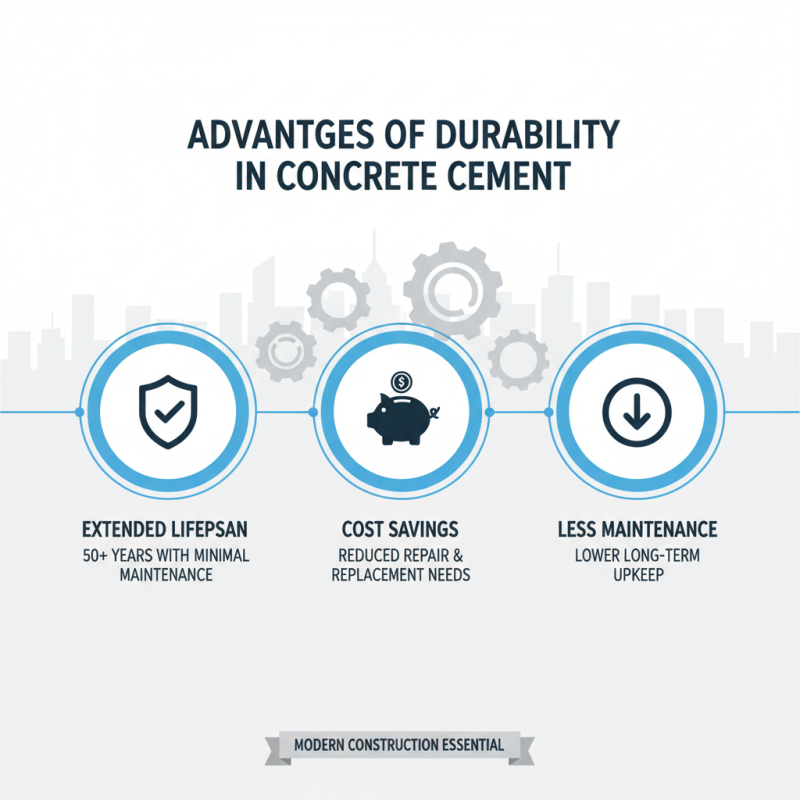
Advantages of Durability in Concrete Cement for Construction Projects

Top 10 Benefits of Using Concrete Cement in Construction?

Concrete cement is a cornerstone of modern construction, primarily due to its exceptional durability. Studies indicate that concrete structures can last over 50 years with minimal maintenance. This longevity significantly reduces the need for repairs, leading to cost savings over the lifespan of a project.

The resilience of concrete cement withstands harsh weather, heavy loads, and even fire. According to a report from the Portland Cement Association, concrete can endure extreme temperatures and resist rot, unlike wood. This makes it ideal for various climates. However, it’s crucial to consider potential cracking issues, which may arise due to temperature fluctuations or improper mixing.

Tips: Maintain adequate moisture during curing to enhance strength and reduce cracking. Make sure your concrete mix is tailored for the specific conditions of your project.

Moreover, concrete's thermal mass contributes to energy efficiency. By regulating indoor temperatures, it reduces reliance on heating and cooling systems. While these benefits are considerable, proper installation and understanding of material properties are vital to harness concrete’s full potential effectively. Lack of expertise can lead to flaws that undermine durability, making ongoing training for construction teams essential.

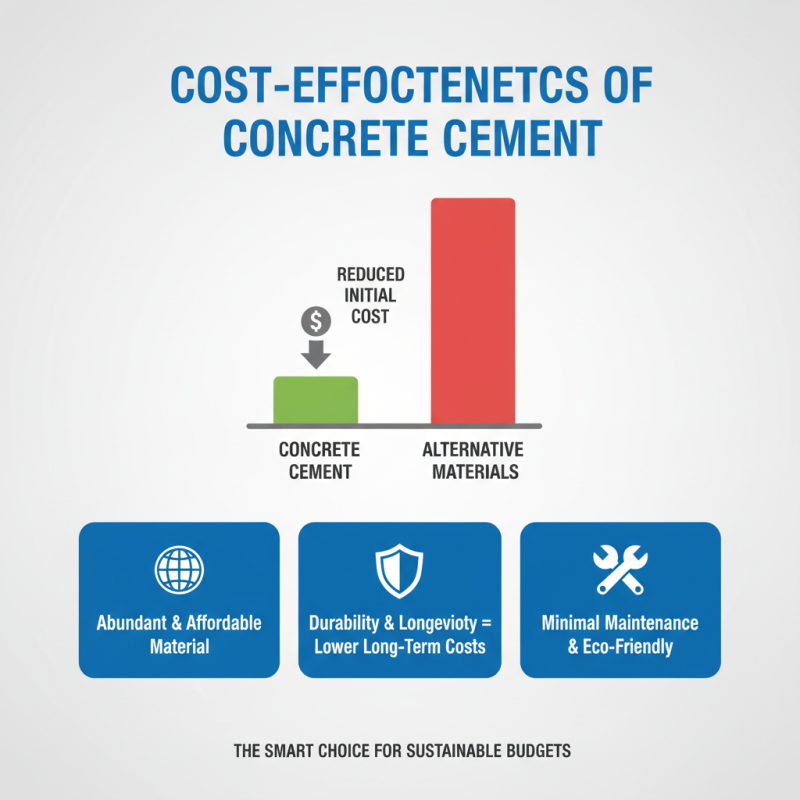
Cost-Effectiveness of Using Concrete Cement Over Alternative Materials

Top 10 Benefits of Using Concrete Cement in Construction?

Concrete cement stands out as an ideal choice in construction, especially when considering cost-effectiveness. Utilizing concrete reduces the overall budget for many projects. Its availability and affordability make it a strong contender against other materials. Comparing costs, concrete often requires fewer resources over time. Maintenance and longevity contribute significantly to its financial appeal.

Tips: Always assess local concrete pricing. This can vary widely depending on the market. Look for bulk options if your project requires significant amounts. Remember, upfront costs can be deceiving. Long-term savings often outweigh initial investments.

Concrete's durability offers another financial advantage. It resists harsh conditions, reducing the need for frequent repairs. In contrast, other materials might wear down quickly, leading to additional expenses. Projects utilizing concrete can expect fewer disruptions and lower lifecycle costs. However, sometimes, the initial labor costs can be higher. Always evaluate skill levels when hiring labor for concrete work.

Tips: Research local contractors before making decisions. Experienced teams can save you money in the long run. Keep in mind, less experience may lead to costly mistakes or delays. Finding the right balance in skill and cost is crucial for your success.

Sustainability: Environmental Benefits of Concrete Cement in Building

Concrete cement plays a crucial role in sustainable construction. It is widely recognized for its durability and long lifespan, which reduces the need for frequent replacements. This durability directly impacts resource conservation, as less material is used over time. The production process of concrete cement has developed significantly. Modern techniques incorporate recycled materials, minimizing waste and promoting a circular economy.

Additionally, concrete has a low thermal conductivity. This characteristic helps regulate indoor temperatures, reducing energy usage for heating and cooling. Buildings constructed with concrete can maintain a stable environment, leading to lower energy bills. However, the production of concrete cement does generate significant carbon emissions. While advancements are ongoing, challenges remain in achieving net-zero emissions.

The versatility of concrete allows it to adapt to various applications, from pavements to structures. This adaptability contributes not only to functionality but also to aesthetic considerations in urban design. Yet, there is ongoing debate about the balance between environmental impact and structural requirements. As the industry evolves, continuous reflection on these issues will drive innovation in building practices.

Top 10 Benefits of Using Concrete Cement in Construction

The following bar chart illustrates the key benefits of using concrete cement in construction, highlighting its sustainability and environmental advantages.

Versatility of Concrete Cement in Various Construction Applications

Concrete cement is known for its versatility in construction. Its ability to adapt to various applications makes it an ideal choice for many projects. From residential buildings to commercial complexes, concrete can be used effectively. It can withstand heavy loads and is durable in harsh weather conditions. This makes it suitable for foundations, roads, and bridges.

When working with concrete, consider the mix design. A well-balanced mix ensures strength and longevity. Too much water can weaken the structure. Pay attention to curing times to achieve optimal results. Each project may require different techniques, which highlights the need for flexibility in approach.

Remember, concrete is not just a one-size-fits-all solution. There are types tailored for specific needs. Lightweight concrete is effective for less load on structures. High-strength concrete is used where durability is paramount. Understanding these variations allows for better planning.

Prepare for some challenges. Weather and temperature can impact curing. Engineers often face issues with cracks appearing later. Using additives can help overcome some of these concerns. Keep learning and adapting to make your concrete projects successful.

Ease of Maintenance and Longevity of Concrete Cement Structures

Concrete cement structures are known for their durability. They resist weathering, which means they last longer. This longevity reduces the need for frequent repairs. Less maintenance is a huge benefit for building owners. Over time, this maintenance ease translates into cost savings.

The surfaces of concrete are less prone to damage than other materials. However, it is important to monitor for cracks. While concrete can endure a lot, it requires some inspection. Regular upkeep, such as sealing, can extend its life. Smaller issues can be fixed before they become major problems.

Building professionals often underline the ease of maintenance with concrete. This material supports various designs but is also forgiving in terms of upkeep. However, neglecting maintenance can lead to costly repairs later on. Proper knowledge of care practices is crucial for maximizing the benefits of concrete cement structures.

Top 10 Benefits of Using Concrete Cement in Construction

Benefit Description Longevity (Years) Maintenance Level
Durability Concrete is highly resistant to wear, weathering, and corrosion. 50+ Low
Fire Resistance Concrete is inherently fire resistant and does not burn. Indefinite Low
Energy Efficiency Concrete structures retain heat and reduce energy costs. Varies Medium
Cost-Effectiveness Lower life cycle costs make concrete a cost-effective solution. 40+ Low
Aesthetic Flexibility Can be molded into various shapes and finishes. Varies Medium
Low Environmental Impact Sustainable construction option when using recycled materials. 50+ Low
Sound Insulation Concrete structures provide excellent sound proofing. 40+ Low
Pest Resistant Concrete is resistant to termites and rodents. 50+ Low
Quick Installation Faster construction times compared to other materials. Varies Medium
High Load Bearing Capacity Can support heavy loads, making it ideal for many structures. 50+ Low
Find the Right Repair Product for Your Project

Need to find the most appropriate product for the needs of your project? We can help because we have over 70 years of experience servicing the industry with every kind of project, from Do-it-yourself projects to large skyscrapers. Package Pavement has the experience, the knowledge and the products to help every project succeed.
Quikrete Repair Products
Legend
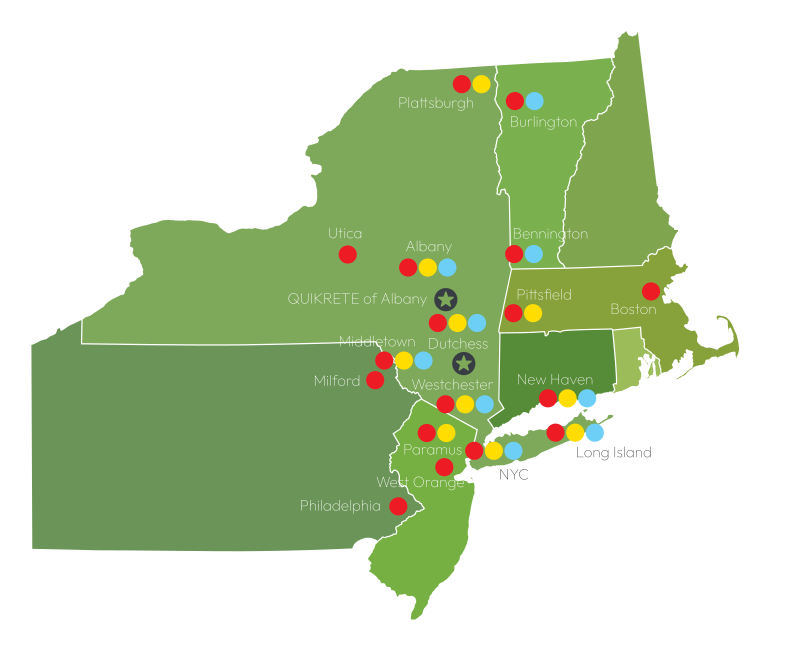
Package Pavement has two convenient locations in Stormville, NY (Dutchess County) and Ravena, NY (Greene County) to serve the Northeastern Region with bagged concrete, blacktop, mortar, and repair products. This map gives a general idea of where we service and the product lines we offer.
Package Pavement Products
Quikrete Products
Spec Mix Products
map

Our Brands Websites