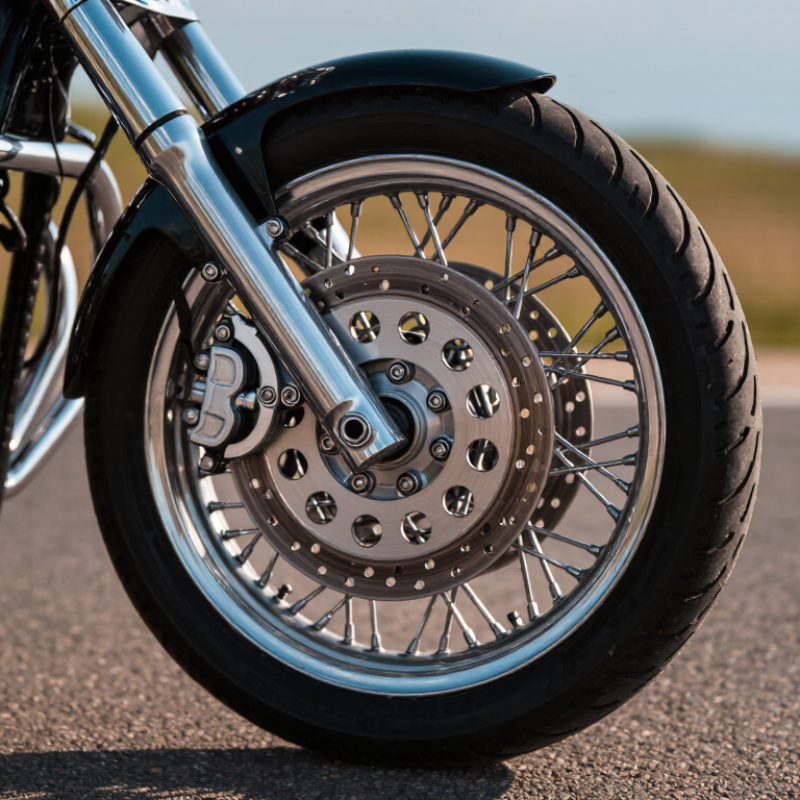
| Impact absorption | The rim, hub, and tensioned spokes form a flexible wheel structure that can deflect slightly under impacts. | That compliance can help the wheel cope with uneven surfaces and repeated bumps, which is useful on rough roads and trails. | Spokes do not prevent damage. A severe impact can bend the rim, damage spokes, or affect wheel alignment. |
| Durability under rough use | Loads are distributed through multiple spokes between the hub and rim rather than through a single solid wheel structure. | Individual spoke tension can be checked and adjusted, supporting ongoing maintenance and wheel truing. | Spoke tension should be inspected periodically; loose, damaged, or unevenly tensioned spokes can compromise wheel condition. |
| Repairability | Depending on the wheel design and extent of damage, individual spokes and some rim components may be replaceable. | Some localized spoke damage can be addressed without replacing the entire wheel, subject to inspection and repair availability. | A badly bent or cracked rim, damaged hub, or compromised wheel may require specialist repair or replacement. Repairs should be checked for true and correct spoke tension. |
| Comparison with cast wheels | Spoke wheels use separate tensioned components; cast wheels are made as a single wheel structure. | Spoke construction offers serviceable components and flexibility that can suit motorcycles used on rough terrain. | Cast wheels generally require less spoke-related maintenance. A damaged cast wheel may need replacement rather than component-level repair. |
| Tire and tube setup | Many traditional spoke wheels use inner tubes because spoke holes pass through the rim bed. | A tube-type setup can be practical where the motorcycle and wheel are designed for it. | Some spoke wheels are designed for tubeless use, but compatibility depends on the wheel’s construction and manufacturer specifications. Do not assume a spoke wheel is tubeless-ready. |
| Routine care | Spokes, nipples, rim condition, and wheel alignment can be inspected as part of regular maintenance. | Inspection can help identify loose or damaged components before they lead to more extensive wheel problems. | Follow the motorcycle service manual for inspection intervals and adjustment procedures; use a qualified technician when needed. |
| Best-suited use | Commonly selected for motorcycles intended for adventure riding, off-road use, or surfaces with frequent impacts. | The combination of compliance and serviceable components can be advantageous when riding conditions are demanding. | Wheel choice should also account for the motorcycle’s intended use, load limits, tire compatibility, and manufacturer recommendations. |