Exploring the Benefits of Continuous Pyrolysis Plant for Recycling?

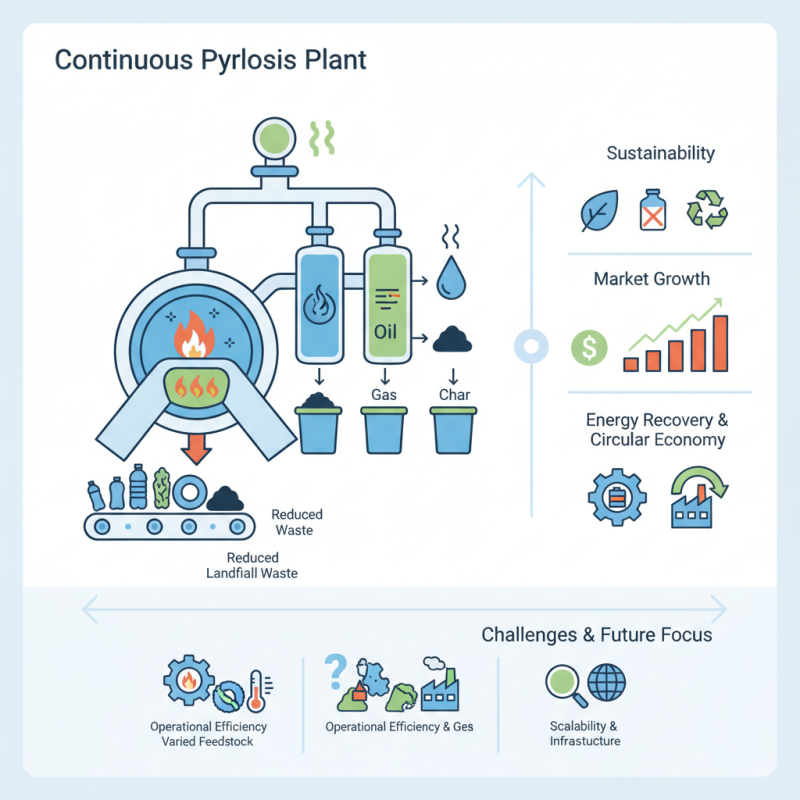
The Continuous Pyrolysis Plant stands at the forefront of innovative recycling technology. With global waste generation projected to reach 3.4 billion tons annually by 2050, solutions are urgently needed. The continuous nature of these plants allows for real-time processing of waste materials, transforming them into valuable resources like oil, gas, and char. According to a report by MarketsandMarkets, the pyrolysis market is expected to grow from USD 320 million in 2020 to USD 550 million by 2025, reflecting a significant shift in waste management practices.

Continuous Pyrolysis Plants contribute significantly to sustainability. They offer an efficient way to recover energy from various waste streams, reducing landfill use by up to 90%. However, challenges remain in standardizing operational efficiencies across different waste types. Additionally, maintaining optimal temperatures and handling varied feedstock can complicate processes. These factors necessitate ongoing research and development to improve plant reliability and performance.

As industries strive to meet growing environmental regulations, adopting a Continuous Pyrolysis Plant can provide a competitive edge. The opportunity for energy recovery aligns with the circular economy principles, yet it requires a commitment to adapting technologies. The journey toward widespread implementation continues to raise questions around scalability and infrastructure development.

Exploring the Benefits of Continuous Pyrolysis Plant for Recycling?

Understanding Continuous Pyrolysis: A Step Toward Sustainable Recycling

Continuous pyrolysis technology is a pivotal advancement in promoting sustainable recycling practices. Unlike conventional batch pyrolysis, continuous pyrolysis processes waste materials in a steady flow. This method significantly enhances efficiency and output, critical for managing the growing global waste crisis. According to recent industry reports, continuous pyrolysis plants can convert waste into valuable resources at a rate up to 5 tons per hour. This capability positions the technology as a key player in the recycling sector.

A critical aspect of continuous pyrolysis is its ability to minimize greenhouse gas emissions. Traditional waste disposal methods contribute significantly to atmospheric pollution, while continuous processes can operate with reduced emissions. The U.S. Environmental Protection Agency (EPA) acknowledges that modern pyrolysis systems can achieve up to 90% fewer emissions compared to conventional incineration. This data highlights its potential in combating climate change while meeting energy needs sustainably.

Tips: When exploring continuous pyrolysis plants, consider the feedstock type. Not all materials yield the same results. Also, ensure compliance with local regulations to facilitate smooth operations. Adopting this technology may require initial investment and expertise. Continuous learning in this evolving field is essential for maximizing efficiency and sustainability.

Key Components of a Continuous Pyrolysis Plant and Their Functions

Continuous pyrolysis plants play a crucial role in recycling waste materials. They convert organic waste into valuable resources. Key components of these plants significantly enhance their efficiency and effectiveness.

The feedstock feeding system is essential for continuous operations. It ensures a steady supply of waste material, minimizing downtimes. According to industry reports, consistent feed rates improve overall energy efficiency by 15%. This steady input is vital for maximizing output.

Another important component is the reactor. It facilitates the pyrolysis process by heating the feedstock to high temperatures in the absence of oxygen. This process breaks down the materials, transforming them into bio-oil, gas, and char. Research shows that optimal reactor design can increase product yields by 20%. Effective heat management systems must also be in place. They ensure uniform heating, which is critical. However, maintaining ideal temperatures can be challenging. Operators may need to adjust settings frequently based on feedstock variability.

Lastly, the cooling and condensing system plays a pivotal role in separating bio-oil and gas. Efficient cooling systems lead to better product recovery. However, the design can sometimes lead to energy losses if not optimized. Ongoing assessments and improvements are essential to maximize this component's performance.

Benefits of Continuous Pyrolysis Plant for Recycling

Advantages of Continuous Pyrolysis Over Traditional Waste Management Methods

Continuous pyrolysis plants present a transformative solution for waste management. Unlike traditional methods, they offer a more efficient way to recycle organic materials into valuable products. This process converts waste into oil, gas, and char, reducing landfill use. By minimizing waste volume, continuous pyrolysis addresses environmental concerns directly.

One significant advantage of continuous pyrolysis is its ability to operate non-stop. This means a consistent output of products, enhancing economic viability. In contrast, batch processing in traditional methods often leads to downtime and inefficiency. Moreover, continuous systems can be scaled, allowing for adaptability based on waste availability. However, initial setup costs for pyrolysis plants can be high, and technology requirements may be challenging for some operators.

Continuous pyrolysis also supports local economies. By converting local waste into resources, communities can reduce reliance on external suppliers. This fosters both job creation and environmental stewardship. Yet, ongoing training and education are crucial for workers to effectively manage these advanced systems. Balancing technology with human expertise ensures the benefits of continuous pyrolysis are maximized while acknowledging the learning curve involved.

Environmental Impact: How Continuous Pyrolysis Contributes to Eco-friendly Practices

Continuous pyrolysis plants are making significant strides in eco-friendly practices. These facilities convert waste materials, such as plastics and biomass, into valuable resources. The process reduces the amount of waste sent to landfills. It creates biochar, oils, and gases, which can be repurposed. According to a report from the Environmental Protection Agency (EPA), pyrolysis can reduce landfill waste by up to 90%.

Implementing continuous pyrolysis could lead to substantial environmental benefits. Studies show that pyrolysis significantly lowers greenhouse gas emissions compared to incineration. One research publication highlights a reduction of over 30% in CO2 output in pyrolysis plants. This makes it an attractive option for combatting climate change. Furthermore, continuous pyrolysis enhances energy recovery, with efficiency rates reaching 80% in some cases. However, it is essential to acknowledge the initial investment in technology.

There are challenges that need addressing. The technology is still evolving. It requires fine-tuning to increase economic feasibility. Additionally, public acceptance remains a hurdle. Community awareness about safety and environmental impacts is crucial for success. These factors necessitate ongoing research and development. Overall, continuous pyrolysis exemplifies a promising step toward sustainable waste management.

Economic Benefits: Cost Efficiency and Profitability of Continuous Pyrolysis Systems

Continuous pyrolysis systems offer significant cost efficiency and profitability for recycling. These systems convert organic waste into valuable resources. By processing materials like plastics and biomass, they generate oil, gas, and char. This transformation helps businesses minimize waste disposal costs.

Operating a continuous pyrolysis plant can lower raw material costs. It provides an alternative to traditional disposal methods. The process can produce energy that offsets operational expenses. Moreover, the ongoing demand for recycled products enhances revenue streams. However, initial investment and operational challenges can limit profitability.

Efficiency is key. Maintaining optimal temperatures and flow rates can improve output and reduce energy consumption. Regular maintenance is vital for sustaining productivity. While continuous systems provide various benefits, they require skilled personnel to manage operations effectively. Balancing costs and outputs demands careful planning and strategy.

Find the Right Repair Product for Your Project

Need to find the most appropriate product for the needs of your project? We can help because we have over 70 years of experience servicing the industry with every kind of project, from Do-it-yourself projects to large skyscrapers. Package Pavement has the experience, the knowledge and the products to help every project succeed.
Quikrete Repair Products
Legend
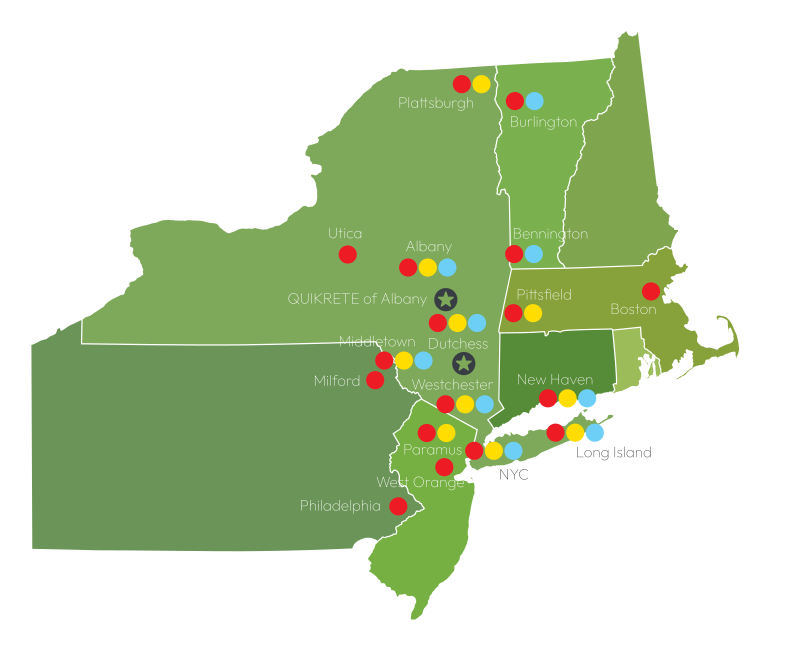
Package Pavement has two convenient locations in Stormville, NY (Dutchess County) and Ravena, NY (Greene County) to serve the Northeastern Region with bagged concrete, blacktop, mortar, and repair products. This map gives a general idea of where we service and the product lines we offer.
Package Pavement Products
Quikrete Products
Spec Mix Products
map

Our Brands Websites