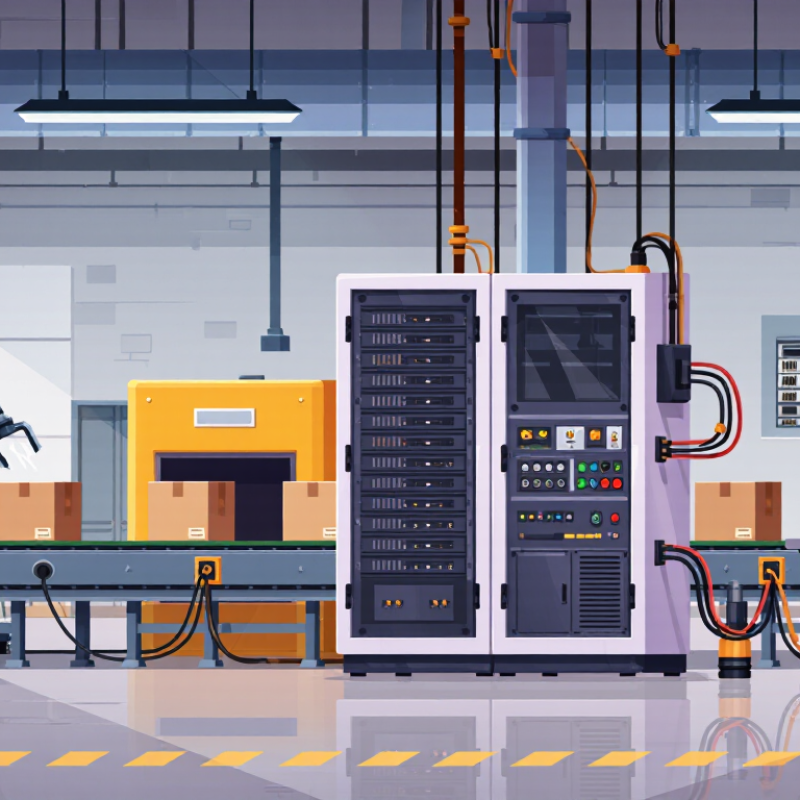
| Definition | An automation computer is an industrial computing device designed to monitor equipment, process data, and control machines with limited human intervention. | It receives information from sensors, executes control logic, and sends commands to actuators or connected equipment. | Industrial control panels, machine controllers, production monitoring stations, and building automation systems. |
| Primary Purpose | Its main purpose is to make physical processes more consistent, measurable, responsive, and efficient. | The computer continuously compares real-time measurements with programmed targets and initiates corrective actions when necessary. | Maintaining temperature, controlling motor speed, regulating pressure, or coordinating machine sequences. |
| Processing Unit | The processing unit executes software instructions and control algorithms. | It analyzes input signals, performs calculations, evaluates logical conditions, and produces output commands. | Real-time processors, multi-core industrial CPUs, and embedded computing modules. |
| Input Devices | Input devices provide information about the current condition of a process or machine. | Electrical signals or digital messages are collected and converted into values that the control software can interpret. | Temperature sensors, proximity sensors, pressure transmitters, cameras, switches, and flow meters. |
| Output Devices | Output devices perform physical actions based on the computer's decisions. | The computer sends electrical or network-based commands to change the operation of connected equipment. | Motors, valves, relays, robotic mechanisms, heaters, pumps, and warning indicators. |
| Control Logic | Control logic consists of programmed rules that determine how the system should respond to input conditions. | Logic may use sequences, timers, counters, mathematical calculations, feedback loops, and alarm conditions. | Starting a pump when a tank level is low or stopping a machine when a safety switch is activated. |
| Real-Time Operation | Real-time operation means that the system processes events within a predictable time period. | The computer repeatedly scans inputs, runs the control program, updates outputs, and records system status. | Motion control, safety monitoring, temperature regulation, and high-speed production equipment. |
| Communication | Communication capabilities allow the automation computer to exchange data with other devices and software systems. | Data is transmitted through wired or wireless industrial networks using standardized communication methods. | Connections to sensors, controllers, operator panels, supervisory software, databases, and maintenance systems. |
| Human-Machine Interface | A human-machine interface allows operators to view status information and adjust authorized settings. | The interface displays measurements, trends, alarms, operating modes, and equipment controls. | Touchscreen panels, industrial monitors, dashboards, status indicators, and alarm screens. |
| Data Storage | Automation computers can store operating parameters, event records, alarms, and performance data. | Stored information supports troubleshooting, production analysis, maintenance planning, and compliance reporting. | Historical sensor values, fault logs, operating hours, batch records, and energy measurements. |
| Environmental Design | Industrial Automation Computers are commonly designed for demanding operating conditions. | Protective enclosures, temperature management, vibration resistance, and dust protection help maintain reliable operation. | Factory floors, utility rooms, outdoor equipment cabinets, warehouses, and process facilities. |
| Safety Functions | Safety-related functions reduce risks to people, equipment, and processes. | The system can detect abnormal conditions and place equipment in a defined safe state, although dedicated safety systems may be required for critical applications. | Emergency stops, protective-door monitoring, overload detection, pressure limits, and shutdown sequences. |
| Feedback Control | Feedback control uses measured output values to improve the accuracy of a process. | The computer compares the measured value with a desired setpoint and adjusts the output to reduce the difference. | Holding a target temperature, maintaining liquid level, stabilizing pressure, or controlling conveyor speed. |
| Power and Reliability | Reliable power delivery is essential because unexpected interruptions can stop automated processes. | Power protection, backup systems, monitoring, and controlled restart procedures help reduce downtime and data loss. | Industrial power supplies, surge protection, battery backup, redundant storage, and automatic recovery routines. |
| Performance Indicators | Performance is commonly evaluated through measurable operational indicators. | The computer or connected software records timing, availability, faults, energy use, and process quality data. | Response time, uptime, cycle time, alarm frequency, throughput, energy consumption, and maintenance intervals. |
| Main Benefits | Automation computers can improve repeatability, productivity, safety, monitoring, and resource efficiency. | Automated decisions and continuous monitoring reduce manual intervention and help identify problems earlier. | Consistent product quality, reduced process variation, faster fault detection, and more efficient equipment use. |
| Common Limitations | Automation systems require suitable programming, maintenance, cybersecurity, and reliable infrastructure. | Incorrect configuration, damaged sensors, communication failures, software errors, or insufficient training can affect performance. | Unplanned downtime, inaccurate readings, unsafe commands, compatibility issues, and difficult system upgrades. |
| Typical Operating Cycle | The basic operating cycle consists of sensing, processing, acting, and verifying. | The computer reads inputs, applies control logic, updates outputs, checks the result, and repeats the cycle continuously. | Measure tank level, calculate required valve position, adjust the valve, and verify the new level. |