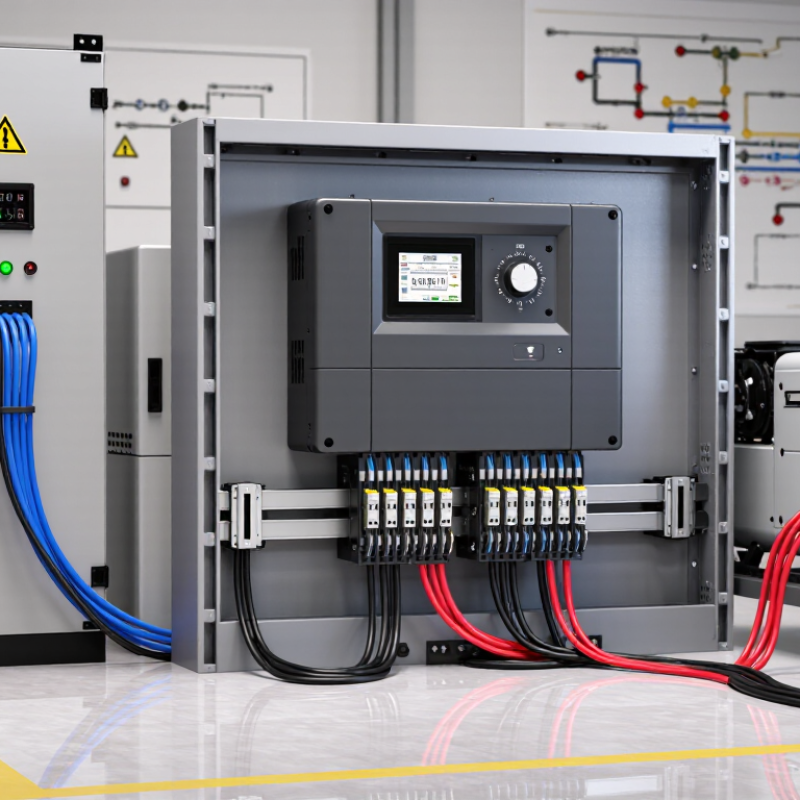
| Source connections | Provide connections for the normal power source and the alternate source, commonly utility power and a generator. | The switch selects one source at a time to supply the connected load, subject to its design and configuration. |
| Voltage and frequency sensing | Monitors electrical conditions on the preferred source and, when configured, the alternate source. | If the preferred source falls outside configured limits, the controller can initiate a transfer sequence. Specific monitored conditions depend on the equipment. |
| Controller and logic | Processes source status, programmed settings, and transfer signals. | After detecting an unacceptable normal source, it can signal a standby generator to start and transfer the load when the alternate source is suitable. |
| Time-delay settings | Apply programmed delays to help avoid unnecessary switching due to brief disturbances and to allow a generator to stabilize. | Depending on the settings, delays may be used before starting a generator, transferring to the alternate source, or retransfer to the normal source. |
| Switching contacts | Make and break the electrical connection between the selected source and the load. | The contacts move between source positions using the transfer mechanism. Contact ratings must be appropriate for the system and load. |
| Transfer mechanism and interlocking | Moves the contacts and helps prevent incompatible source connections. | Many designs use a break-before-make sequence, disconnecting one source before connecting the other. Some systems use different transfer methods where designed for the application. |
| Neutral switching (if fitted) | Switches the neutral conductor along with the phase conductors in configurations that require it. | Whether the neutral is switched depends on the system grounding arrangement, applicable electrical requirements, and switch design. |
| Load terminals and enclosure | Connect the switched output to the load and house the electrical and control components. | The enclosure provides protection appropriate to the installation environment; the load receives power from whichever source is selected. |
| Typical return-to-normal sequence | Restores the load to the normal source after it returns and remains acceptable for the configured period. | The controller retransfers the load, often after a programmed delay, and may keep the generator running briefly for cooldown before signaling it to stop. |