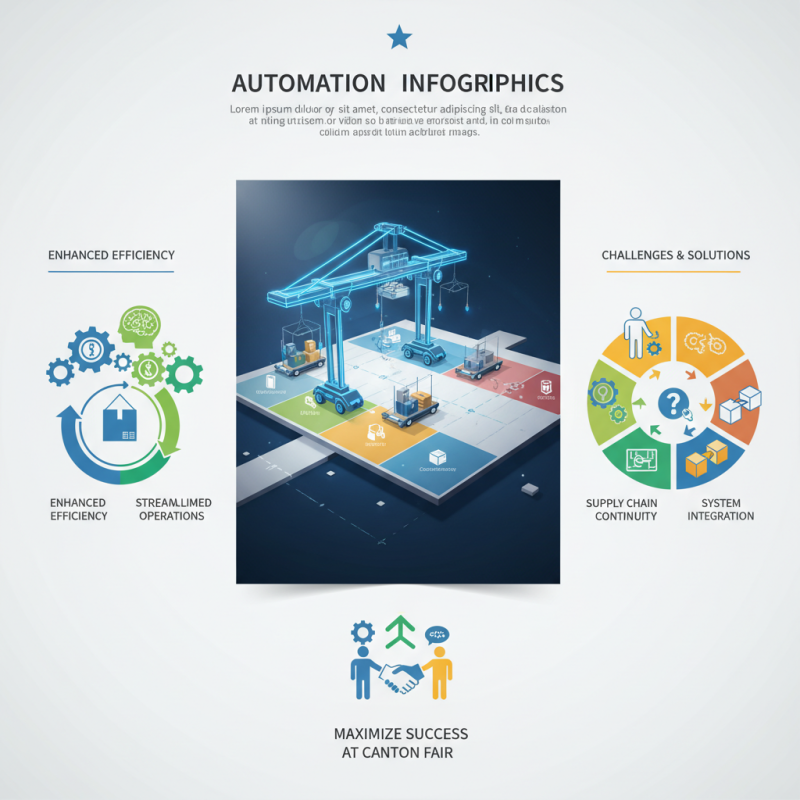
Automated Crane System Tips for Success at Canton Fair 2026?

As the Canton Fair 2026 approaches, leveraging an Automated Crane System can significantly enhance logistical operations. This revolutionary system stands to streamline the movement of goods in the expansive 1.55 million square meter exhibition space. By integrating cutting-edge technology, participants can experience improved efficiency when navigating large venues filled with diverse products across multiple sectors.

However, success with the Automated Crane System requires careful planning and execution. Businesses must ensure their teams are well-trained to operate this advanced machinery. Common challenges include adapting to new workflows and maintaining an uninterrupted supply chain. Some organizations may struggle with integration into existing systems. It's essential to address these potential hiccups proactively.

Additionally, while automation brings numerous benefits, it’s important not to overlook the human element. Building a strong support team can mitigate issues that arise during operation. Understanding the limitations of automation can guide necessary adjustments. By embracing both technology and teamwork, businesses can thrive at the Canton Fair, maximizing their potential for success.

Automated Crane System Tips for Success at Canton Fair 2026?

Understanding the Automated Crane System and Its Benefits

Automated Crane Systems are revolutionizing logistics and warehousing. At the Canton Fair 2026, these systems can enhance efficiency. They streamline the process of moving heavy materials. This reduces manual labor and minimizes safety risks. Companies often experience a surge in productivity with such systems.


Understanding the benefits is critical. Automated cranes can operate 24/7, maximizing operational hours. They can be programmed to follow specific routes, minimizing downtime. However, implementation can pose challenges. Training staff to adapt to new technology is essential. Some employees may resist changes, leading to temporary disruptions. It’s crucial to create a supportive training environment to mitigate this.


Visualizing the workspace can create further challenges. Some layouts may not support automated systems well. Incompatible equipment can hinder performance, causing delays. It’s vital to assess the facility's readiness. Regular reviews and adjustments can ensure optimal operations. Embracing automation requires careful planning and continuous improvement.

Key Features of Automated Crane Systems for Efficient Operations

Automated crane systems are revolutionizing logistics and operations at trade events like the Canton Fair. These systems enhance efficiency in various ways. They offer precise control over heavy loads, minimizing the risk of damage. With advanced sensors and real-time data processing, cranes can navigate complex environments seamlessly.

One key feature is their ability to operate autonomously. This reduces the need for constant human oversight. Yet, training and human intervention remain crucial during critical operations. The integration of smart technologies can also lead to unexpected challenges. Ensuring seamless connectivity to manage workflows is essential but can sometimes fail due to network issues.

Automated cranes are designed for speed and accuracy. However, their deployment can encounter issues like software glitches or equipment malfunctions. Regular maintenance is crucial to prevent downtime. Operators need to be prepared for such unpredictabilities. Adaptability and teamwork are vital to achieving optimal performance in a practical setting like the Canton Fair.

Planning for Successful Implementation at Canton Fair 2026

The Canton Fair 2026 offers an excellent opportunity for businesses to showcase their products. Implementing an automated crane system can significantly enhance logistics and efficiency. According to industry reports, automation can increase operational efficiency by up to 40%. Efficient material handling is crucial during events like trade fairs.


When planning for implementation, stakeholders must consider key areas. One tip is to ensure that the crane system is compatible with existing infrastructure. Poor integration can lead to delays and increased costs. Data from recent studies show that 30% of automation projects face integration issues. Planning ahead with compatibility in mind can mitigate this risk.


Another consideration is staff training. Operators need to understand how to use the system effectively. A lack of proper training can result in accidents and inefficiencies. Investing in comprehensive training programs can reduce these risks. Continuous evaluation of staff performance will help identify gaps in knowledge.

Best Practices for Maintenance and Troubleshooting of Crane Systems

Maintaining an automated crane system requires diligence and knowledge. Regular inspections can prevent costly downtime. Reports suggest that 30% of crane failures stem from inadequate maintenance. Operators must regularly check wear and tear, especially on cables and pulleys. These components can deteriorate over time, leading to potential mishaps. Keeping a meticulous maintenance log is vital for tracking performance and issues.


Troubleshooting should also be a priority. A malfunctioning crane can disrupt operations massively. Studies indicate that 40% of unplanned outages occur due to electrical failures. Operators should familiarize themselves with diagnostic tools. These tools can help quickly identify issues. Regular software updates can enhance performance and prevent bugs.


Understanding the environment is crucial too. Dust, moisture, and temperature fluctuations can impact crane longevity. Environmental factors can lead to corrosion or mechanical failures. Training staff on recognizing signs of wear is essential. Over time, these practices can transform operational efficiency. However, complacency might hinder safety protocols. It’s important to remain vigilant.

Networking Opportunities and Partnerships to Enhance Success

The Canton Fair 2026 presents unique networking opportunities for companies in the automated crane industry. Engaging with peers can spark innovative solutions. Recent industry reports indicate that collaborative partnerships can drive a 30% increase in project efficiency. Meeting potential partners fosters trust and opens doors to new technology exchanges.

Conversations with industry leaders are vital. You can learn from their experiences, both successes and mistakes. Engaging in discussions can reveal insights about market trends. A 2022 study showed that 75% of successful firms credit their networking efforts for growth. Actively seeking connections can lead to valuable alliances.

However, not all networking experiences are positive. Sometimes, mismatched interests can waste time and resources. It is crucial to identify potential partners who share similar goals. A focused approach can maximize benefits while minimizing pitfalls. Understanding the dynamics of effective synergy is key for success at the fair.

Find the Right Repair Product for Your Project

Need to find the most appropriate product for the needs of your project? We can help because we have over 70 years of experience servicing the industry with every kind of project, from Do-it-yourself projects to large skyscrapers. Package Pavement has the experience, the knowledge and the products to help every project succeed.
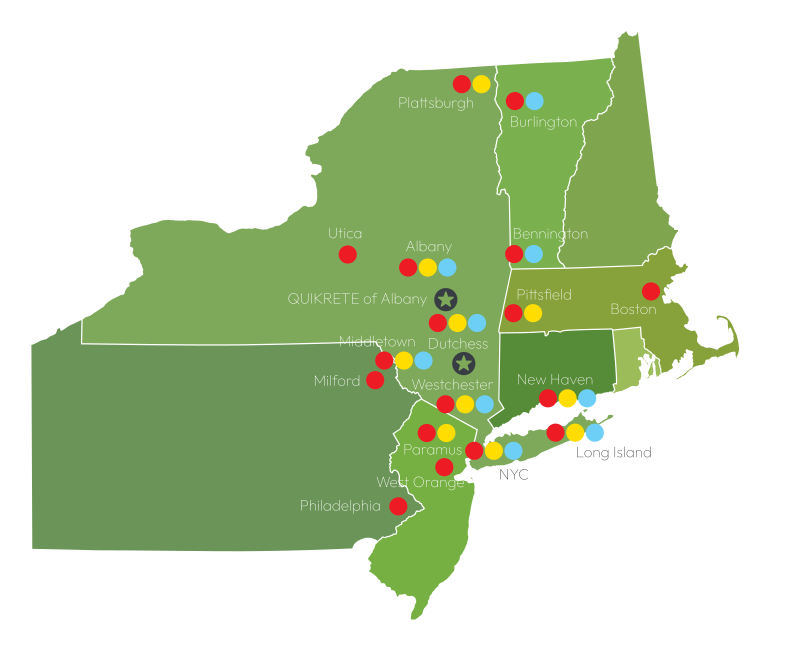
Quikrete Repair Products
Legend
Package Pavement has two convenient locations in Stormville, NY (Dutchess County) and Ravena, NY (Greene County) to serve the Northeastern Region with bagged concrete, blacktop, mortar, and repair products. This map gives a general idea of where we service and the product lines we offer.
Package Pavement Products
Quikrete Products
Spec Mix Products
map

Our Brands Websites