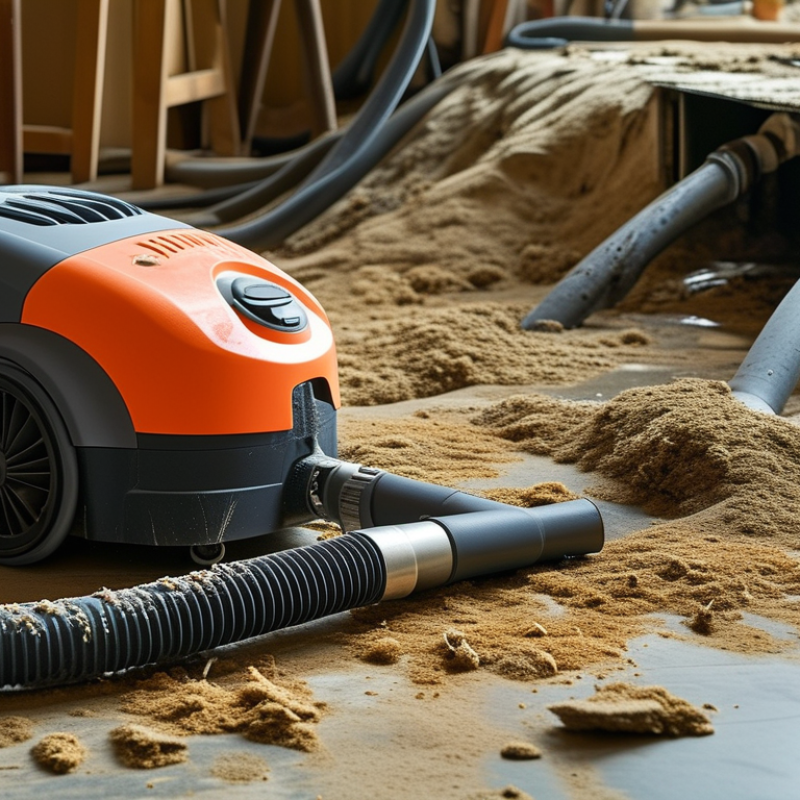
| Definition | Air duct machine | Portable equipment used to inspect, clean, dry, seal, or repair HVAC air-distribution ductwork. | The machine uses airflow, rotating tools, vacuum pressure, cameras, or compressed air to remove contaminants and improve duct conditions. | Use equipment only for the task and duct material for which it is designed. |
| Main Function | Duct cleaning | A negative-air vacuum commonly maintains approximately 1,500–4,000 cubic feet per minute, depending on the system and hose arrangement. | The vacuum creates controlled airflow toward a collection unit so loosened dust is captured instead of spreading through the building. | Seal access openings and verify that the collection system is operating before agitation begins. |
| Main Function | Mechanical agitation | Brushes, air whips, skipper balls, or rotary tools are selected according to duct size and surface condition. | Agitation loosens settled dust and debris from internal duct surfaces so the vacuum can remove it. | Avoid excessive force on flexible ducts, internal insulation, dampers, and access panels. |
| Main Function | Inspection camera | Small camera heads are commonly used to inspect areas that cannot be viewed directly. | Live video helps identify heavy dust, moisture, microbial growth, damaged insulation, disconnected sections, or obstructions. | Clean and disinfect the camera head according to the equipment instructions after each contaminated inspection. |
| Operating Principle | Negative pressure | The isolated duct section should remain under negative pressure during cleaning. | Pressure control prevents loosened contaminants from escaping into occupied spaces. | Check seals, flexible hoses, access doors, and pressure readings throughout the job. |
| Filtration | Dust collection filter | High-efficiency filtration is recommended when fine particles may be released; HEPA filters are generally rated to capture at least 99.97% of 0.3-micrometre particles when tested under specified conditions. | Filtration reduces the amount of fine particulate returned to the surrounding environment. | Inspect filters before use, replace damaged filters, and clean or replace them when pressure loss becomes excessive. |
| Power System | Electrical supply | Equipment may use standard single-phase power or higher-capacity circuits, depending on motor size and configuration. | The motor drives the vacuum blower, rotary brush, compressor, or other cleaning mechanism. | Use grounded connections, suitable circuit protection, intact cords, and properly rated extension cables. |
| Work Area | Duct isolation | Supply and return openings in the work zone should be covered, blocked, or isolated as appropriate. | Isolation directs airflow through the cleaning equipment and protects occupied areas from dust migration. | Turn off or control HVAC operation before opening the duct system and protect nearby furnishings. |
| Personal Protection | Respiratory protection | Use respiratory protection when dust exposure cannot be adequately controlled by ventilation, isolation, or filtration. | Cleaning can disturb fine particles, allergens, and other contaminants that may irritate the respiratory system. | Select protection through a workplace hazard assessment and ensure proper fit, training, and maintenance. |
| Personal Protection | Eye, hearing, and hand protection | Safety glasses, hearing protection, gloves, protective clothing, and slip-resistant footwear are commonly required. | Rotating tools, compressed air, airborne debris, and high equipment noise can create multiple exposure hazards. | Inspect personal protective equipment before use and replace worn or contaminated items. |
| Noise Control | Operating noise | Vacuum motors, compressors, and agitation tools may produce hazardous noise levels depending on location and duration. | Noise exposure can contribute to hearing damage and communication problems during maintenance work. | Measure or assess noise where appropriate, limit exposure time, and use hearing protection. |
| Mechanical Safety | Rotating components | Brushes, cables, belts, and shafts must have suitable guards or controlled access. | Moving parts can cause entanglement, cuts, or impact injuries. | Disconnect power and apply lockout or tagout procedures before clearing jams or servicing moving parts. |
| Compressed Air | Air pressure control | Compressed air pressure must remain within the tool manufacturer's specified operating range. | Air whips and nozzles use pressurized air to dislodge debris from duct surfaces. | Never direct compressed air at people, use damaged hoses, or exceed the rated pressure of the tool or duct. |
| Fire Safety | Combustible dust and ignition sources | Do not use ordinary cleaning equipment in areas where flammable vapors or combustible dust may create an explosive atmosphere. | Motors, switches, static electricity, and hot surfaces can become ignition sources in hazardous locations. | Conduct a hazard assessment and use equipment approved for the specific hazardous environment when required. |
| Inspection | Pre-use inspection | Inspect hoses, seals, power cords, filters, brushes, guards, wheels, control switches, and access panels before every use. | Early detection of damage helps prevent equipment failure, leakage, and injuries. | Remove defective equipment from service until it has been repaired and verified as safe. |
| Routine Maintenance | Filter and dust-container service | Check before each use; empty containers and service filters when full, clogged, or damaged. | Restricted filters reduce airflow, increase motor load, and may lower contaminant-capture performance. | Follow safe disposal procedures for collected dust and contaminated materials. |
| Routine Maintenance | Hose and seal inspection | Inspect before each job and whenever suction decreases or visible dust escapes. | Leaks reduce negative pressure and allow contaminants to bypass the collection system. | Replace cracked hoses, worn gaskets, loose clamps, and damaged access-door seals. |
| Routine Maintenance | Brush and cable care | Inspect after each job for worn bristles, bent shafts, frayed cables, and trapped debris. | Worn or damaged tools may clean unevenly and can damage duct surfaces. | Clean, dry, lubricate, or replace components according to the equipment service schedule. |
| Post-Job Procedure | Equipment decontamination | Clean external surfaces, tools, hoses, and collection components after each job. | Decontamination reduces cross-contamination between buildings and protects service personnel. | Use cleaning agents compatible with the equipment materials and allow components to dry before storage. |
| Documentation | Service records | Record inspection findings, filter changes, repairs, pressure checks, and cleaning dates. | Written records support preventive maintenance and help demonstrate that safety checks were completed. | Keep records according to workplace procedures, applicable regulations, and equipment instructions. |