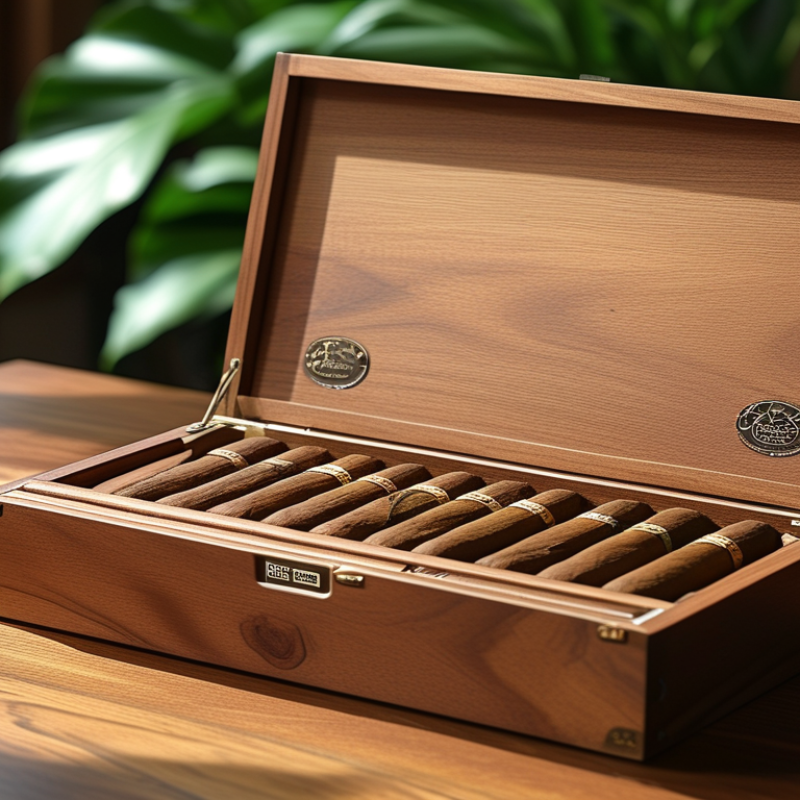
| 1 | Choose a humidity-suitable interior | For long-term cigar storage, the interior should support stable relative humidity, commonly around 65%–72%, depending on cigar type and personal preference. | Helps reduce the risk of cigars becoming excessively dry or overly moist. | A display case without a suitable humidity system may be decorative but unsuitable for aging or extended storage. | Check whether the case accepts a humidification device, has adequate air circulation, and allows a hygrometer to be placed where it can be read easily. |
| 2 | Compare wood and lining materials | Untreated Spanish cedar is widely used in humidors because it absorbs and releases moisture and has a distinctive aroma. Other woods may be suitable when properly sealed and isolated from cigars. | Spanish cedar can contribute to humidity buffering, provide a traditional appearance, and help discourage certain tobacco pests. | Wood quality varies, and strong odors, excessive resin, or chemical finishes can affect cigars. Glass and metal provide visibility but do not regulate humidity by themselves. | Look for clean, evenly fitted lining, no strong chemical odor, no visible mold, and no unfinished edges that could shed particles. |
| 3 | Evaluate construction quality | A well-built case should have aligned joints, a level base, secure hinges, and a lid that closes consistently without excessive force. | Better construction improves durability, protects cigars from physical damage, and supports more consistent internal conditions. | Poorly assembled cases can warp, develop gaps, or place pressure on the lid and hinges over time. | Inspect corners, joinery, screws, hinges, feet, drawer movement, and the stability of shelves or trays. |
| 4 | Check the seal and access system | A display humidor should close evenly around the perimeter. A gasket or close-fitting lid can reduce unnecessary air exchange. | A better seal makes humidity management more predictable and can reduce humidification frequency. | An airtight case is not automatically ideal; cigars still need appropriate humidity management and should not be stored in stagnant or excessively damp conditions. | Close the lid gently, check for uneven gaps, verify latch alignment, and confirm that the seal does not require excessive pressure. |
| 5 | Consider glass, acrylic, and light exposure | Clear panels improve visibility, but cigars should be kept away from direct sunlight and strong heat. UV-filtering or tinted glazing can offer additional protection. | Glass offers a premium appearance and scratch resistance; acrylic is lighter and less likely to shatter. | Clear materials can admit light and heat, while acrylic may scratch more easily and can accumulate static. | Check panel thickness, clarity, edge finishing, UV protection, glare, and whether the case can be positioned away from windows or heat sources. |
| 6 | Match capacity and layout to the collection | Allow enough space for airflow and handling. Trays, dividers, or adjustable shelves should not compress cigar boxes or individual cigars. | A suitable layout improves organization, presentation, and access while reducing unnecessary handling. | Overestimating capacity can lead to overcrowding, restricted airflow, and difficulty checking individual cigars. | Measure cigar lengths and ring gauges, check shelf spacing, confirm removable components, and leave practical clearance around each cigar. |
| 7 | Assess visual design and placement | Select finishes, colors, lighting, and proportions that complement the room while keeping the case away from direct sun, radiators, kitchens, and areas with large temperature swings. | A balanced design can function as furniture or a display feature while keeping cigars visible and organized. | Highly decorative finishes may prioritize appearance over sealing, maintenance, capacity, or temperature stability. | Review viewing angles, finish durability, dust resistance, lighting heat, cleaning access, footprint, and compatibility with the surrounding décor. |