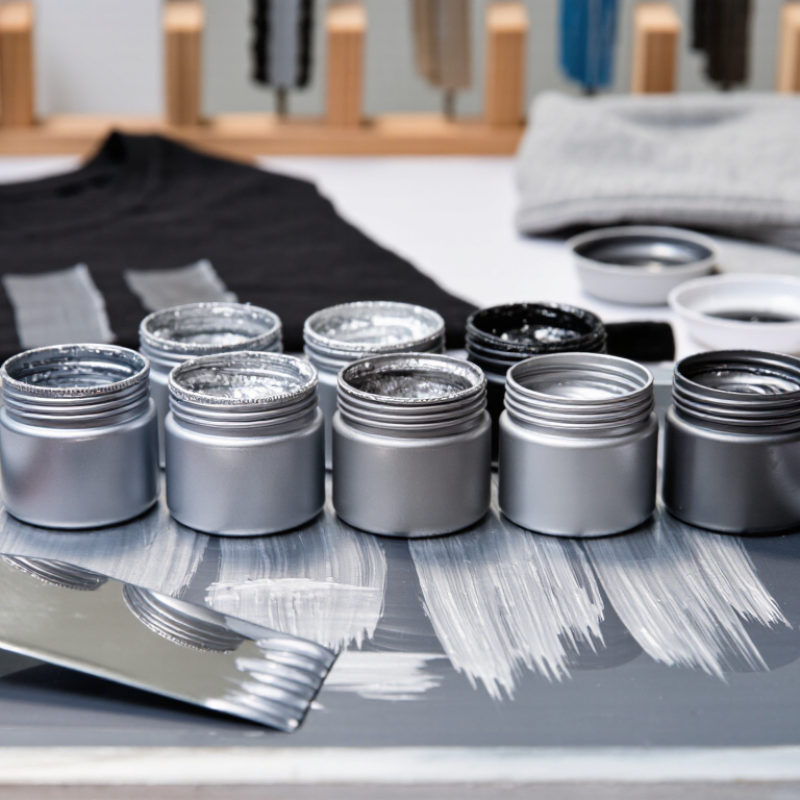
| Metallic Plastisol | Apparel graphics, lettering, and decorative textile prints | Commonly used textiles, subject to the ink’s specifications | Opaque, metallic appearance from reflective metal flakes | Requires the specified heat cure. Metallic particles can produce a heavier hand, and the printed surface may feel less soft than a standard textile ink. |
| Water-Based Metallic | Soft-hand textile designs and prints on suitable paper or fabric | Absorbent textiles and paper compatible with the formulation | Metallic sheen with a water-based carrier | Must be dried and cured according to the product instructions. Absorbent substrates can reduce brightness; test the fabric and wash performance before production. |
| Solvent-Based Metallic | Decorative graphics, signs, and selected packaging or product surfaces | Compatible plastics, coated materials, and other nonporous surfaces | Metallic effect suited to surfaces that may not absorb water-based ink | Drying commonly involves solvent evaporation. Check substrate compatibility, ventilation requirements, and applicable handling and safety guidance. |
| UV-Curable Metallic | Short-run graphics and decorative printing on rigid products | Compatible plastics, glass, and coated or treated surfaces | Metallic finish with rapid curing when exposed to the specified UV source | Requires suitable UV-curing equipment. Adhesion depends on the substrate and preparation, so test before running a production job. |
| Two-Component Epoxy Metallic | Durable decorative markings on products and industrial components | Compatible glass, metal, and rigid plastics | Hard, durable film after the components chemically cure | Mixing ratios and working time matter. Follow the technical instructions for preparation, cure conditions, and substrate testing. |
| Conductive Silver Ink | Printed circuits, electrical contacts, sensors, and other electronic applications | Substrates specified for the ink, such as selected films or rigid boards | Designed to conduct electricity; not primarily chosen for a decorative metallic effect | Electrical performance depends on the ink formulation, print thickness, substrate, and cure process. Verify resistance and adhesion in the finished application. |
| Retroreflective Silver or Gray Ink | Visibility graphics, safety markings, and selected performance-textile designs | Compatible textiles or other substrates specified for the formulation | Reflects light back toward its source when illuminated; appearance differs from mirror-like metallic ink | Often relies on reflective glass beads. Print and cure settings can affect the reflective effect, so test performance under the intended conditions. |