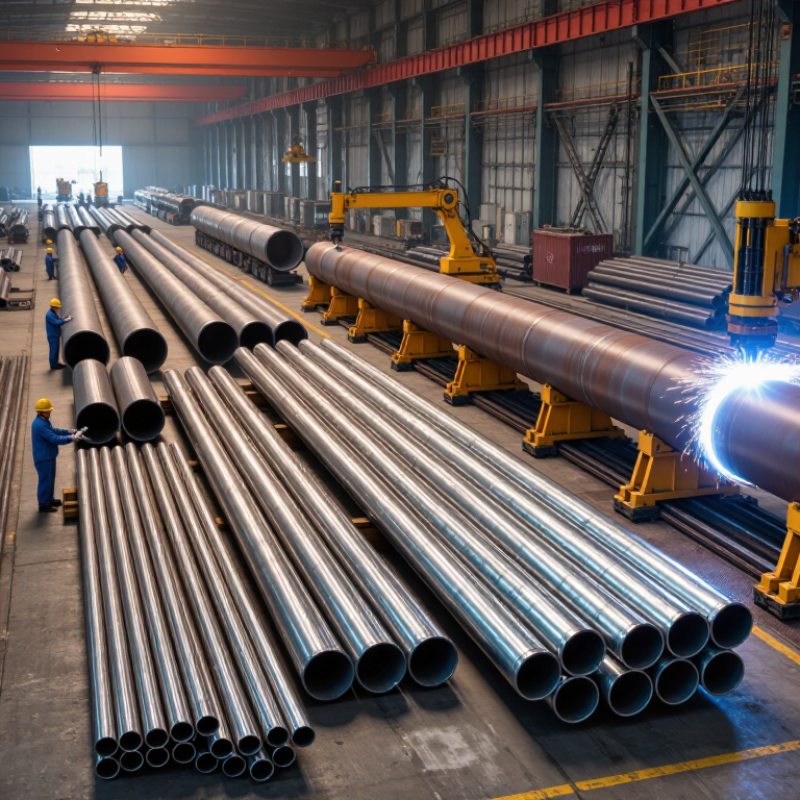
| ERW pipe | Cold-formed strip or plate is joined along a longitudinal seam using electric resistance heating and pressure. | Approximately 20–610 mm (0.75–24 in), depending on mill configuration. | Approximately 1.5–16 mm. | ASTM A53, ASTM A500/A500M, EN 10219, API 5L and ISO 3183 where specified. | Water lines, structural columns, mechanical tubing, low- and medium-pressure service, and general fabrication. | Verify seam quality, weld inspection, dimensional tolerance, end finish, coating, and applicable pressure or structural requirements. |
| HFW pipe | A high-frequency electric current heats the strip edges, which are forced together to form a longitudinal weld; it is commonly treated as a high-frequency form of ERW. | Approximately 20–610 mm, subject to production line capacity. | Commonly about 2–16 mm. | API 5L, ISO 3183, EN 10217-1, and project-specific requirements. | Transmission and process pipelines, line pipe, boiler or pressure-service applications when the required grade and testing are specified. | Check heat treatment of the seam, weld-line inspection, hydrostatic testing, nondestructive testing, and PSL or delivery class. |
| LSAW pipe | A wide plate is formed into a cylinder and welded longitudinally, usually by submerged arc welding; forming may use JCOE, UOE, or related processes. | Approximately 406–1,422 mm (16–56 in). | Approximately 6–40 mm, with larger thicknesses available for some projects. | API 5L, ISO 3183, ASTM A671/A672 for specified services, and EN 10217-5. | Large-diameter oil and gas transmission lines, water transmission, structural piles, penstocks, and offshore or onshore infrastructure. | Confirm plate grade, weld procedure qualification, seam location, ultrasonic or radiographic testing, roundness, straightness, and impact-test requirements. |
| SSAW / HSAW spiral-welded pipe | Hot-rolled coil is helically formed and joined with submerged arc welding along a spiral seam. | Approximately 219–3,200 mm (8–126 in), depending on equipment and project requirements. | Approximately 5–25 mm; project limits vary. | API 5L, ISO 3183, ASTM A252 for piling, EN 10217-5, and regional water-pipe specifications. | Water mains, low- to medium-pressure pipelines, piling, dredging lines, structural applications, and large-diameter utility systems. | Evaluate spiral seam geometry, allowable operating pressure, coil chemistry, weld testing, coating system, and suitability for cyclic or high-pressure service. |
| Double-submerged-arc-welded pipe | The longitudinal or spiral joint is welded from both inside and outside with submerged arc welding to provide a deep, controlled weld profile. | Commonly about 406–1,422 mm for longitudinal production and up to approximately 3,200 mm for spiral production. | Often about 6–40 mm, subject to the approved manufacturing procedure. | API 5L, ISO 3183, EN 10217-5, ASTM A671/A672, and project-specific pipeline codes. | High-integrity transmission lines, water infrastructure, offshore structures, and heavy-wall pipe systems. | Review weld repair limits, full-length ultrasonic or radiographic examination, hydrotest pressure, toughness, sour-service requirements, and traceability. |
| Structural welded pipe | Usually produced by ERW, HFW, LSAW, or SSAW processes and supplied primarily for load-bearing rather than pressure-service duties. | Approximately 20–3,200 mm, depending on section, process, and specification. | Approximately 2–40 mm for common commercial products. | ASTM A500/A500M, ASTM A252, EN 10219, EN 10210 where applicable, and regional structural standards. | Building columns, bridge components, traffic structures, piling, towers, machinery frames, and temporary works. | Specify yield strength, tensile strength, impact class, buckling design, section dimensions, straightness, welding suitability, and corrosion protection. |
| Pressure-service welded pipe | ERW, HFW, LSAW, or SSAW pipe manufactured under a pressure-pipe specification with defined weld, testing, and inspection controls. | Typically about 20–1,422 mm; the permissible range depends on the selected standard and grade. | Selected to meet design pressure, temperature, corrosion allowance, and code requirements rather than a single universal range. | ASTM A53, ASTM A671/A672, EN 10217, API 5L, ISO 3183, and applicable national pressure codes. | Steam, water, process fluids, gas transmission, power plants, refineries, and industrial piping. | Define design pressure and temperature, fluid category, corrosion mechanism, weld examination level, hydrotest, impact testing, and certification documents. |
| Coated welded pipe | A welded steel pipe receives an external or internal protective system such as fusion-bonded epoxy, three-layer polyethylene, three-layer polypropylene, or cement mortar lining. | The diameter range follows the underlying ERW, LSAW, or SSAW pipe; approximately 20–3,200 mm is common across projects. | Determined by the base pipe and design loads; coating thickness is specified separately. | ISO 21809 series, AWWA C213/C210 where applicable, EN 10289, DIN 30670, and project coating specifications. | Buried pipelines, potable-water systems, marine exposure, wastewater, and corrosive industrial environments. | Confirm surface preparation, coating thickness, holiday testing, adhesion, operating temperature, field-joint coating, lining compatibility, and handling restrictions. |