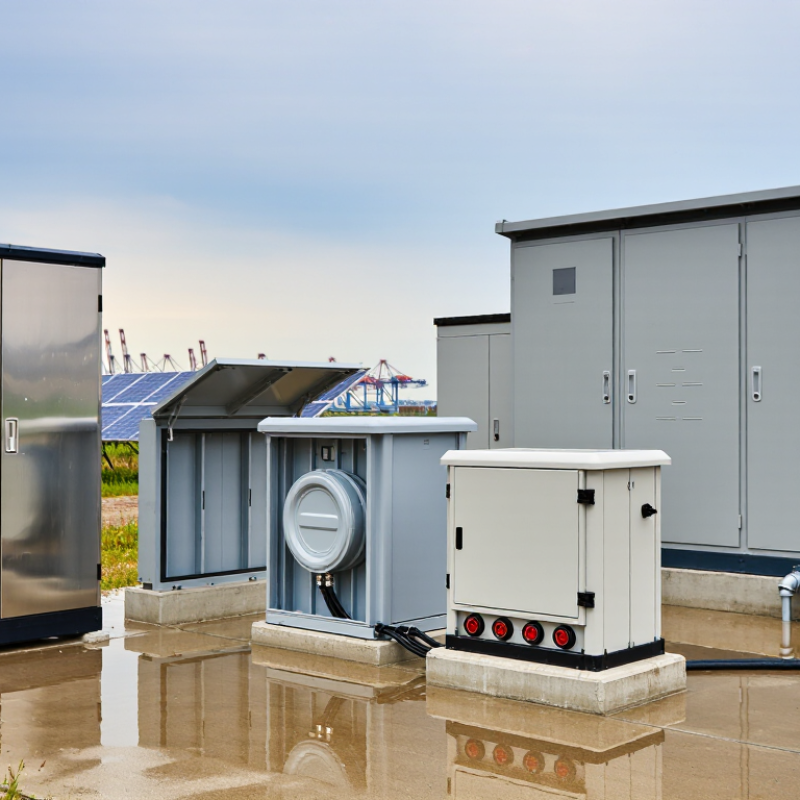
| Outdoor Isolator or Load-Break Switch Enclosure | Low voltage up to 1,000 V AC; commonly 16–630 A | IP65 IP66 IP67 | UV-stabilized polycarbonate, glass-reinforced polyester, powder-coated steel, or 316 stainless steel | Isolation, switching under specified load conditions, short-circuit withstand when correctly coordinated with upstream protection | Outdoor machinery, pumps, rooftop equipment, agricultural sites, utility and industrial installations | Confirm whether the stated IP rating applies to the complete installed assembly, including cable glands, hinges, locks, and operating handles. |
| Low-Voltage Waterproof Distribution Board | Up to 1,000 V AC; typically 63–1,600 A | IP54 IP55 IP65 IP66 | Powder-coated galvanized steel, 304 stainless steel, 316 stainless steel, GRP, or polycarbonate | Overcurrent protection, residual-current protection, surge protection, isolation, metering, and feeder distribution | Commercial buildings, process plants, outdoor utilities, construction sites, coastal areas, and washdown zones | Check heat dissipation, internal segregation, cable-entry direction, available short-circuit rating, and accessibility for maintenance. |
| Motor Control Center with Sealed Compartments | Up to 1,000 V AC; commonly 400–6,300 A busbar systems | IP31 IP42 IP54 IP55 | Formed and galvanized steel with epoxy-polyester powder coating; stainless steel may be used for corrosive locations | Motor starting, overload protection, short-circuit protection, earth-fault protection, variable-speed control, and interlocking | Factories, water-treatment plants, HVAC systems, mining facilities, and heavy industrial process areas | Higher IP protection can reduce natural ventilation. Verify temperature-rise limits, derating, arc-fault requirements, and internal separation form. |
| Outdoor Feeder Pillar or Cable Distribution Cabinet | Up to 1,000 V AC; commonly 100–1,250 A | IP54 IP55 IP65 | Hot-dip galvanized steel, aluminum, GRP, 304 stainless steel, or 316 stainless steel for severe coastal exposure | Feeder isolation, fuse or circuit-breaker protection, cable termination, metering, and surge protection | Roadside networks, renewable-energy sites, residential developments, ports, farms, and public infrastructure | Evaluate corrosion category, foundation and drainage, vandal resistance, condensation control, clearances, and cable-bending space. |
| Automatic Transfer Switch Enclosure | Low voltage up to 1,000 V AC; commonly 40–3,200 A | IP54 IP55 IP65 | Powder-coated steel for general use; stainless steel or GRP for humid, corrosive, or outdoor locations | Automatic source transfer, mechanical and electrical interlocking, undervoltage monitoring, phase-loss detection, and emergency bypass options | Data centers, hospitals, emergency systems, generator installations, telecom facilities, and critical infrastructure | Verify transfer time, neutral switching arrangement, short-circuit rating, controller operating temperature, and manual bypass provisions. |
| Photovoltaic DC Combiner or String Protection Box | Typically up to 1,500 V DC; current depends on the number of strings and fuses | IP65 IP66 IP67 | UV-resistant polycarbonate, polyester, aluminum, or powder-coated stainless steel | String fusing, DC isolation, Type 1 or Type 2 surge protection, reverse-current protection, and monitoring | Rooftop solar systems, utility-scale solar fields, agricultural installations, and battery-supported PV systems | Use components rated specifically for DC voltage and photovoltaic duty. Check maximum system voltage, temperature derating, polarity, and arc-risk control. |
| Waterproof Battery Energy Storage Distribution Cabinet | Low voltage DC or AC sections; voltage and current vary by battery architecture | IP54 IP55 IP65 | Powder-coated steel, aluminum, 304 stainless steel, or 316 stainless steel; thermal insulation may be required | DC isolation, overcurrent protection, insulation monitoring, surge protection, temperature monitoring, and emergency shutdown interfaces | Outdoor energy-storage compounds, microgrids, renewable-energy plants, commercial facilities, and remote power systems | Ingress protection does not replace fire, thermal-runaway, ventilation, spacing, or battery safety requirements. Review the applicable local installation rules. |
| Medium-Voltage Ring Main Unit or Compact Switchgear | Typically 3.3–36 kV; current commonly 200–1,250 A | IP4X IP54 IP55 | Sealed or welded painted steel; stainless steel external panels may be selected for severe outdoor or coastal conditions | Load switching, circuit isolation, earth-fault protection, overcurrent protection, cable testing access, and transformer feeder protection | Distribution substations, commercial complexes, wind and solar plants, industrial sites, and utility networks | IP rating is only one part of medium-voltage selection. Also verify insulation level, internal-arc classification, making and breaking capacity, earthing, and service continuity. |
| Waterproof Control and Instrumentation Panel | Control circuits typically 24–240 V AC/DC; power feeders may be included up to 1,000 V AC | IP65 IP66 IP67 | Polycarbonate, GRP, aluminum, 304 stainless steel, or 316 stainless steel | PLC control, signal isolation, low-voltage distribution, sensor interfaces, alarm circuits, and communication equipment protection | Food and beverage facilities, wastewater plants, marine environments, outdoor process skids, and washdown areas | Consider condensation, cable-gland sealing, transparent-door durability, electromagnetic compatibility, heat load, and access to display devices. |