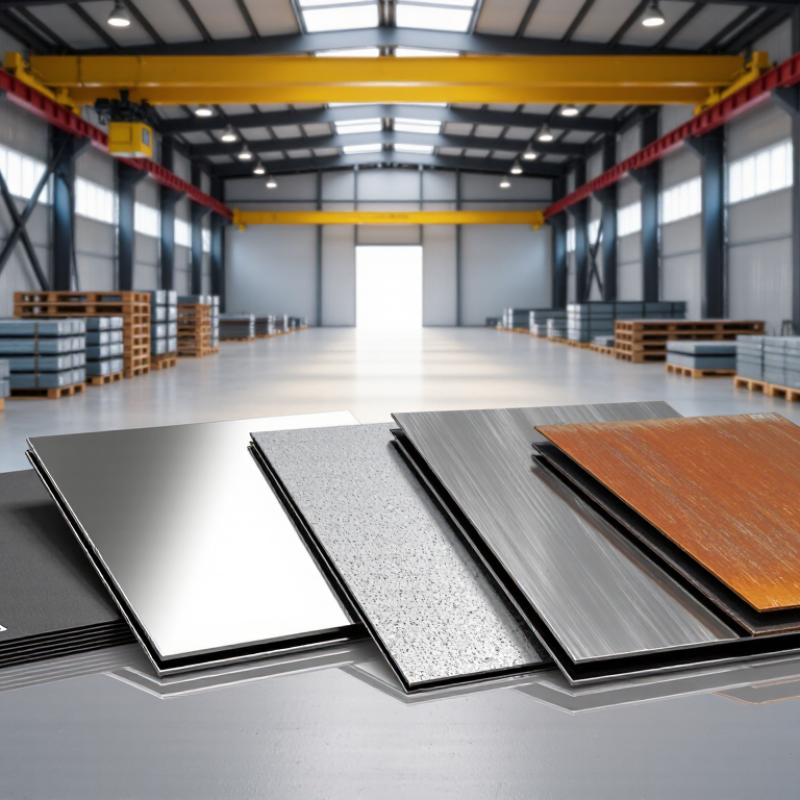
| Carbon Structural Steel Plate | Low-carbon or medium-carbon plate used for general structural fabrication. Common specifications include ASTM A36 and EN 10025-2 grades such as S235JR and S275JR. | Usually ferrite-pearlite at low and moderate carbon levels. The proportion of pearlite generally increases with carbon content. | Good weldability and formability; typical minimum yield strength is about 235–275 MPa for widely used grades. | Approximately 4–150 mm, depending on the grade, mill, and supply condition. | Buildings, platforms, bridges, frames, brackets, machinery bases, and general fabricated structures. | Confirm the governing standard, yield strength, impact-test requirement, thickness tolerance, surface condition, and welding procedure. |
| High-Strength Low-Alloy Plate | Microalloyed structural plate containing small additions of elements such as niobium, vanadium, or titanium. Examples include ASTM A572 Grade 50 and EN 10025-3 normalized fine-grain grades. | Fine-grained ferrite-pearlite or similar controlled low-carbon structures produced through alloying and thermomechanical processing. | Higher strength-to-weight ratio than basic structural steel; common yield-strength levels are approximately 345–550 MPa. | Approximately 6–100 mm for many commercial supply programs. | Heavy structures, transport equipment, cranes, towers, bridges, and load-bearing components where weight reduction is useful. | Check weldability, carbon equivalent, minimum impact temperature, delivery condition, and whether the grade is normalized or thermomechanically controlled. |
| Weathering Steel Plate | Atmospheric-corrosion-resistant structural steel designed to form a protective oxide layer under suitable outdoor exposure. Common standards include ASTM A588 and EN 10025-5. | Low-carbon structural matrix with alloying additions, commonly including copper, chromium, nickel, and phosphorus, depending on the grade. | Structural strength comparable to many HSLA grades and improved resistance to atmospheric corrosion when conditions allow stable patina formation. | Approximately 5–100 mm. | Bridges, outdoor sculptures, railway structures, façades, containers, and exposed architectural steelwork. | Not recommended for continuously wet, salt-spray, submerged, or poorly ventilated environments without additional protection. Surface appearance changes during weathering. |
| Boiler and Pressure-Vessel Plate | Carbon, manganese, or alloy steel plate manufactured for pressure-retaining equipment. Common specifications include ASTM A516 and EN 10028 pressure-vessel grades. | Typically normalized ferrite-pearlite or fine-grained alloy structures, depending on grade and heat treatment. | Good notch toughness and weldability, with strength and impact performance specified for elevated or low service temperatures. | Approximately 6–250 mm, subject to grade and production route. | Boilers, storage tanks, reactors, heat exchangers, pressure vessels, and process equipment. | Verify impact-test temperature, ultrasonic testing, heat-treatment condition, plate thickness, forming requirements, and applicable design code. |
| Shipbuilding and Marine Plate | Structural plate qualified for hulls and marine structures under recognized shipbuilding specifications. Typical grades include A, AH, DH, and EH strength categories. | Fine-grained low-carbon structural steel, supplied as rolled, normalized, or thermomechanically controlled plate depending on grade. | Good weldability, fatigue resistance, and low-temperature impact toughness; higher-strength grades commonly provide yield strengths around 315–390 MPa. | Approximately 5–100 mm for hull and marine structural components. | Ship hulls, offshore structures, decks, bulkheads, marine platforms, and port equipment. | Certification, impact toughness, ultrasonic inspection, through-thickness properties, weldability, and approval by the required marine classification system are critical. |
| Abrasion-Resistant Steel Plate | Quenched and tempered alloy plate designed to resist sliding, impact, and gouging wear. Hardness classes are commonly identified by nominal Brinell hardness, such as 400 or 500 HBW. | Predominantly tempered martensite, sometimes with bainitic components, depending on chemistry and cooling conditions. | High hardness and wear resistance; nominal hardness commonly ranges from about 400 to 550 HBW, with lower formability than mild steel. | Approximately 4–100 mm. | Dump bodies, crushers, hoppers, chutes, conveyors, mining equipment, buckets, and recycling machinery. | Use approved preheating and welding practices. Confirm hardness tolerance, impact requirements, bending radius, cutting method, and expected wear mechanism. |
| Quenched and Tempered High-Strength Plate | Heat-treated structural plate supplied after quenching and tempering for high strength and controlled toughness. Standards include EN 10025-6 and comparable national specifications. | Tempered martensite or a mixed tempered martensitic-bainitic structure. | Typical yield strengths range from approximately mast 690 to over 1,000 MPa, depending on grade; high strength supports lighter structures. | Approximately 6–80 mm. | Mobile cranes, lifting equipment, heavy vehicles, pressure components, construction machinery, and high-load frames. | Welding heat input, hydrogen control, preheating, post-weld treatment, bending limits, and hardness near the heat-affected zone require careful control. |
| Stainless Steel Plate | Corrosion-resistant alloy plate containing at least about 10.5% chromium by mass. Major families include austenitic, ferritic, martensitic, and duplex stainless steels. | Structure depends on family: austenite, ferrite, martensite, or austenite-ferrite duplex. Nickel, molybdenum, and nitrogen may improve corrosion or mechanical performance. | High corrosion resistance and cleanability; austenitic grades generally offer excellent formability, while duplex grades provide high strength and chloride resistance. | Approximately 0.5–150 mm, with thicker products available for specialized projects. | Food processing, chemical equipment, water treatment, architecture, medical facilities, energy systems, and marine applications. | Specify grade, surface finish, corrosion environment, chloride exposure, solution-annealing condition, intergranular-corrosion requirement, and welding method. |
| Galvanized Steel Plate | Steel plate protected by a zinc coating applied through hot-dip galvanizing or another zinc-coating process. Product specifications define coating mass and substrate properties. | Low-carbon or structural steel substrate with a zinc or zinc-alloy coating; hot-dip products may contain iron-zinc intermetallic layers beneath the outer zinc layer. | Good general corrosion protection in many atmospheric environments; formability and weldability depend on substrate grade and coating thickness. | Approximately 0.4–6 mm for many continuous-line products; thicker galvanized plate may be available through batch processes. | Roofing, wall panels, ducts, agricultural structures, automotive components, enclosures, and general fabrication. | Confirm coating designation, spangle or surface appearance, passivation, forming radius, repair requirements after cutting, and corrosion exposure category. |
| Checkered or Patterned Plate | Steel plate with raised patterns, commonly tears, diamonds, or other textures, to improve walking traction and reduce slipping. | Usually carbon structural steel with a hot-rolled base and an integral raised pattern formed during rolling. | Provides structural load capacity similar to the specified base grade while increasing surface grip; effective thickness varies with the pattern. | Commonly 2.5–12 mm base thickness, with pattern height added to the nominal overall thickness. | Stairs, walkways, platforms, vehicle floors, industrial flooring, ramps, and equipment access areas. | Specify base thickness separately from pattern height, pattern direction, flatness, slip performance, drainage needs, and dimensional tolerances. |
| Corten-Type Weathering Plate | Trade-neutral description for copper-bearing atmospheric-corrosion-resistant steel. The exact grade should be selected from the applicable national or international standard. | Low-carbon structural steel with alloying elements that promote a relatively stable, adherent patina in suitable atmospheric conditions. | Good outdoor durability and structural performance; corrosion resistance depends strongly on wet-dry cycling and environmental exposure. | Approximately 5–80 mm. | Landscaping, façades, bridges, rail infrastructure, outdoor furniture, and architectural features. | Ensure drainage and ventilation, prevent contact with runoff-sensitive materials, and avoid use in marine or permanently damp environments without engineering protection. |