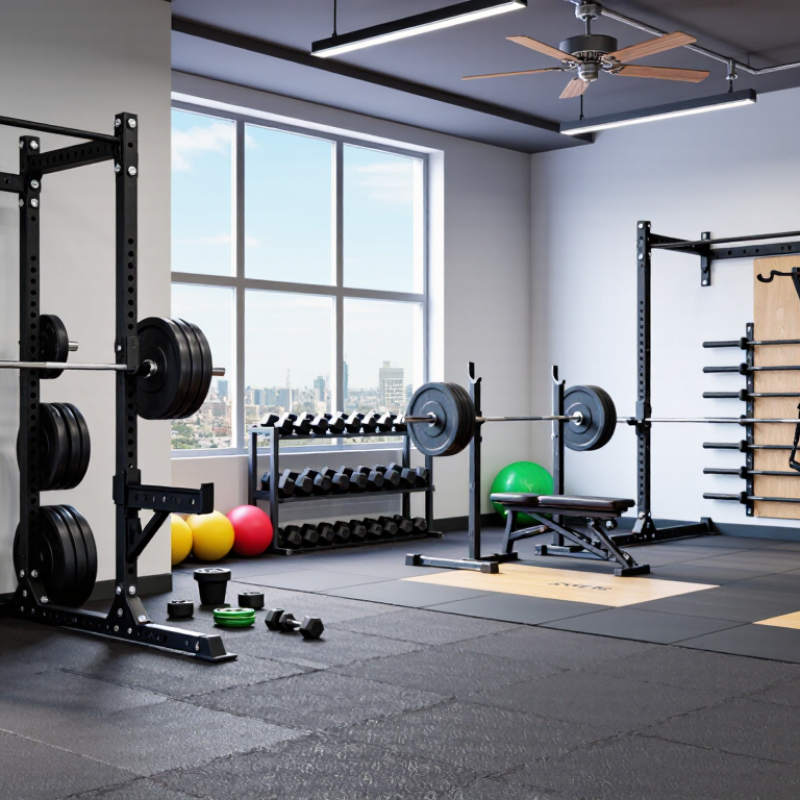
| Strength Racks, Rigs and Supporting Equipment |
| Full Power Rack | 1.2–1.5 m × 1.2–1.6 m × 2.1–2.4 m
(47–59 in × 47–63 in × 83–94 in) | 2.4–2.7 m
(8–9 ft) | 180–450 kg
(400–1,000 lb) | Barbell squats, bench pressing, overhead pressing, pull-ups and rack-based accessory work. | Requires a stable, level floor. A minimum of 0.9 m (3 ft) of access space is advisable around the main working sides. Secure anchoring is recommended for high-load or kipping use. | Best for 2+ strength days
Supports the resistance-training component recommended alongside aerobic activity. |
| Half Rack | 1.2–1.5 m × 1.0–1.4 m × 2.1–2.4 m
(47–59 in × 39–55 in × 83–94 in) | 2.4–2.7 m
(8–9 ft) | 180–360 kg
(400–800 lb) | Squats, presses, Olympic-lifting variations and pull-up work with a smaller footprint than a full rack. | Needs rear clearance and a secure base. It is generally easier to place in a home gym or compact training studio. | Efficient strength option
Suitable for short 30–45-minute sessions performed at least twice weekly. |
| Wall-Mounted Rig | 1.2–1.5 m projection × 2.4–3.6 m width × 2.1–2.7 m height
(47–59 in × 94–142 in × 83–106 in) | 2.7–3.0 m
(9–10 ft) | 180–450 kg per rack bay
(400–1,000 lb) | Pull-ups, squats, presses, suspension training, rings and multi-user functional training. | Must be fixed to a structurally suitable wall or floor system. Check wall type, fastener specification, floor loading and emergency access before installation. | High-density facility choice
Useful where several users share equipment during scheduled weekly sessions. |
| Freestanding Multi-Bay Rig | 2.0–3.0 m × 2.0–3.0 m × 2.4–3.6 m
(79–118 in × 79–118 in × 94–142 in) | 2.7–3.6 m
(9–12 ft) | 180–450 kg per station
(400–1,000 lb) | Group pull-ups, barbell training, rope work, rings, sled preparation and circuit-based strength sessions. | Requires a larger safety zone and a level floor. Allow at least 1.2–1.5 m (4–5 ft) of clear space around high-traffic training areas. | Suitable for group circuits
Can combine resistance stations with moderate-intensity conditioning blocks. |
| Squat Stand | 1.1–1.3 m × 0.8–1.0 m × 1.5–2.4 m
(43–51 in × 31–39 in × 59–94 in) | 2.4–2.7 m
(8–9 ft) | 135–270 kg
(300–600 lb) | Squats, overhead presses, front squats and basic barbell strength training. | Use on a non-slip surface with adequate side clearance. A spotter system or safety arms improve protection during unsupervised training. | Compact strength option
Appropriate for users prioritizing two or more weekly resistance sessions. |
| Functional Cable Trainer | 1.2–1.8 m × 0.8–1.2 m × 2.1–2.4 m
(47–71 in × 31–47 in × 83–94 in) | 2.4–2.7 m
(8–9 ft) | Two stacks of 45–90 kg each
(100–200 lb each) | Adjustable cable resistance for rows, presses, rotations, pulldowns, rehabilitation and full-body accessory work. | Allow cable travel and user movement space of at least 1.2 m (4 ft) in front of each working side. Confirm whether the unit requires floor anchoring. | Versatile full-body training
Supports moderate-volume sessions for different ability levels without repeated barbell loading. |
| Lifting Platform | 2.4 m × 1.8–2.4 m
(8 ft × 6–8 ft) | Matched to rack height | Based on floor and equipment specification | Deadlifts, Olympic lifts, power movements and controlled barbell dropping where permitted. | Use shock-absorbing rubber or a purpose-built platform. Check floor structure, noise transmission, ventilation and local building rules. | Protective foundation
Improves setup safety but does not itself provide aerobic activity. |
| Plate and Bar Storage Rack | 0.6–1.2 m × 0.5–0.8 m × 1.0–1.5 m
(24–47 in × 20–31 in × 39–59 in) | Not applicable | 135–450 kg
(300–1,000 lb) | Organized storage for Olympic plates, change plates, bars and small accessories. | Place outside the lifting and walking path. Distribute plates evenly and verify the storage rack’s total load rating rather than relying only on individual peg ratings. | Safety and workflow support
Reduces trip hazards and improves transition time between exercises. |
| Weekly Activity Benchmark and Buying Implications |
| Moderate-Intensity Aerobic Benchmark | 150–300 minutes per week | Examples: brisk walking, steady cycling, active recreational movement or other activity that noticeably increases breathing while allowing conversation. | Improves the likelihood that a rack or rig is used as part of a balanced program rather than as the only training tool. | For a rack-focused facility, pair strength stations with walking routes, cycles, rowers or other aerobic equipment to cover the full weekly target. | WHO benchmark
Equivalent examples: 5 × 30 minutes = 150 minutes; 5 × 60 minutes = 300 minutes. |
| Vigorous-Intensity Aerobic Benchmark | 75–150 minutes per week | Examples: running, fast cycling, vigorous circuit training or activity that makes conversation difficult. | High-intensity rig circuits may contribute to this target when the session genuinely reaches vigorous intensity and recovery is managed. | Provide adequate spacing, flooring, ventilation, hydration access and a progression plan for users who are not already conditioned. | Alternative benchmark
Vigorous minutes generally require greater recovery and should not be assumed from equipment type alone. |
| Muscle-Strengthening Benchmark | At least 2 days per week | Train all major muscle groups using body weight, free weights, machines, cables, resistance bands or other resistance methods. | Power racks, half racks, rigs and cable trainers can all support this requirement when exercises cover the legs, hips, back, chest, abdomen, shoulders and arms. | For shared facilities, select adjustable equipment, clear exercise signage and multiple load increments to accommodate different users. | Strength benchmark
The weekly recommendation concerns frequency and muscle coverage, not a single mandatory load. |
| Practical Weekly Program Example | 5 days × 30 minutes moderate activity
+ 2 strength sessions | A sample structure could include three moderate aerobic sessions, two mixed aerobic-and-strength sessions, and at least two days with major-muscle resistance work. | Allows a rack or rig to serve as the strength hub while separate low-impact equipment or outdoor activity supplies the aerobic minutes. | Buyers should evaluate total usable floor area, user throughput, maintenance access and safety clearance—not only the rack’s steel dimensions. | Balanced planning model
Individual needs, medical conditions and training experience should guide intensity and progression. |
| Global Buyer Checklist | Confirm dimensions in both metric and imperial units. | Verify whether ratings refer to the frame, each attachment, each storage peg or the complete system. | Check corrosion protection, weld quality, adjustment increments, accessory compatibility and replacement-part availability. | Review local electrical, structural, fire, accessibility, noise and anchoring requirements before importing or installing equipment. | Procurement priority
Published specifications vary by design and testing method; compare like-for-like ratings. |