2026 Top Hydraulic Bending Machine Trends Buyers Must Know?

As we approach 2026, the Hydraulic Bending Machine sector is evolving rapidly. According to a recent report by IBISWorld, the market for hydraulic machinery is expected to grow by 4.5% annually. This growth highlights the increasing demand for precision and efficiency in metal fabrication.

In recent years, advancements such as CNC technology and automation have transformed operational processes. Companies are investing in smarter machines to enhance productivity and reduce labor costs. However, not all innovations guarantee performance improvements. Many buyers face challenges in selecting the right technology.

Understanding the latest trends is crucial. Features like energy efficiency and compact design are gaining traction. Yet, with every trend, there are trade-offs that require careful consideration. Staying informed about these developments will enable buyers to make educated decisions in an ever-changing market for Hydraulic Bending Machines.

2026 Top Hydraulic Bending Machine Trends Buyers Must Know?

Emerging Technologies in Hydraulic Bending Machines for 2026

Emerging technologies in hydraulic bending machines are shaping the industry landscape for 2026. Advanced automation plays a pivotal role, enhancing productivity and precision. According to a recent market analysis, businesses adopting automation report a 30% increase in efficiency. This trend leverages AI-driven software for optimal bending processes, reducing material waste and human error.

Electric-hydraulic hybrid systems are gaining attention. These systems combine the benefits of both technologies, offering energy efficiency and high performance. The industry predicts a growth rate of over 15% per year for hybrid machines. Users appreciate lower operational costs and reduced carbon footprints, making them a sustainable choice.

Tip: Regular maintenance of hydraulic systems is vital. It ensures long-term performance and reduces unexpected downtime.

Another key trend is the integration of IoT technology. It allows real-time monitoring and data collection, which can enhance decision-making. Companies implementing IoT solutions experience up to 25% better uptime. However, integrating these technologies is not without challenges. Transitioning existing systems can be costly and complex.

Tip: Consider starting with a pilot project. It helps gauge effectiveness before full-scale implementation.

Key Features to Look for in Modern Hydraulic Bending Machines

When looking for a modern hydraulic bending machine, certain key features stand out. The machine's control system must be intuitive and user-friendly. Many operators benefit from touchscreen controls, which simplify adjustments. Automated settings can significantly reduce setup time, enhancing production efficiency. Ensure the software is adaptable for various bending programs, which provides versatility in projects.

Look for robust frame construction, as this directly correlates with durability. Steel frames can withstand heavy loads without compromising accuracy. Additionally, precision tooling is crucial. High-quality dies minimize material waste and improve the overall finish. Pay attention to the bending radius; machines that can handle a range of radii can accommodate diverse bending tasks.

Advanced safety features are not just desirable, they are necessary. Safety interlocks and emergency stop buttons can help prevent accidents. Regular maintenance access is vital for longevity but often overlooked. Evaluate how easy it is to repair or replace parts. This aspect can significantly influence long-term operational costs. A reliable hydraulic system keeps the bending process smooth but often requires careful checks to avoid performance issues.

2026 Top Hydraulic Bending Machine Trends Buyers Must Know

Feature Importance Trend Expected Benefits
Precision Control Systems Enhances accuracy Growing demand for accuracy in applications Reduced waste and improved product quality
Energy Efficiency Cost savings Increased focus on sustainability Lower operational costs over time
Automatic Bending Labor efficiency Shift towards automation Enhanced productivity and reduced labor costs
User-Friendly Interfaces Improved operator experience Meeting demands for ease of use Shorter training times and fewer operator errors
Smart Technology Integration Real-time monitoring Growth in IoT applications Better maintenance and predictive analytics
Multifunctional Capabilities Versatility in operations Demand for flexible manufacturing solutions Ability to cater to diverse customer needs

Sustainability Practices Impacting Hydraulic Machinery Trends

The hydraulic bending machine industry is witnessing a pivotal shift towards sustainability. Manufacturers are adopting eco-friendly practices to meet rising environmental standards. Sustainable materials and energy-efficient designs are becoming the norm. This trend is particularly significant as businesses aim for greener operations and lower carbon footprints.

Tips: Consider investing in machines that use renewable energy sources. Look for innovations that allow for less material waste. These changes can drive down operational costs while benefiting the planet.

The integration of sustainable practices impacts both manufacturers and buyers. Companies are exploring ways to reduce energy consumption during operation. Implementing predictive maintenance can extend machine life and reduce environmental impact. This shift necessitates a reevaluation of purchasing criteria for buyers. A focus on sustainability means prioritizing durable and efficient machines.

Tips: Research machine lifecycle and maintenance needs before investing. Evaluate suppliers' commitment to sustainability. This diligence pays off in both performance and environmental impact.

Market Insights: Demand and Supply Trends for 2026 Hydraulic Machines

The demand for hydraulic bending machines in 2026 is projected to rise significantly, driven by expanding manufacturing sectors. According to recent market analysis, the production of hydraulic machines is expected to grow at a CAGR of 4.5% over the next few years. This growth reflects the increasing complexity in manufacturing processes, requiring more advanced machinery.

Supply chain dynamics also play a vital role in shaping market conditions. Factors such as raw material availability and labor shortages present continuous challenges. Notably, about 30% of manufacturers report difficulties in sourcing high-quality components. This situation can lead to delays and increased costs, highlighting the need for better supply chain management strategies.

In addition, sustainability is becoming a crucial theme in the hydraulic machine market. Environmental concerns push manufacturers to adopt eco-friendlier technologies. The shift towards energy-efficient machines is evident. Reports indicate that up to 40% of new hydraulic models will focus on reducing energy consumption by 2026. However, integrating these technologies can be costly and complex, leaving many companies to reconsider their approach.

Comparative Analysis: Hydraulic vs. Other Bending Technologies in 2026

In 2026, the hydraulic bending machine industry is witnessing a significant shift. A comparative analysis reveals intriguing insights between hydraulic and alternative bending technologies. According to a recent industry report, hydraulic machines hold a market share of about 55%, attributed to their efficiency and versatility. These machines excel in bending thick materials, unmatched by their counterparts.

In contrast, electric and mechanical bending technologies are gaining traction. They account for approximately 25% and 20% of the market, respectively. Data shows that electric machines consume up to 30% less energy than hydraulic models. However, they struggle with heavy-duty applications. Mechanical systems can be faster but may not offer the precision demanded in intricate designs.

Precision remains a central concern across technologies. Hydraulic systems can bend various materials seamlessly but often require extensive maintenance. Users have reported frustration over downtime due to hydraulic fluid leaks. In contrast, while electric systems promise lower emissions, they may lack robustness. A balanced understanding of these strengths and weaknesses can guide buyers toward the best choice for their operational needs.

Find the Right Repair Product for Your Project

Need to find the most appropriate product for the needs of your project? We can help because we have over 70 years of experience servicing the industry with every kind of project, from Do-it-yourself projects to large skyscrapers. Package Pavement has the experience, the knowledge and the products to help every project succeed.
Quikrete Repair Products
Legend
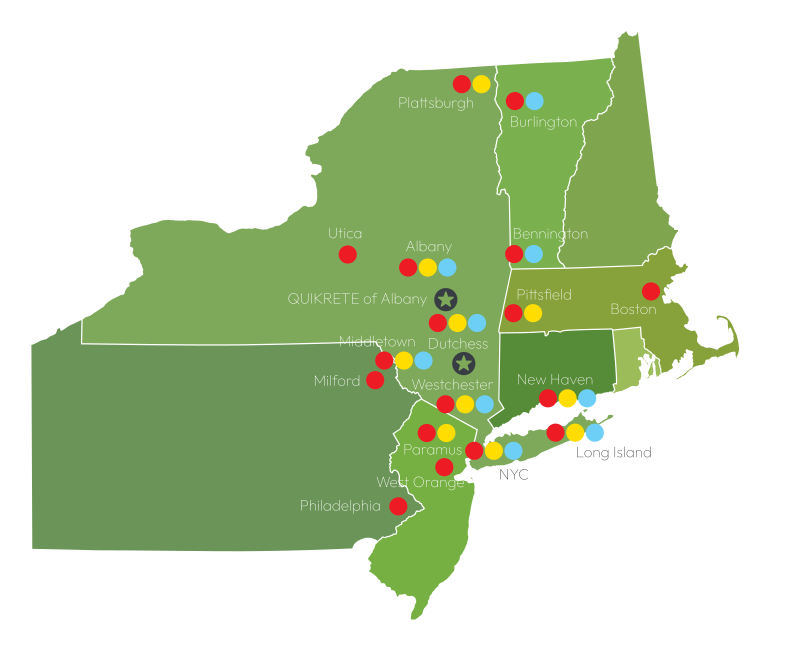
Package Pavement has two convenient locations in Stormville, NY (Dutchess County) and Ravena, NY (Greene County) to serve the Northeastern Region with bagged concrete, blacktop, mortar, and repair products. This map gives a general idea of where we service and the product lines we offer.
Package Pavement Products
Quikrete Products
Spec Mix Products
map

Our Brands Websites