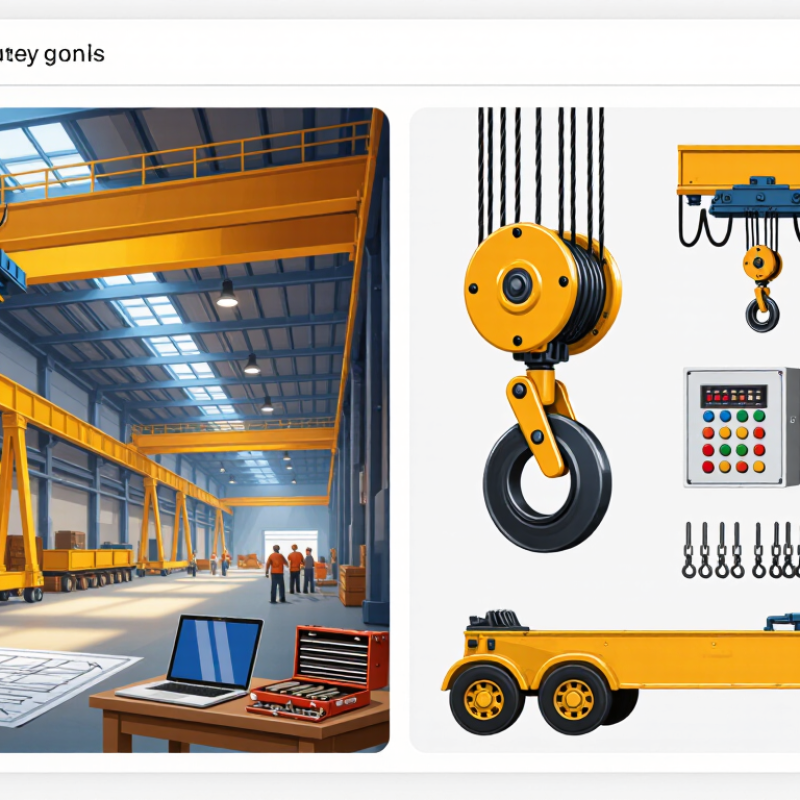
| Top-Running Single-Girder Bridge Crane | General manufacturing, maintenance bays, warehouses, and material-handling areas where moderate lifting capacity and economical installation are priorities. | - Load and deflection calculations
- Weld procedures and inspection records
- Hoist test certificates
- Traceable material and component documentation
| - ASME B30.2 where applicable
- OSHA 29 CFR 1910.179 in the United States
- EN 15011 for applicable European installations
| Span and lift height, pendant or radio control, variable-speed travel, low-headroom hoist, galvanized components, and indoor or outdoor protection. | Verify rated capacity, runway alignment, end-stop design, overload protection, emergency stop function, travel limits, and operational testing under the approved load plan. |
| Top-Running Double-Girder Bridge Crane | Heavy-duty production, steel processing, foundries, power facilities, and applications requiring greater hook height, span, or auxiliary lifting equipment. | - Girder stress and fatigue assessment
- Wheel-load calculations
- Brake and gearbox specifications
- Documented factory acceptance testing
| - ASME B30.2 where applicable
- EN 15011 where applicable
- ISO 4301-1 for crane classification principles
| Main and auxiliary hoists, independent or synchronized lifting, operator cabin, grab or magnet interface, service platforms, and tandem controls. | Check wheel loads against runway design, verify independent brake performance, confirm load-test procedures, review fatigue classification, and inspect access and guarding provisions. |
| Underhung or Under-Running Bridge Crane | Facilities with limited headroom, lighter-duty production lines, and buildings where the crane runway is supported from the roof structure. | - Building-support and hanger calculations
- Runway connection details
- Hoist and trolley compatibility data
- Inspection and maintenance instructions
| - Applicable ASME B30 series requirements
- EN 15011 where applicable
- Local structural and electrical codes
| Low-headroom hoist, curved runway sections where permitted, multiple crane systems, festoon or conductor-bar power, and restricted-height controls. | Obtain a structural engineer’s confirmation of roof and hanger capacity, verify clearances, inspect runway joints, and test anti-drop and end-stop provisions. |
| Outdoor Bridge Crane | Outdoor yards, shipyards, precast concrete plants, ports, storage areas, and process facilities exposed to weather. | - Wind-load and storm-parking calculations
- Corrosion-protection system specification
- Outdoor electrical enclosure ratings
- Drainage and water-ingress provisions
| - EN 15011 or ASME B30.2 as applicable
- Local wind, seismic, and environmental codes
- IEC 60204-32 for applicable lifting-machine electrical equipment
| Storm locks, rail clamps, anemometer, heating or anti-condensation devices, UV-resistant controls, stainless or coated components, and remote monitoring. | Verify wind-service and out-of-service loads, storm-warning logic, parking arrangements, coating thickness, enclosure protection, drainage, and emergency recovery procedures. |
| Explosion-Risk or Hazardous-Environment Crane | Selected chemical, pharmaceutical, petroleum, gas, and dust-risk areas where ignition-control requirements apply. | - Area-classification compatibility statement
- Electrical and mechanical equipment certificates
- Temperature-class and protection-method documentation
- Hazardous-area installation instructions
| - Applicable ATEX or IECEx requirements
- Local hazardous-location electrical codes
- IEC 60079 series where applicable
| Non-sparking design features, certified motors and controls, grounding and bonding, sealed enclosures, special brakes, and corrosion-resistant finishes. | Match every component to the site zone or division, confirm certificate scope, review bonding continuity, verify temperature limits, and require installation by qualified personnel. |
| Process or Continuous-Duty Bridge Crane | Steel mills, foundries, paper plants, waste-processing facilities, and production environments requiring frequent or near-continuous crane operation. | - Duty-cycle and classification calculations
- Thermal ratings for motors and brakes
- Fatigue-life assessment
- Preventive-maintenance and spare-parts plan
| - ISO 4301-1 classification principles
- EN 15011 where applicable
- ASME B30.2 where applicable
| High-cycle hoists, regenerative drives, redundant braking, heat shielding, automatic positioning, load weighing, and condition monitoring. | Compare expected starts per hour and operating time with rated duty, verify brake and motor thermal margins, review fatigue design, and establish inspection intervals. |
| Cleanroom or Hygienic Bridge Crane | Controlled manufacturing, electronics, pharmaceutical, food, and laboratory environments where contamination control is important. | - Surface-finish and cleanability specification
- Particle-shedding and lubricant-control information
- Sealed-component details
- Cleaning and maintenance procedures
| - Applicable cleanroom and facility standards
- EN 15011 or ASME B30.2 as applicable
- Local hygiene, electrical, and fire requirements
| Stainless or coated surfaces, sealed bearings, low-particle cable systems, cleanroom-compatible lubricants, and remote controls. | Confirm compatibility with the room classification and cleaning agents, inspect exposed surfaces, verify ingress protection, and approve materials before installation. |
| Smart or Automated Bridge Crane | High-throughput warehouses, steel storage, repetitive production, and facilities seeking position control, usage data, or reduced manual handling. | - Functional safety and control-system documentation
- Software version and change-control records
- Cybersecurity and network architecture information
- Sensor calibration and backup procedures
| - IEC 60204-32 where applicable
- ISO 13849-1 or IEC 62061 for relevant safety functions
- Applicable local machinery and workplace-safety rules
| Automatic positioning, anti-sway control, collision avoidance, load identification, warehouse-management integration, geofencing, and remote diagnostics. | Test normal, fault, recovery, and loss-of-communication scenarios; verify safe states, access control, manual override, event logging, and operator training. |
| Low-Headroom or Restricted-Clearance Crane | Existing buildings, retrofit projects, production lines, and facilities where ceiling height or side clearances limit conventional crane arrangements. | - Building survey and clearance drawings
- Hook-approach and lifting-height calculations
- Runway and support-interface details
- Installation method statement
| - Applicable ASME B30.2 or EN 15011 requirements
- Local structural and electrical codes
- Manufacturer’s documented safe-use instructions
| Compact hoists, side-mounted drives, special end trucks, recessed electrification, custom hook approaches, and split installation packages. | Perform a three-dimensional clearance review, confirm maintenance access, verify hook travel, inspect structural interfaces, and document installation tolerances. |
| Supplier Documentation and Service Package | Applicable to every bridge-crane procurement, regardless of crane configuration or lifting capacity. | - General arrangement and load data
- Electrical schematics and control manuals
- Inspection, test, and conformity records
- Spare-parts and recommended-maintenance list
| - ISO 9927 inspection principles
- ISO 12480-1 safe-use principles
- Applicable national workplace-safety regulations
| Operator training, preventive-maintenance contracts, periodic inspection support, remote diagnostics, critical-spares stock, and response-time commitments. | Use a documented pre-award checklist, verify references for comparable duty, confirm technician qualifications, define warranty exclusions, and establish post-installation support obligations. |