| Typical Output | 30–60 cans/min | 60–150 cans/min | 150–400 cans/min | Select capacity based on sustained output, not the machine’s short-term maximum rating. |
| Suitable Operation | Small-batch production, pilot lines, and frequent product changes | Regular food, beverage, and general metal-packaging production | Continuous, high-volume production with automated upstream and downstream equipment | Match the seamer to the actual daily production schedule and required operating hours. |
| Can Diameter Range | Approximately 52–153 mm | Approximately 52–153 mm | Approximately 52–153 mm, depending on tooling and machine configuration | Confirm the exact body diameter, lid diameter, flange profile, and tooling availability for every can format. |
| Can Height Range | Approximately 30–200 mm | Approximately 30–250 mm | Approximately 30–300 mm | Can-height ranges vary by chuck, lifter, guide rail, and container material. |
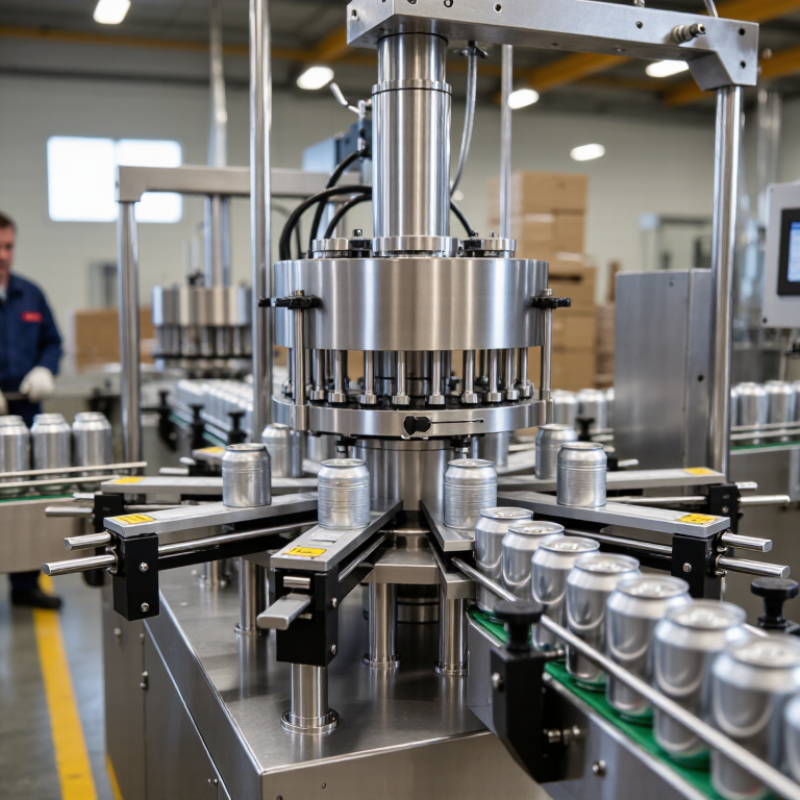
| Seaming Stations | Usually 1–2 stations | Usually 2 stations | Usually 4 or more stations | More stations generally support higher throughput, but they also increase tooling and maintenance requirements. |
| Seam Formation | Two-operation double seam: first operation followed by second operation | Two-operation double seam with adjustable seaming pressure and timing | Multi-station double seam with synchronized high-speed can handling | Verify that the machine can meet the required seam thickness, seam width, tightness, and countersink specifications. |
| Typical Drive System | Approximately 0.75–2.2 kW motor | Approximately 1.5–4 kW motor | Approximately 4–11 kW motor | Motor size depends on speed, can material, seaming load, and auxiliary systems. |
| Control System | Start/stop controls with basic speed adjustment | PLC and touchscreen interface with recipe settings | PLC, HMI, servo or variable-frequency drive control, alarms, and line communication | Prioritize recipe storage, fault history, emergency-stop functions, and easy access to operating parameters. |
| Changeover Time | Approximately 20–60 minutes | Approximately 15–45 minutes | Approximately 30–90 minutes, depending on the number of formats | Quick-change tooling, format guides, and repeatable adjustment scales can reduce setup waste. |
| Vacuum or Gas Flushing | Optional; commonly added as a separate module | Optional integrated or inline vacuum/gas-flushing system | Usually available for oxygen-sensitive or shelf-life-focused products | Check the required residual oxygen level, gas compatibility, sealing method, and product characteristics. |
| Construction Materials | Painted steel frame with stainless-steel product-contact areas | Stainless-steel guarding and corrosion-resistant product-contact components | Hygienic stainless-steel construction with washdown-compatible guarding options | For wet or corrosive environments, confirm the stainless-steel grade, sealing protection, and washdown rating. |
| Can Feeding | Manual loading or simple infeed conveyor | Automatic conveyor infeed with can spacing and accumulation | Continuous automatic infeed synchronized with the complete packaging line | Check container orientation, feeding stability, accumulation capacity, and compatibility with existing conveyors. |
| Can Discharge | Manual collection or short discharge conveyor | Automatic discharge conveyor with basic jam detection | High-speed discharge with reject handling and line synchronization | Reliable discharge prevents seam damage, can tipping, and downstream line stoppages. |
| Seam Quality Monitoring | Manual inspection and periodic destructive testing | Sensor-based checks plus scheduled seam teardown inspection | Automated monitoring options with alarm, reject, and production-data functions | Even with sensors, regular teardown inspection remains necessary for seam-quality verification. |
| Typical Utility Requirements | Single-phase or three-phase power; compressed air may be optional | Three-phase power and approximately 5–7 bar compressed air when pneumatic devices are used | Three-phase power, compressed air, and optional gas or vacuum utilities | Confirm voltage, frequency, air consumption, gas demand, floor space, drainage, and ventilation requirements. |
| Best Choice For | Low-to-medium volumes and flexible production | Most general-purpose production lines | High-volume lines where throughput and automation justify higher investment | Choose the smallest machine that comfortably meets your required output and future growth plan. |
| Main Trade-Off | Lower investment but more manual handling and lower throughput | Balanced cost, flexibility, speed, and automation | Highest productivity but greater capital cost, tooling complexity, and maintenance demand | Compare total cost of ownership, including tooling, energy, labor, spare parts, training, and downtime. |