2026 Top Rotary Pouch Packing Machines Buying Guide
Selecting the right rotary pouch packing machine requires more than comparing speed figures. It requires evidence from real production conditions. Flexible packaging continues to expand across food, beverages, personal care, and household products. Smithers’ “The Future of Flexible Packaging to 2029” highlights ongoing demand for lightweight formats, improved barrier performance, and efficient material use. Grand View Research also reports steady growth in the global flexible packaging market. These trends make pouch automation increasingly relevant for manufacturers planning reliable capacity.
The details matter. A machine rated at 80 pouches per minute may perform differently with powder, liquid, or sticky products. Film thickness, pouch width, zipper design, and filling accuracy can change the result. PMMI’s packaging industry reports repeatedly emphasize automation, labor efficiency, and flexible equipment integration. Therefore, buyers should examine changeover time, sealing temperature control, dosing consistency, sanitation access, and spare-parts support. Watch the machine run your actual product.
Not just a brochure.
This 2026 buying guide compares rotary pouch packing machines through practical, measurable criteria. It considers output stability, energy use, control systems, safety features, maintenance access, and total cost of ownership. Factory acceptance testing, sample packaging trials, and service response deserve equal attention. A lower purchase price can become expensive after repeated stoppages or difficult cleaning. That point is easy to underestimate.
No guide can replace production testing. Supplier claims also need verification. Use published reports as market context, then confirm performance through documented trials and references from comparable plants. The best decision balances present requirements with future pouch sizes, products, and regulatory expectations. Reliability is not a slogan. It is observed in every sealed pouch.
2026 Rotary Pouch Machine Market: Capacity, Speed, and Application Data
2026 Top Rotary Pouch Packing Machines Buying Guide
Rotary pouch machines are becoming more relevant as flexible packaging expands across food, pet care, personal care, and household products. Smithers’ 2024 flexible packaging research values the global market at more than USD 200 billion, with continued growth expected through 2029. This demand does not mean every machine needs maximum speed. Product texture, pouch size, filling accuracy, and sealing temperature often matter more.
Typical rotary systems operate between 30 and 120 cycles per minute, depending on pouch format and filling method. An eight-station machine running 60 cycles per minute may produce up to 480 pouches hourly per lane, before downtime and rejected packs. Real output is lower. It always is. PMMI industry research continues to identify labor availability, changeover time, and automation integration as major packaging concerns. Buyers should therefore examine tool-free adjustments, servo control, inspection access, and cleaning time.
Application data should guide capacity decisions. Powdered products may require dust control and auger fillers, while sauces need anti-drip pumps and stronger sealing systems. For fragile snacks, gentle product handling can protect appearance and reduce waste. A compact machine may suit short runs, but its hourly output can fall sharply during frequent format changes. This is where purchasing decisions become less obvious. A slower, easier-to-clean machine may deliver better annual efficiency than a faster system with long changeovers. Reported speeds are useful, but verified trial data is more dependable.
How Rotary Machines Achieve 30–120 Pouches per Minute
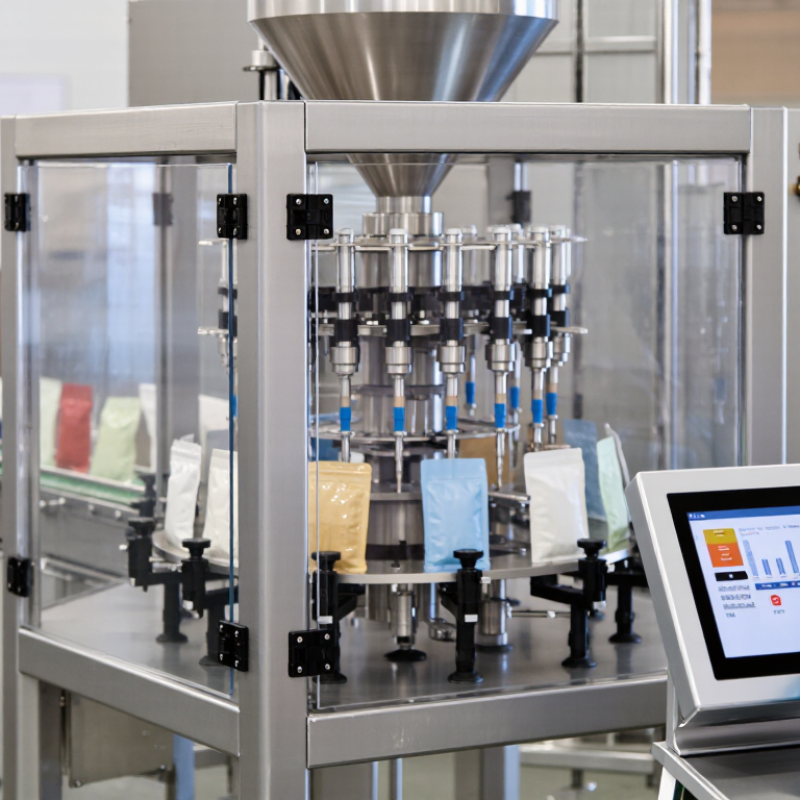
A rotary pouch packing machine reaches 30–120 pouches per minute through continuous indexing, not simple motor speed. Multiple stations open bags, fill products, remove air, seal, and discharge them in sequence. At 60 pouches per minute, one pouch leaves the machine every second. Servo-driven jaws help maintain timing when pouch sizes change.
PMMI’s 2023 U.S. Packaging Machinery Shipments Study reported approximately $10.2 billion in shipments during 2022, reflecting strong demand for automated production equipment. However, speed claims require careful inspection. The stated rate usually assumes stable materials, one product, and ideal filling conditions. Sticky powders, uneven granules, or weak seals can reduce output sharply. Real production is messier.
Look closely at the sealing area. A reliable machine should show clean seal lines, controlled temperature, and consistent pouch spacing. Ask for a factory trial using your actual film and product. Record good pouches per minute, rejected pouches, changeover time, and cleaning time. The Packaging Machinery Manufacturers Institute also identifies labor availability and flexible production as important automation drivers. That matters when operators must manage several pouch formats. Faster is not always better. A machine running at 120 pouches per minute may create more waste if sensors, fillers, or seals cannot keep pace. Steady output often wins.
Comparing Automation, Energy Use, Hygiene, and Total Cost of Ownership
2026 Top Rotary Pouch Packing Machines Buying Guide
Comparing Automation, Energy Use, Hygiene, and Total Cost of Ownership
A rotary pouch packing machine should match your production rhythm, not only your target speed. In equipment evaluations, I check servo control, pouch detection, filling accuracy, and changeover time. Higher automation can reduce labor and operator errors, but it may increase training needs. A fast machine is not automatically the best investment. Test it with your actual pouch material and product.
Tips: Request a live trial. Measure output, rejected pouches, cleaning time, and compressed-air use. Ask for energy data under normal production, not ideal conditions. A machine that saves ten minutes during changeover may recover its extra cost faster than one with a higher advertised speed. My own concern is often overlooked: small delays can become expensive across several shifts.
Hygiene should be judged from the frame, contact parts, seals, and access points. Smooth surfaces, limited product traps, tool-free removal, and clear drainage can shorten sanitation work. Verify whether parts tolerate your approved cleaning process. Total cost of ownership includes electricity, air consumption, spare parts, service response, labor, downtime, and training. Build a three-year estimate using realistic production hours. Leave room for uncertainty. Maintenance records and operator feedback may reveal costs that brochures never mention.
