
2026 Top Concrete Cement Innovations Transforming Construction Industry?

The construction industry is on the brink of a revolution with innovations in concrete cement. These advancements promise to enhance durability and sustainability. In 2026, the integration of high-performance materials will redefine building standards. Concrete cement is evolving, paving the way for smarter structures.

One key innovation is 3D printing, which allows for rapid construction using unique concrete cement mixtures. This technology reduces waste and lowers costs. However, challenges exist in achieving the ideal strength and longevity. Moreover, the environmental impact of manufacturing concrete cement remains a concern. Companies are exploring alternatives to minimize carbon footprints.

As we embrace these innovations, we must reflect on their implications. The shift to advanced concrete cement solutions invites questions about long-term viability. While benefits are clear, it is crucial to assess how these changes affect workers and local communities. Balancing progress with responsibility is essential in this transformative era.

2026 Top Concrete Cement Innovations Transforming Construction Industry?

Emerging Technologies in Concrete and Cement Production for 2026

The construction industry is on the brink of transformation as we approach 2026. Emerging technologies in concrete and cement production are reshaping the landscape. For example, data shows that using recycled materials can reduce carbon emissions by up to 20%. This shift not only addresses environmental concerns but also reflects changing industry norms.

Innovative techniques such as 3D printing with concrete are gaining traction. Studies indicate that projects utilizing this method can be completed 30% faster than conventional approaches. Yet, challenges remain. The durability of 3D printed structures is still under scrutiny, necessitating further research. Additionally, integrating smart materials is a breakthrough. These materials can adapt to environmental changes, improving sustainability.

Despite the potential, not all innovations succeed. For example, early attempts at using autonomous vehicles for material transport faced setbacks. Issues with safety and efficiency arose, prompting the industry to reconsider such technologies. Continuous experimentation is vital to drive progress and develop effective solutions. The evolving nature of concrete and cement production promises a dynamic future for construction.

2026 Top Concrete Cement Innovations Transforming Construction Industry

Innovation Description Impact on Industry Implementation Year
3D Printing of Concrete Utilization of 3D printing technology to create complex structures. Reduces construction time and waste, enhances design flexibility. 2026
Carbon Capture Concrete Concrete that integrates carbon capture technologies to reduce emissions. Lower carbon footprint and supports sustainability goals. 2026
Self-Healing Concrete Concrete that can autonomously repair cracks over time by using bacteria or polymers. Increases durability and reduces maintenance costs. 2026
Eco-Friendly Alternatives Using recycled materials or bio-based ingredients in concrete production. Decreases reliance on natural resources and promotes recycling. 2026
Smart Concrete Concrete embedded with sensors to monitor structural health. Enhances safety and informs maintenance needs preemptively. 2026

Sustainable Practices in Concrete Innovations Reducing Environmental Impact

Sustainable practices in concrete innovations are becoming essential. The construction industry is under pressure to reduce its carbon footprint. Concrete production is a significant contributor to CO2 emissions. Innovative methods are emerging to address this challenge.

One approach includes using waste materials in concrete mixes. This reduces the demand for raw materials, and it lowers energy consumption. For instance, incorporating recycled aggregates or industrial byproducts improves sustainability. Yet, these materials can alter the concrete’s strength. More research is necessary to ensure they meet safety standards.

Another interesting development is carbon capture technology. Capturing CO2 emissions during production could transform the industry's environmental impact. However, implementation remains costly, and not all facilities can adopt this technology. The challenge lies in balancing economic feasibility with environmental responsibility. The journey to a sustainable future is complex, but innovation is crucial.

Innovations in Sustainable Concrete Practices (2026)

Smart Materials: Enhancements in Concrete Durability and Performance

The construction industry is witnessing a revolution in concrete materials. Innovations in smart materials are enhancing concrete's durability and performance in remarkable ways. These advancements are not just theoretical; they are being implemented in real-world applications. For instance, some new concrete formulations can self-heal when cracks occur, which could extend the life of structures significantly. This ability to recover from minor damages reflects a shift toward sustainability in construction.

Engineers are also experimenting with additives that improve resistance to environmental factors. These smart additives can make concrete more resilient to extreme weather conditions, which is crucial in regions prone to harsh climates. However, while the benefits are clear, some challenges remain. The long-term effects of these innovations are still under scrutiny. Will they perform as expected over decades? It’s an essential question for investors and builders.

Moreover, the cost of integrating these advanced materials can be higher than traditional options. This raises budgetary concerns for many projects. Striking a balance between innovation and cost-effectiveness is complex. As the industry progresses, careful evaluation is needed to ensure that these exciting materials do not compromise quality or safety. Balancing performance and practicality requires ongoing dialogue among stakeholders.

Automation and Robotics in Cement Manufacturing Processes

2026 Top Concrete Cement Innovations Transforming Construction Industry?

The construction industry is undergoing a significant transformation. Automation and robotics are playing a vital role in cement manufacturing processes. These innovations aim to enhance efficiency and reduce costs. Automation can streamline operations, making them faster and more precise. For example, robotic arms can handle heavy materials with ease. This reduces the risk of injuries. However, not every plant is ready to integrate these technologies.

While automation provides many benefits, challenges remain. Implementing new systems can be expensive. Workers may feel uncertain about job security. The skills gap is another issue. Many workers need training to operate advanced machinery. This transition can lead to frustrations on the ground level. Plants might face delays in production as they adapt to new processes.

Moreover, quality control is crucial in cement production. Automated systems must be monitored to ensure standards are met. Failure to maintain quality can lead to serious flaws in construction projects. Companies must find a balance between automation and human oversight. While robots can handle repetitive tasks, human judgment is essential during complex operations. Embracing automation is not just about technology. It's also about reshaping workforce expectations and skills.

Future Trends: The Role of AI and IoT in Concrete Industry Advancements

The integration of AI and IoT in the concrete industry is reshaping construction. These technologies enable real-time data collection and analysis. Concrete producers can monitor material quality more effectively. Sensors embedded in concrete can report on hydration levels and temperature. This ensures optimal curing processes and prevents structural failures.

However, challenges remain. Implementing these technologies requires significant investment and training. The workforce must adapt to new digital tools. There can be concerns about data security and privacy. Additionally, not all companies have the same level of tech-savviness. Ensuring that everyone keeps pace is essential for success.

Despite these hurdles, the potential benefits are immense. Predictive analytics can enhance project efficiency. Maintenance needs can be anticipated, reducing costs. Ultimately, a smarter concrete industry could lead to safer, more sustainable buildings. This transition is not without bumps, but the promise of a more innovative future is clear.

Find the Right Repair Product for Your Project

Need to find the most appropriate product for the needs of your project? We can help because we have over 70 years of experience servicing the industry with every kind of project, from Do-it-yourself projects to large skyscrapers. Package Pavement has the experience, the knowledge and the products to help every project succeed.
Quikrete Repair Products
Legend
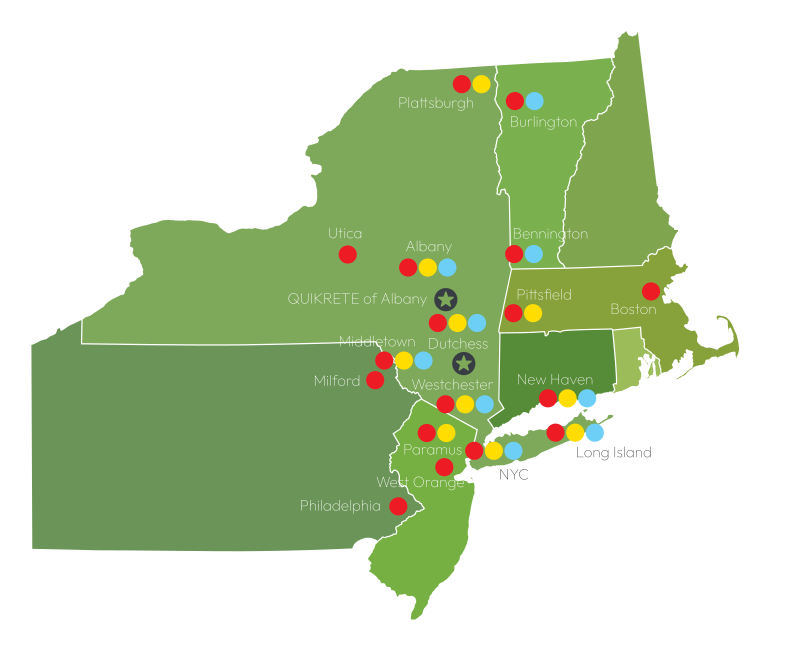
Package Pavement has two convenient locations in Stormville, NY (Dutchess County) and Ravena, NY (Greene County) to serve the Northeastern Region with bagged concrete, blacktop, mortar, and repair products. This map gives a general idea of where we service and the product lines we offer.
Package Pavement Products
Quikrete Products
Spec Mix Products
map

Our Brands Websites