

2026 Cement Repair Guide for Global Buyers How to Fix It?

Cement repair is a vital skill for maintaining the integrity of structures worldwide. As buildings age, wear and damage are inevitable. This guide serves as a comprehensive resource for global buyers seeking effective solutions. It focuses on practical approaches to cement repair that are accessible and reliable.

Understanding cement repair involves recognizing the specific issues at hand. Cracks, spalling, and surface discoloration often require targeted interventions. Experienced professionals advocate for methodical evaluation before embarking on repairs. Choosing the right materials and techniques can significantly influence the outcome.

However, not every solution is foolproof. Mistakes in repairs can lead to further deterioration. Buyers should educate themselves on potential pitfalls. Knowledge of proper application, drying times, and environmental factors is essential. A thoughtful approach to cement repair can yield lasting results, ultimately preserving structural integrity.

2026 Cement Repair Guide for Global Buyers How to Fix It?

Understanding Cement Repair: Key Concepts for Global Buyers

Cement repair is an essential topic for global buyers. Understanding the basics helps in making informed decisions. Knowing what types of damage can affect concrete structures is crucial. Cracks, spalling, and discoloration are common issues. Each type requires a specific repair approach.

For effective repairs, one must consider the cause of the problem. Is it environmental exposure, settling, or improper application? Addressing the root cause ensures lasting results. DIY solutions can be tempting, but they often fall short. It's easy to underestimate the complexity of cement repair. Professional input can save time and resources in the long run.

Choosing the right materials is another vital aspect. Factors include climate, load-bearing requirements, and the existing structure's integrity. It’s also essential to evaluate long-term performance. Many buyers rush through this step, only to face future issues. Taking time to understand all these aspects will lead to better choices and outcomes.

Common Types of Cement Damage and Their Causes

2026 Cement Repair Guide for Global Buyers How to Fix It?

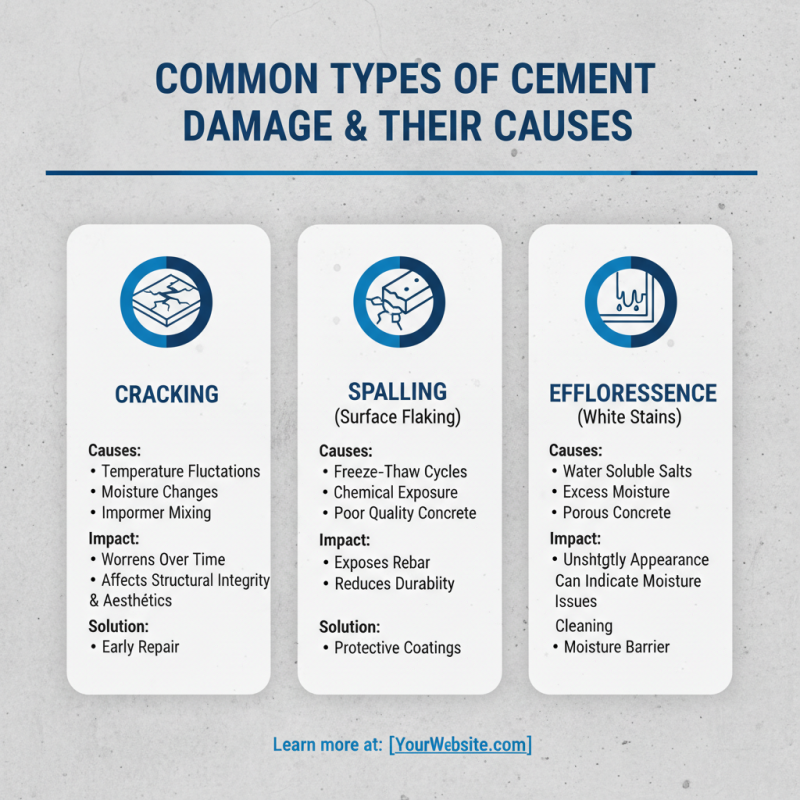
Cement damage can arise from various sources, impacting its effectiveness and appearance. One common issue is cracking. These fissures can be caused by temperature fluctuations, moisture changes, or improper mixing. Even small cracks may worsen over time, leading to bigger problems. Addressing cracks early can preserve the structure integrity and aesthetics.

Another prevalent type of damage is spalling. This occurs when water seeps into the concrete and freezes. The expansion can chip away the surface, creating a rough texture. Improper drainage or exposure to harsh weather often exacerbates this issue. It’s crucial to inspect outdoor cement installations regularly to mitigate this problem.

Lastly, efflorescence is a frequent concern. This white powdery residue appears when water evaporates from the cement surface, leaving minerals behind. While not harmful, it can detract from visual appeal. Regular cleaning and addressing moisture sources can help in managing this issue. Being aware of these common problems empowers homeowners and builders to maintain their cement structures effectively.

Step-by-Step Guide to Assessing Repair Needs

Assessing repair needs for cement structures is crucial. Start by examining the surface for visible cracks or discoloration. Use a moisture meter to detect hidden dampness. This step is essential as moisture can lead to further deterioration.

Tips: Keep a journal of your findings. Document locations, sizes, and potential causes. Over time, patterns may emerge, helping with future repairs.

Next, consider the structural integrity. Look for signs of shifting or settling. Check around door frames and windows for gaps. Sometimes, these subtle signs can indicate larger issues beneath the surface that need attention.

Tips: Engage with a professional for a thorough assessment if unsure. Expert advice can prevent costly repairs later. Reflection is vital; revisit previous assessments to refine your approach.

2026 Cement Repair Guide for Global Buyers - Step-by-Step Guide to Assessing Repair Needs

Repair Type Assessment Method Common Issues Recommended Action
Cracks Visual Inspection Hairline to structural Seal with epoxy or polyurethane
Spalling Tap Test Chipping away of surface Patch with suitable repair mortar
Scaling Visual Inspection Surface flaking Resurface with bonding agent and concrete
Settling Leveling Measurement Uneven surface Employ mud jacking or slab lifting
Water Damage Damp meter Test Moisture infiltration Apply waterproof coating

Essential Tools and Materials for Cement Repair

When tackling cement repair, having the right tools and materials is crucial. A comprehensive report from the International Cement Review states that nearly 30% of construction projects exceed their budgets due to improper materials. This highlights the importance of understanding what is needed for successful repairs.

Basic tools include:
  • Trowels: allow for smooth application, essential for an even finish.
  • Chisels: help remove damaged areas before repair.
  • Mixing buckets: assist in blending repair compounds accurately.

These tools should be in good condition, as worn equipment can lead to poor results.


As for materials, a high-quality repair mortar is essential. Mortars specifically designed for structural repairs can withstand severe weather and load variations. A study revealed that using subpar materials can reduce the lifespan of repairs by up to 50%. Water, additives, and protective sealants also play vital roles in enhancing the durability of repairs. Selecting the correct combination ensures longevity and robustness in repairs, avoiding the pitfalls of quick fixes that lead to ongoing issues.

Best Practices for Ensuring Long-Lasting Repair Results

2026 Cement Repair Guide for Global Buyers How to Fix It?

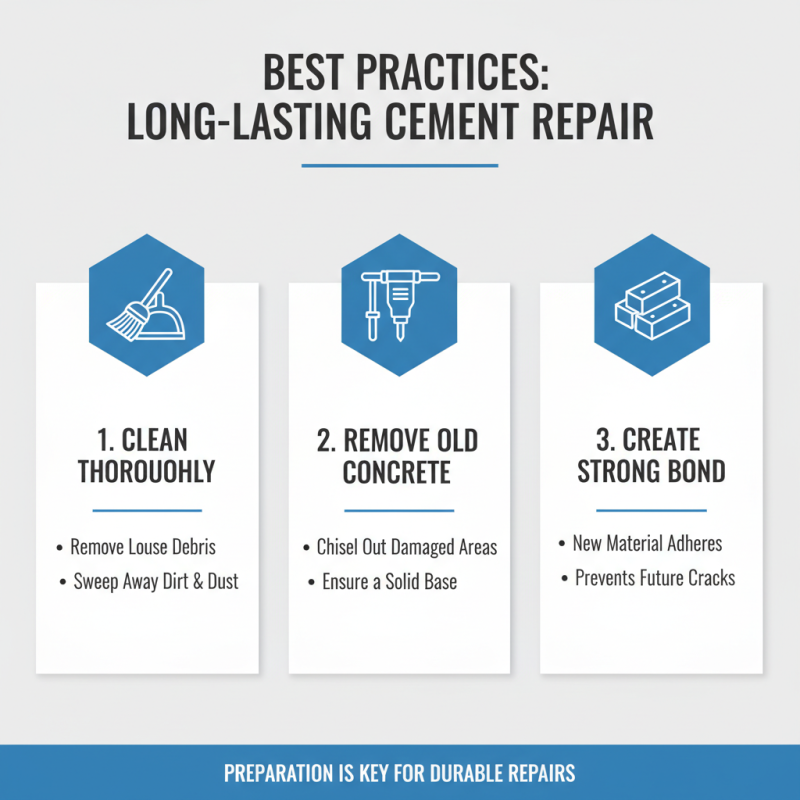
Cement repair can be challenging. To ensure long-lasting results, proper preparation is essential. Start by cleaning the area thoroughly. Remove loose debris, dirt, and old concrete. This creates a strong bond between the new material and the existing surface.

Choosing the right mix is critical. Using a high-quality mix specifically for repairs can make a difference. Follow the manufacturer’s instructions for the best results. Mixing too thick or too thin can lead to cracking later. Patience is key during application. Allow proper curing time. Rushing this process can result in weak repairs.

It's important to assess the repair site regularly. Look for signs of deterioration or damage. Unexpected changes can occur after repairs. Think critically about the environment and material usage. Reflection on previous repairs can guide future efforts. Learning from mistakes is part of the process. Embrace it.

Find the Right Repair Product for Your Project

Need to find the most appropriate product for the needs of your project? We can help because we have over 70 years of experience servicing the industry with every kind of project, from Do-it-yourself projects to large skyscrapers. Package Pavement has the experience, the knowledge and the products to help every project succeed.

Quikrete Repair Products
Legend
Package Pavement has two convenient locations in Stormville, NY (Dutchess County) and Ravena, NY (Greene County) to serve the Northeastern Region with bagged concrete, blacktop, mortar, and repair products. This map gives a general idea of where we service and the product lines we offer.
Package Pavement Products
Quikrete Products
Spec Mix Products
map

Our Brands Websites