| Electric Bicycles and Cargo E-Bikes | Urban commuting, delivery, last-mile cargo and short-distance personal mobility. | Geared hub motor with permanent magnets | Single rear-wheel motor; front-wheel drive is used for selected light-duty designs. | 0.25–0.75 kW per wheel | 35–80 N·m at the wheel | 24–52 V DC | Low cost, compact packaging, strong launch torque and good efficiency at urban speeds. | Limited continuous thermal capacity; gear noise and wear may increase under heavy cargo duty. | Excellent |
| Electric Three-Wheelers and Auto-Rickshaws | Passenger transport, small freight, urban delivery and developing-market mobility. | Direct-drive hub motor or sealed geared hub motor | Single rear axle motor or two independently controlled rear-wheel motors. | 1.5–5 kW per driven wheel | 100–300 N·m at the wheel | 48–96 V DC | Simple drivetrain, high low-speed torque, regenerative braking and reduced maintenance. | Unsprung mass can affect ride comfort; cooling must be designed for frequent stop-and-go operation. | Excellent |
| Small Electric Passenger Cars | Dense-city travel, short commutes, car-sharing and low-cost urban transport. | Compact in-wheel permanent-magnet motor or low-mass hub motor | Two-wheel drive, normally front or rear axle; independent wheel control is optional. | 10–25 kW per driven wheel | 150–350 N·m at the wheel | 300–400 V DC | Efficient use of cabin space, precise torque control and potential elimination of conventional differentials. | Wheel mass, sealing, impact resistance and suspension tuning are critical; high-speed efficiency must be validated. | Very Good |
| Compact and Mid-Size Electric SUVs | Family transport, mixed urban and highway use, light recreational travel and global passenger-car markets. | High-power hub motor with liquid-cooled stator; in-wheel configuration for performance-focused designs | Two-wheel drive for efficiency or four-wheel drive using one motor per driven wheel. | 25–60 kW per driven wheel | 300–700 N·m at the wheel | 400–800 V DC | Independent traction control, torque vectoring, packaging flexibility and fast response on low-grip surfaces. | Greater unsprung mass, higher sealing requirements, thermal management complexity and higher system cost. | Good with validation |
| Premium and Performance Electric Cars | High acceleration, dynamic handling, premium comfort and advanced all-wheel-drive applications. | Liquid-cooled in-wheel permanent-magnet motor with independent inverter control | Four independently controlled wheel motors. | 40–100 kW per driven wheel | 500–1,000 N·m at the wheel | 600–900 V DC | Very fast torque response, precise yaw control, flexible packaging and high regenerative-braking potential. | High cost, demanding durability testing, wheel-load sensitivity and challenging NVH management. | Specialized |
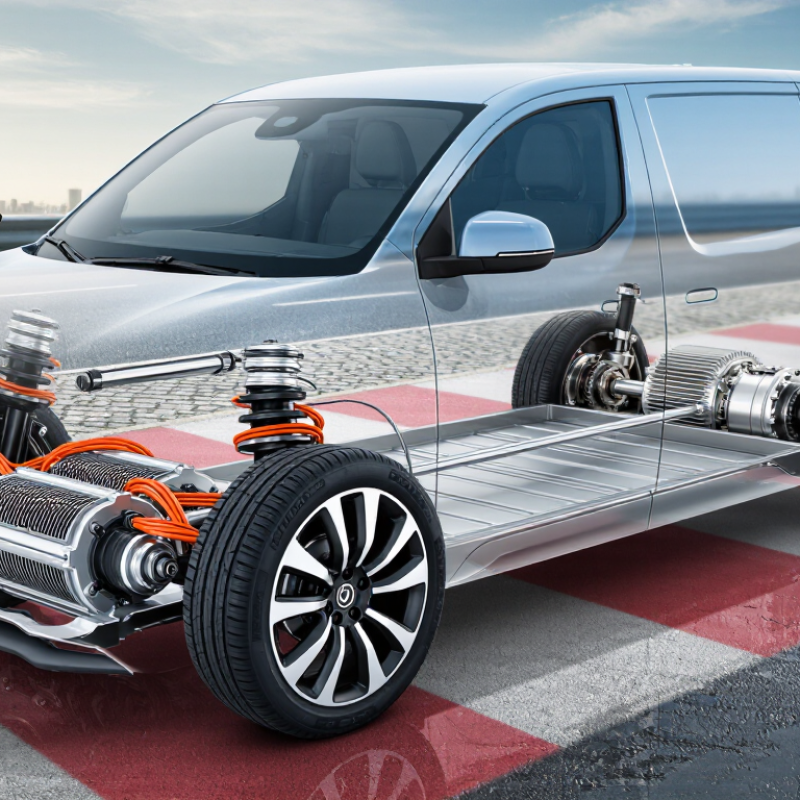
| Light Commercial Vans and Pickups | Urban delivery, service fleets, municipal operations and short-to-medium-distance cargo transport. | Heavy-duty direct-drive hub motor or reinforced geared hub motor | Rear-wheel drive; dual rear-wheel systems can be used for higher payloads. | 30–75 kW per driven wheel | 500–1,200 N·m at the wheel | 400–800 V DC | High launch torque, reduced mechanical drivetrain parts, good packaging around cargo space and strong low-speed control. | Payload changes affect thermal loading; wheel impact, water ingress and brake blending require robust design. | Good for urban fleets |
| Buses and Shuttle Vehicles | Fixed-route urban transit, airport shuttles, campuses and high-utilization passenger service. | High-torque hub motor with liquid cooling and redundant monitoring | Two-wheel rear axle drive or multiple motors across a driven axle. | 75–180 kW per driven wheel | 1,500–4,000 N·m at the wheel | 600–900 V DC | Strong regenerative braking, high launch performance, packaging flexibility and reduced transmission maintenance. | Large rotating and unsprung masses, continuous-duty heat rejection, road-shock exposure and serviceability requirements. | Good for selected routes |
| Medium and Heavy Electric Trucks | Regional distribution, refuse collection, port logistics, construction support and high-payload transport. | Reinforced hub motor or axle-integrated motor; full in-wheel systems require specialist validation | Rear tandem axle drive or multiple motors distributed across driven wheels. | 100–250 kW per driven wheel | 2,500–6,000 N·m at the wheel | 600–1,000 V DC | High starting torque, independent wheel traction management and potential reduction in mechanical drivetrain components. | Extreme wheel-load and durability demands, high unsprung mass, thermal management and service complexity. | Application-specific |
| Off-Road Utility and Agricultural Vehicles | Mining support, agriculture, forestry, construction and low-speed operation on uneven terrain. | Sealed high-torque hub motor with planetary reduction and active thermal monitoring | Four-wheel independent drive or multiple driven axles. | 20–150 kW per driven wheel | 1,000–5,000 N·m at the wheel | 400–1,000 V DC | Precise traction control, high gradeability, flexible chassis packaging and reduced mechanical transmission losses. | Shock loads, mud and water sealing, debris protection, cooling at low vehicle speed and maintenance access. | Strong for specialist use |
| Low-Speed Autonomous Mobility Platforms | Campus transport, warehouse logistics, delivery robots and controlled-area passenger services. | Low-voltage direct-drive hub motor with integrated position sensing | Two-wheel differential drive or four-wheel independent drive. | 0.5–10 kW per driven wheel | 30–250 N·m at the wheel | 48–400 V DC | Compact integration, precise low-speed maneuvering, easy software control and minimal mechanical parts. | Limited speed range, sensor and fail-safe integration requirements, and sensitivity to wheel slip. | Excellent in controlled areas |