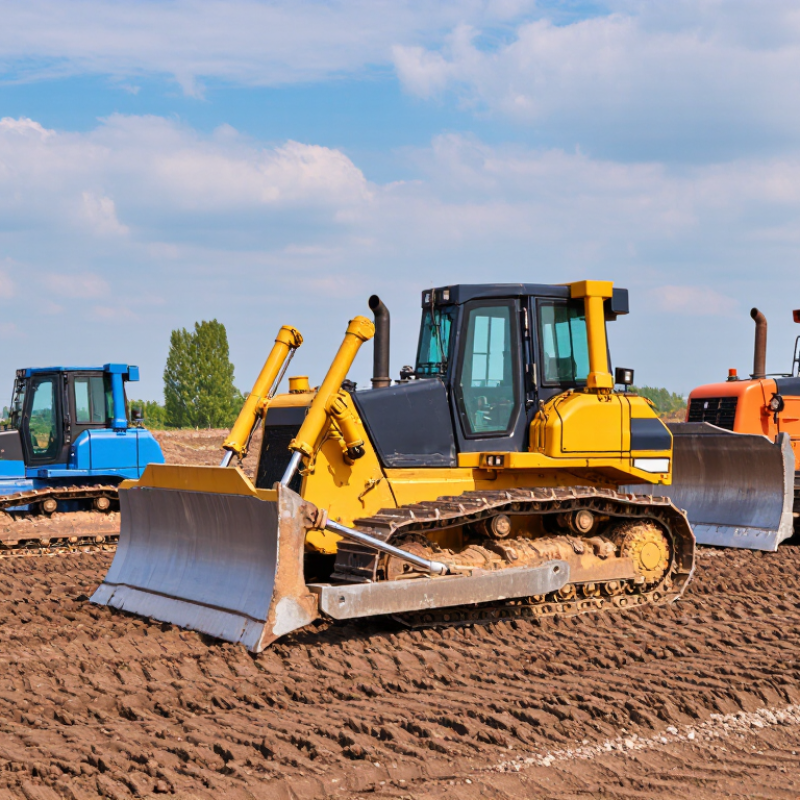
| Small Crawler Bulldozer | 6–12 t | 55–105 hp
(41–78 kW) | 2.4–3.0 m | 1.5–3.0 m³ | 35–55 kPa | Usually suitable for regional road transport; confirm legal width and total shipping weight. | Residential development, landscaping, farm roads, utility trenches, and light site preparation. | Undercarriage wear, blade linkage play, cooling-system condition, and hydraulic leaks. |
| Medium Crawler Bulldozer | 13–25 t | 110–210 hp
(82–157 kW) | 3.0–3.8 m | 3.0–6.5 m³ | 55–80 kPa | Often requires a low-loader or heavy haulage trailer; check axle loads and route restrictions. | General earthmoving, road construction, quarry support, land clearing, and large commercial sites. | Track-chain and sprocket remaining life, transmission response, final drives, and frame cracks. |
| Large Crawler Bulldozer | 26–45 t | 220–390 hp
(164–291 kW) | 3.8–4.6 m | 6.5–12.0 m³ | 75–105 kPa | Requires specialized heavy transport, route planning, permits, and suitable loading equipment. | Major infrastructure, mining support, bulk earthmoving, large-scale grading, and difficult cuts. | Powertrain oil analysis, final-drive temperature, structural repairs, and hydraulic pump performance. |
| Extra-Large Mining Bulldozer | 46–115 t | 400–1,000 hp
(298–746 kW) | 4.5–6.5 m | 12.0–30.0 m³ | 95–150 kPa | Normally transported in major components using engineered heavy-haul logistics and site assembly. | Open-pit mining, overburden management, large stockpiles, and continuous high-load dozing. | Lifetime operating hours, rebuild records, structural fatigue, cooling capacity, and parts availability. |
| Low-Ground-Pressure Bulldozer | 12–30 t | 110–300 hp
(82–224 kW) | 3.2–4.2 m | 3.5–8.0 m³ | 25–45 kPa | Transport weight may be moderate, but extra-wide tracks can affect road permits and loading clearance. | Peatland, wetlands, soft soil, reclamation work, pipeline corridors, and floodplain construction. | Track width and shoe condition, undercarriage alignment, flotation performance, and blade control. |
| Swamp or Marsh Bulldozer | 15–35 t | 130–330 hp
(97–246 kW) | 3.5–4.8 m | 4.0–9.0 m³ | 20–40 kPa | Extra-wide configuration can require route surveys, special permits, and careful trailer selection. | Wetland access, canal and levee work, land reclamation, drainage projects, and soft alluvial ground. | Water and mud ingress, sealed-component condition, track-frame corrosion, and hydraulic contamination. |
| Waste-Handling Bulldozer | 18–45 t | 180–450 hp
(134–336 kW) | 3.4–4.8 m | 5.0–12.0 m³ | 60–100 kPa | Heavy transport is commonly required; inspect overall height when equipped with guarding and special attachments. | Landfill cell construction, waste spreading, cover placement, transfer stations, and refuse compaction support. | Radiator and air-intake plugging, cab and belly guarding, corrosion, seals, and fire-prevention systems. |
| Pipelaying or Side-Boom Configuration | 20–50 t | 180–500 hp
(134–373 kW) | 3.2–4.6 m | 4.5–11.0 m³ | 55–95 kPa | Attachment configuration can significantly affect width, height, center of gravity, and transport permits. | Pipeline corridors, slope work, trench support, right-of-way preparation, and material backfilling. | Attachment certification, rated lifting system, winch or side-boom condition, brakes, and structural integrity. |
| Angle-Blade Bulldozer | 10–40 t | 100–400 hp
(75–298 kW) | 2.8–4.8 m | 2.5–10.0 m³ | 45–95 kPa | Generally similar to the base machine, but blade articulation may affect transport width. | Roadside shaping, ditching, side casting, slope trimming, snow removal, and confined earthmoving. | Angle-cylinder leakage, pivot-pin wear, blade cutting-edge condition, and control-valve response. |
| Winch-Equipped Bulldozer | 15–45 t | 130–450 hp
(97–336 kW) | 3.0–4.8 m | 3.5–11.0 m³ | 50–100 kPa | Additional rear equipment increases transport length and may require attachment removal. | Forestry, steep terrain, recovery work, utility corridors, anchoring, and controlled pulling operations. | Winch drum and cable wear, clutch and brake operation, rear-frame stress, and hydraulic controls. |